River Phoenix

  • The Thing Called Love (1993)

    The Thing Called Love (1993)

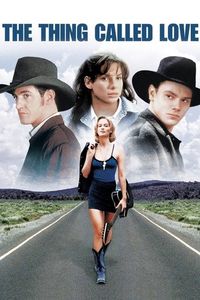
    (On Cable TV, October 2021) I still have many films to go before I’m done with Peter Bogdanovich’s filmography: he’s had an eclectic career, and while his best-known films are almost classics, the rest of his work is practically obscure. I certainly had no idea about The Thing Called Love, although the circumstances of the film’s release (close to the untimely death of its headliner River Phoenix, ensuring a quasi-confidential release out of fears to be seen exploiting the situation) have not helped the film reach posterity. It probably doesn’t help that it also heads for familiar territory in showing the low-intensity struggles of four songwriters working to strike it big in Nashville. Despite a few romantic sparks, the film remains about struggling artists and how they congregate every week for a chance to play at an influential local bar. For many viewers, the draw here won’t be for Bogdanovich’s careful direction but seeing a main cast featuring young River Phoenix, Samantha Mathis, Dermot Mulroney and Sandra Bullock. The soundtrack is not bad (and I say this while having no special affection for the country/western genre), although the romantic subplots feel underwhelming compared to the performing aspects. The script does have a sense of humour, and the result is not much of a chore to sit through. Still, The Thing Called Love will never be considered an essential film—perhaps for fans of the lead actors, perhaps for those invested in songwriting (as opposed to simple vocal performance), perhaps for Bogdanovich fans.
  • Running on Empty (1988)

    Running on Empty (1988)

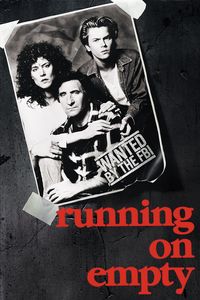
    (On Cable TV, December 2020) I didn’t expect to develop much sympathy for the adult protagonists of Running on Empty. As the film quickly sketches out, here are two ex-activists who ended up maiming a janitor in a laboratory bombing in the 1970s, then spending the 15 previous years on the run while raising two boys. Who can empathize with people like that? Fortunately, though, the emphasis of the film is on their elder son, a gifted pianist who is getting fed up with uprooting himself every few years, as his parents are terrified of being discovered by the authorities and keep a nomadic lifestyle. The script does a fine job of portraying the toll that regular uprooting can take, especially outside a controlled context providing support. The protagonist is played by River Phoenix, going a rather good job as the one most affected by the decisions of his parents. There’s a mixture of social drama and paranoid thriller going on here, especially when the runaways themselves keep suffering for not turning themselves in. From a narrative perspective, Running on Empty is messy: While it has a clear moral centre in the eldest son, it does spend some time on tangents related to other family members – it shouldn’t work, but somehow it coheres into a strong conclusion that is no less effective from being predictable long in advance. Director Sidney Lumet is at ease with a complex, politically aware script, and the cleanliness of his work does much to untangle a script filled with tangents.

  • My Own Private Idaho (1991)

    My Own Private Idaho (1991)

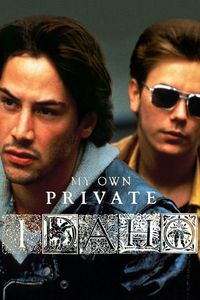
    (YouTube Streaming, September 2020) I suspect that most circa-2020 viewers will approach My Own Private Idaho because it happens to star young Keanu Reeves and River Phoenix and you know what? That’s a perfectly respectable reason. Phoenix’s talent, taken too soon, is showcased here, and Reeves turns in a looser performance than in many of his other roles. But it’s not the only reason to watch My Own Private Idaho. Some will flock to it because of its strong gay themes at a time where such topics were not yet part of the mainstream; others for watching one of writer-director Gus van Sant’s early efforts; and others for the film’s stylish presentation halfway between realism and dreamlike escapism. It is because of this whole package that My Own Private Idaho remains interesting, even to those who, like me, aren’t particularly interested in either of those specific reasons. It’s a film that doesn’t quite play out like expected. The expressionistic moments are refreshing in the middle of so much grimy meditation on the outcasts of society; and the narrative remains a stream of surprises. While I don’t particularly like My Own Private Idaho (too long, too scattered, too sad), I can certainly respect it, no matter why anyone would want to watch it.