Robert Duvall

  • The Rain People (1969)

    The Rain People (1969)

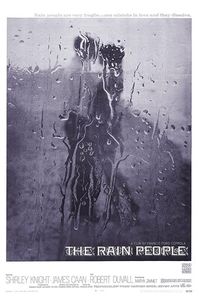
    (On Cable TV, November 2021) As an aging movie reviewer who’s accumulating what’s laughably called “maturity,” I’ve gotten much better at not calling movies “boring and dull and pretentious” — there’s usually something good about everything and it’s my job to find what it is (or which audience it would serve best). But the fact that it doesn’t happen as often is not a guarantee that it doesn’t still happen and so, well: The Rain People is boring and dull and pretentious. There’s a reason for that:  Coming from writer-director Francis Ford Coppola in the burgeoning years of the New Hollywood, it gets to play with things that Classic Hollywood would not have allowed: An unsympathetic character leaving her loving husband out of sheer wanderlust; a gritty filmmaking style aping realism and delivering drudgery; an inconclusive conclusion without much in terms of character development. These, obviously, are the tools of literary fiction but in the characteristic zeal that marks, well, much of American history, the New Hollywood filmmakers went far overboard and later generations can only suffer through those early releases. There’s clearly a footnote in film history for The Rain People — not only as an early work from a major American director, but also a film featuring both James Caan and Robert Duvall prior to The Godfather. There’s an audience for those non-formulaic films with closer ties to written character drama than genre pictures — but even aging movie reviewers have their preferences, and I’m throwing my lot with the genre-obsessed plot-dominant camp that does not settle for boring and dull and pretentious.
  • Tender Mercies (1983)

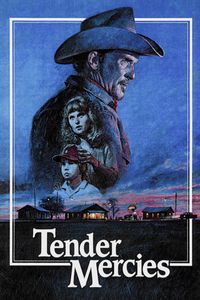
    Tender Mercies (1983)

    (On Cable TV, April 2021) There’s an entire swath of movies I don’t like, and Tender Mercies is squarely in the middle of them: Slow-paced realistic dramas that are heavy on personal recriminations, atmosphere and sadness. Much of the film is focused on a middle-aged alcoholic who used to have a career as a country singer, but finds himself hitting rock-bottom in the middle of Texas. The narrative describes his slow way back up, thanks to God, the love of a good woman and other things found in country songs. It’s not the kind of film I willingly watch unless there’s a reason for it, and that reason here was the film’s nomination for a Best Picture Academy Award. Still, I’d be churlish not to recognize a few things worth noticing. First off would be Robert Duvall’s performance, as he sports an unusual beard and plays off-persona with a sad-sack role (albeit with dignity). The other thing is the all-encompassing Texan atmosphere, with only yellow plain and blue skies to see anywhere you look around. It’s quite an immersive film at times, and it’s an atmosphere that weighs heavily on the slow-moving plot as well, underscoring people stuck in place despite a horizon of possibilities. Otherwise, Tender Mercies is the kind of film that will make more audiences happy and others bored out of their skulls. But then again, take a look at what did win the Best Picture Oscar in 1983: Terms of Endearment. What should have won if I had my way? The Right Stuff, of course.

  • The Chase (1966)

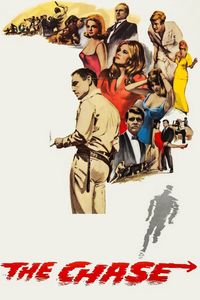
    The Chase (1966)

    (On Cable TV, February 2021) As much as I like to point at 1967 as the year during which Hollywood changed, there were plenty of warning shots prior to Bonnie and Clyde and The Graduate — the 1960s are filled with movies pushing the envelope of what was previously allowable by the Production Code, and exploring gritty filmmaking before New Hollywood ran with it. The Chase strikes me as one of those forebears: a low-energy drama with a downbeat conclusion, featuring grimy naturalistic cinematography and several stars that we would later associate with the 1970s. The core of the film looks a lot like a crime thriller, what with a convict escaping prison and his hometown steeling itself for his return. But as the dramatic non-criminal subplots accumulate, it becomes more obvious that the film is more interested in the hidden depravity of its characters, the small town’s accumulated secrets, and a refusal to bow to conventional values in wrapping up the film. The ensemble cast is stellar, in-between Marlon Brando, Robert Redford, Jane Fonda, Angie Dickinson and a small early role for Robert Duvall. But the result is not quite up to its own goals. Never mind the dark-and-depressive anticipation of the soul-killing 1970s: The Chase delights in upending audience expectations and settling for a nihilistic conclusion. No one is a hero, everyone is terrible and we viewers are stuck with the results. Neither seeking satisfaction as a crime story nor able to deliver enlightenment as a small-town drama, The Chase seems stuck in-between what it would take to be effective one way or the other. We can either see it as a disappointment, or as a stepping stone to the better movies that would follow.

  • The Great Santini (1979)

    The Great Santini (1979)

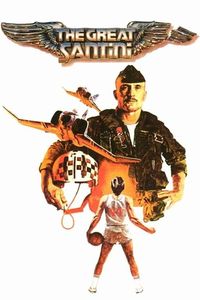
    (On Cable TV, January 2021) There’s something to be said about actors willing to give themselves up to their character while keeping their own ego in check. I’m hardly the first one to point at Robert Duvall’s performance in The Great Santini as one of those great examples of an actor committing to playing a borderline loathsome one—the infamous basketball sequence, in which a grown man can’t accept being beaten by their own son, is one of those masterclass examples of an actor serving a character without caring for their persona. Much of the film is built around the same principles: The lead character is a top-notch fighter pilot, a capable military leader, but a terrible husband and an even worse father-of-four. The Great Santini doesn’t have a plot as much as a series of episodes in service of a character study—the film ends (unsatisfactorily) when the character does. Duvall is very good as the mean prankster, grudge holding, inflexible military officer unable to maintain a distance between the job and his family—but then there are the other actors surrounding him, from the ever-cute Blythe Danner to redheaded Lisa Jane Persky’s screen debut to a solid performance by Michael O’Keefe as his son and rival. Despite the pranks and the grander-than-life nature of its lead character, The Great Santini is not exactly an enjoyable experience: it’s a film about the trauma of living with an oversized character and the energy it takes to power through it. The plot is secondary and treated as such. As a showcase for Duvall, on the other hand, it remains essential.

  • True Confessions (1981)

    True Confessions (1981)

    (On Cable TV, October 2020) Ideally, movies start with an intriguing hook, then build to a good conclusion. True Confessions doesn’t. Oh, the hook is there all right: taking us back to 1940s Los Angeles, the film quickly sets up a mixture of crime drama (featuring a murder similar to the Black Dahlia case), then complicates it with ties to the Catholic Church and powerful real estate developers, and executes its narrative with none other than Robert de Niro and Robert Duvall as, respectively, a Catholic operative and a police detective with temper issues. So far so good, especially when the film manages a low-budget but decent neo-noir atmosphere. The problem with True Confessions, however, is that it goes nowhere after that. The film plays with its crime story but gradually disengages from it, and never quite manages to reach any dramatic intensity. The ending flops hard, no providing any satisfaction. You can appreciate the film for the performances of now-veteran actors as younger men, but True Confessions does itself no favours by setting itself up to be compared with much-better movies such as L.A. Confidential or Chinatown, and then stripping away all the complexity that its betters embraced. There’s little joy to be found inside the film either, with a slow pacing that doesn’t seem to bring anything to the film. At times, True Confessions feels like a late-period degenerate example of the New Hollywood—gritty and grimy and slow and low-stakes but not building to anything more along the way. Such a disappointment—it’s the first rule in the screenwriter’s handbook that a good conclusion forgives a lot of past sins, and True Confessions can’t even manage that.

  • The Pursuit of D. B. Cooper (1981)

    The Pursuit of D. B. Cooper (1981)

    (On TV, April 2020) Taking as premise one of the most famous unsolved airborne hijacking crimes in history, The Pursuit of D. B. Cooper goes all-Hollywood on its “and then…” aftermath. Treat Williams stars as a likable Cooper, but it’s Robert Duvall who looks as if he’s having the most fun playing a dogged insurance investigator. Based on a novel, this adaptation is almost entirely fictional—even the basic facts of the hijacking are not true to reality, let alone the rest. Much of The Pursuit of D. B. Cooper, as promised, is a long chase sequence set in the northwestern United States, with a bit of large-scale plane-versus-car action-comedy stunts as the climax. While the film has a cheerful outlaw comedy atmosphere (very much in vogue as of the early 1980s), a lot of it is merely amusing than truly funny. A look at the film’s incredibly troubled production history suggests how the film arrived in its current mediocre state (Credited director Roger Spottiswood arrived after three previous directors had worked on the film, and reshot much of it as a comedy rather than drama). I still liked The Pursuit of D. B. Cooper, but more as a throwback to the early 1980s than to anything specifically good about the result.

  • Countdown (1967)

    Countdown (1967)

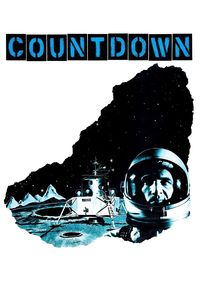
    (On Cable TV, July 2019) No matter how much you know (or think you know) about movies, there’s always another one you don’t know, and today’s discovery for me is 1967’s Countdown, a pre-moon landing techno-thriller about a desperate backup plan to land a single American on the moon before the Soviets do. What was speculative fiction back in 1967 is now a fascinating bit of alternate history, especially considering the care taken in ensuring that the film is grounded in reality—NASA collaborated with the film, and the filmmakers went to painstaking detail to ensure that the film felt plausible. Perhaps the biggest surprise in discovering Countdown (which doesn’t even rank among IMDB’s 100 top seen movies of 1967) is finding out that not only it was director Robert Altman’s first film, but that it starred none other than a very young James Caan and Robert Duvall as astronauts competing to be the first humans on the moon. Altman’s touch can be seen most clearly in his typical (but rarely seen at the time) overlapping dialogue—otherwise, this straightforward tightly-plotted thriller is as far removed from his other movies as it’s possible to be. Caan and Duvall are nearly unrecognizable as younger men, but give quite a bit of gravitas to their ongoing squabble through the film. Compared to other films of the period and later renditions of the space program, Countdown scores highly when it comes to verisimilitude—the spirit, sets, perceived danger and technical details all ring true. Special-effects-wise, the biggest issues come toward the end, as the sequences set on the surface of the Moon don’t have the characteristic harshness that real-life footage has shown us. But for a film released 18 months before the Apollo 11 moon landing, it’s a pretty good effort. Story-wise, I do feel as if the film (or the novel on which it’s based) is missing an entire third act—we leave the protagonist at the earliest possible moment, whereas I feel there was a much stronger and longer story to tell about his return back home. Still, I quite liked Countdown: its techno-thriller aesthetics and narrative drive fall squarely in one of my favourite kinds of fiction, and I think that it’s a splendid period piece to illustrate the suspense of the moon program back in the mid-1960s, before we saw it all culminate with a successful moon landing. I have a feeling I’ll be singing the praises of this less-known film for years to come.

  • Secondhand Lions (2003)

    Secondhand Lions (2003)

    (Google Play Streaming, November 2018) I’m a surprisingly good audience for movies that stake out the interesting middle-ground between reality and fabulation, and Secondhand Lions does manage to create a satisfying film from those elements. The premise has to do with a boy being left with his two elderly uncles living on an isolated farm. To say that the uncles (played wonderfully by Michael Caine and Robert Duvall) are eccentric is putting it mildly—they seem to be financially comfortable enough to give in to their whims and fancies (including purchasing a lion), and they keep telling their young charge about their fantastic youthful adventures. You can probably write the rest of the plot yourself, but Secondhand Lions is at its best in the small incidents and adventures, and in bringing their tall tales to life. The conclusion brings all the threads together in a satisfying coda. It’s not a great film or a memorable one, but it’s rather good at what it attempts to do, and provides enough closure to the audience to be worth a look.

  • MASH (1970)

    MASH (1970)

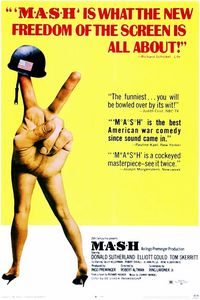
    (On TV, June 2018) Some films are so successful that they sabotage their own legacy, and if MASH doesn’t feel quite as fresh or new or daring as it must have felt in 1970, it’s largely because it was followed by a massively successful TV series and embodied a new cynical way of thinking that would come to dominate (North-) American culture in the following decades. Obviously commenting on the Vietnam War by using the Korean War, MASH shows us disaffected doctors treating the war, and the entire military institution, with obvious contempt. They’ve been drafted, they belong elsewhere and their attitude encapsulates what many Americans had come to think about the military by 1970. Such things are, to put it bluntly, not exactly new these days—and you could easily build a mini-filmography of films in which military heroes behave badly. MASH also suffers from an episodic, largely disconnected plot—there’s a new episode every ten minutes, and it doesn’t build upon those adventures as much as it decides to end at some arbitrary point. Director Robert Altman’s shooting style is also far more similar to newer films than those of 1970—inadvertently scoring another point against itself. It’s not quite as interesting as it was, not as innovative as it was, not as shocking as it was. As a result, it does feel more inert than it should. It’s still worth a watch largely as a historical piece, but also as a showcase for an impressive number of actors—starting with Donald Sutherland, alongside Elliott Gould and a smaller role for Robert Duvall. The metafictional ending works well, but it still leaves things unfinished.

  • The Paper (1994)

    The Paper (1994)

    (Second viewing, On Cable TV, September 2017) I recall seeing The Paper on its opening week, happy (as a former high-school paper editor) to see a film where newspapermen were heroes. I kept a good memory of the result, but I was curious to see if it held up two decades later. Fortunately, The Paper remains almost a definitive statement on 1990s city journalism. Tightly compressed in not much more than 24 hours of action, The Paper follows a hectic day in the life of a newspaper editor juggling work, family and citywide tensions. Directed with a lot of nervous energy by Ron Howard, The Paper can boast of an astonishing cast. Other than a top-form Michael Keaton as a harried news editor, there’s Robert Duvall as a grizzled senior editor, Glenn Close as something of an antagonist, Marisa Tomei as a pregnant journalist desperate for a last bit of newsroom action, Randy Quaid as a rough-and-tough journalist … and so on, all the way to two of my favourite character actresses, Roma Maffia and Siobhan Fallon, in small roles. The dense and taut script by the Koepp brothers offers a fascinating glimpse at the inner working of a nineties NYC newspaper, bolstered by astonishing set design: That newsroom is a thing of beauty as the camera flies by and catches glimpses of dozens of other subplots running along the edges of the screen. You may even be reminded of how things used to work before the rise of the 24-hour Internet-fuelled news cycle. (Of all the things that the Internet has killed, “Stop the presses!” is an under-appreciated loss.)  The Paper is one of those solid, satisfying movies that don’t really revolutionize anything, but happen to execute their premise as well as they could, and ends up being a reference in time. I’m sad to report that by 2017, The Paper seems to have been largely forgotten—while I caught it on Cable TV, it rarely comes up in discussions, has a scant IMDB following, and is rarely mentioned while discussing the careers of the players involved. Too bad—with luck, it will endure as the kind of film you’re happy to discover by yourself. 

  • Open Range (2003)

    Open Range (2003)

    (On DVD, January 2017) I don’t normally have much patience for westerns that last two hours and a half, and there’s no denying that Open Range could have benefited from a more aggressive editing pace. Still, this is a Kevin Costner western, and after Dances with Wolves and The Postman, we all know what that means: Expansive vistas, rough-hewn charisma from its stoic hero, tepid pacing and melodramatic filmmaking. Open Range is in-line with his earlier work: good without being perfect, with enough old-fashioned charm that should appeal to an older audience. Costner gets to play his own archetype, but the film’s standout role has to be the “Boss” played by Robert Duvall: the saving grace of the film’s 139 minutes is having the chance to hear Duvall crunch down on folksy tough dialogue, the kind of which we easily could have used fifteen more minutes. Otherwise, there’s a refreshing realism to the way the story evolves, with casual violence when necessary, an unforgiving environment and tough guys trying to keep what’s theirs. There’s even a grown-up romance thrown in the mix, and it doesn’t feel too out-of-place. Open Range may not sound particularly exciting on paper (or in the middle of the two hours and a half), but some of its moments stand out, including a gritty gunfight where we can honestly fear for at least one character. Not a bad choice, not a bad western.

  • Network (1976)

    Network (1976)

    (On Cable TV, November 2016) I’ll be the first to admit that the biggest problem in watching Network forty years later is being unable to distinguish between what’s a portrait of the media landscape circa 1976 and what we’ve grown accustomed to in 2016. (And, wow, has 2016 broken through the bottom of the barrel in terms of public discourse.) While the visual representation of how a TV network operated in the mid-1970s has now acquired a certain fascination, much of the context surrounding the film is now difficult to pin down. What’s more timeless is the quality of the script by screenwriting legend Paddy Chayefsky, which sounds literate and clever and off-beat at once—there’s a subplot in particular about an affair between an ambitious young woman and a much older man that plays with a mixture of world-weariness and fourth-wall leaning. The rest of the film has other delights to offer, from impassioned populist speeches about “not taking it any more” that feels truer than ever in 2016, along with a provocative counter-speech about “meddling with the primal forces of nature”. I mean, just admire this line, which would never be featured in a modern blockbuster: “There is only one holistic system of systems, one vast and immane, interwoven, interacting, multivariate, multinational dominion of dollars.” Great performances abound from actors such as Faye Dunaway (completely unlikable), William Holden and Peter Finch, along with remarkable appearance by Ned Beatty and Robert Duvall. Watching Network, it’s clear that the fabric on which it is painted has changed in ways it predicted. What I’m wondering is where we’ll ever see something as prophetic and provocative about our own times.

  • Wild Horses (2015)

    Wild Horses (2015)

    (Video on Demand, August 2015)  Let’s be frank: It’s rare to see a film start as unpromisingly as Wild Horses does, with a few scenes acted in such an amateurish fashion as to make us wonder if the actors truly are professionals, or just regular people asked to read lines before a camera.  (It doesn’t help, confidence-wise, to find out that one of the two troublesome actors is writer/director Robert Duvall’s wife, although it makes more sense when you find out that English isn’t her first language.)  Wild Horses never completely recovers from those initial missteps, although it does get more self-assured as it goes on.  The increasing presence of such actors as Robert Duvall, James Franco and Josh Hartnett certainly helps, as does the gradually developed mystery at the heart of the tale.  For Duvall, this may or may not have been a vanity project, but it may remain a misguided one: Wild Horses, at times, feels like another version of the very similar The Judge (also starring Duvall), except with less charm and missing pieces in its narrative tissue.  Some set-pieces are good – I’m thinking about the meeting at a lawyer’s office and the conclusion, both effectively handled.  The rural atmosphere is also comfortable in its own way.  But the rest of the film is hit and miss, with even the good actors not quite managing to lift the film above its pedestrian script.  It’s too bad –for all the respect we can give to a seasoned veteran such as Robert Duvall, his film is too flawed to do him justice.

  • The Judge (2014)

    The Judge (2014)

    (Video on Demand, February 2015)  High-profile dramas have become a bit of an extinct species at the cineplex in this age of multi-screen spectacles, which makes The Judge’s shortcomings a bit more frustrating than usual.  It does have the advantage of a good solid cast, well-used in appropriate roles: Robert Downey, Jr. is in his element as a fast-talking lawyer forced to go back to his small-town origins in order to take care of his father, who’s most appropriately played by Robert Duvall.  Other supporting players include Vera Farmiga (radiant), Vincent D’Onofrio (dour) and Dax Shepard (hilariously clumsy).  Legal proceedings supplements a nostalgic return to small-town family, alongside romantic entanglements and portentous end-of-life drama.  If you get the sense that this is all familiar material juggled in a fairly conventional way, then you’d be right: The Judge is straight-up Hollywood classic filmmaking from the time where CGI monsters hadn’t conquered all available multiplex screens.  (Although the film does contain a lengthy CGI pull-out shot of the protagonist driving down a road that feels intensely out-of-place.)  It feels familiar and disappointing at the same time, the kind of movie everyone loves to mock when talking about Oscar-bait films and audience-friendly mainstream dramas.  Still, The Judge works more often than it doesn’t, and seeing Downey, Jr. in a non-superhero role has become, at this time, a bit of a novelty.  There’s a lot to quibble with the script’s pacing, odd choices of sub-plots, drawn-out endings (two or three of them, depending on how you count) and often-lazy approach to characterization for the secondary players.  Still, The Judge does work well at evoking a quasi-nostalgic sense of place, at creating showcase roles for the two lead Roberts and at providing undemanding drama for two hours.  It could have been worse, although it’s true that it could have been much better.

  • Crazy Heart (2009)

    Crazy Heart (2009)

    (In theatres, February 2010) Yet another entry in the “Film I wouldn’t see if it wasn’t for their Oscar nominations” category.  Would I willingly go see the story of a past-his-prime country music singer who learns to deal with his alcoholism while romancing a single mom half his age?  Gee, Oscar, you really make things difficult for me this year, don’t you?  Cheap shots aside, there’s a little bit to like in Crazy Heart: Jeff Bridges is great in the title role, and the various details about life as an ex country music star are fascinating.  Maggie Gyllenhaal is as cute as she can be (which is a lot) as the single mom, whereas Colin Farrell has a small and perfect supporting role and Robert Duvall is up for another kind bartender role.  This is not a fast film, and it’s definitely aimed at a quiet Midwestern audience.  Bits and pieces of the film are trite and obvious (who couldn’t see the whole “missing child” moment coming?), and the overall arc of the film seems copied from VH1 specials.  Still, for a movie that has practically no guns, explosions, comedy, one-liners, car chases, giant robots or anything designed to get me in the theatre, it’s a bit more bearable that I expected.  But I’m as far from Crazy Heart’s target audience as I could be, so never mind me and go read a review from someone who cares more about the film.