Robert Forster

  • The Wolf of Snow Hollow (2020)

    The Wolf of Snow Hollow (2020)

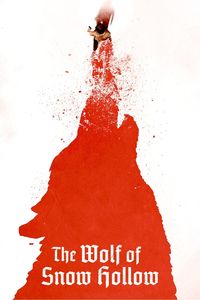
    (Disney Streaming, April 2021) My typical commentary on horror/comedy hybrids is that the balance between the two can be incredibly tricky at times, and not all filmmakers can pull it off. Accordingly, perhaps the most suspenseful aspect of The Wolf of Snow Hollow isn’t as much the small-town police hunt for a werewolf, but the tightrope act that writer-director-star Jim Cummings has to navigate between the demands of horror thrills, comedy chuckles and his own idiosyncratic deadpan sensibilities. The result, fortunately, is a success — something too quirky to be embraced widely, but a more ambitious-than-usual take on familiar genre elements. Much of the attraction of the film comes from its lead character, a policeman in a tight-knit community who has ambitions to succeed his father as the town’s sheriff, but significant anger issues (to the point of repeatedly hitting colleagues), an alcoholic past and difficult relationships with his ex-wife and daughter. Any lesser movie would have done some sleight-of-hand to ensure that he is the killer being hunted (and the film does initially nod in that direction as a red herring), but instead we get a bit of alter-ego reflection between the dual nature of werewolves (here cleverly rationalized as misogynist men hunting women when it’s bright at night) and the hero’s own issues in keeping both aspects of his personality under control. A big dose of visual style does help, especially in grounding The Wolf of Snow Hollow’s sometime-anachronistic execution that rapidly jumps back and forth in time to show cause and effect. The result is as slick as the dialogue can be deliberately rough. Cummings does pretty well in the lead role, with some honourable mentions going to Robert Forster in his final role, and Riki Lindhome as another level-headed police officer. The dialogue is self-consciously “realistic” in all of its awkwardness, but it does help ground the reality of the film to its small-town atmosphere, where nothing of importance is ever supposed to happen. Still, much of the fun of the film comes not from the werewolf hunt, but the way the protagonist buckles under pressure coming from all sides. (The film is not subtle about it at all, with a whistling kettle taking over the soundtrack at least twice.)  The Wolf of Snow Hollow could have benefited from a few additional minutes to straighten out its second-half revelations and play a bit longer in the jumpy atmosphere of a small town terrified by an average police force unable to cope with a serial killer. But the result is still quite good as it is, and well worth a watch. It’s not your average horror film, and not your average horror/comedy film either.
  • El Camino: A Breaking Bad Movie (2019)

    El Camino: A Breaking Bad Movie (2019)

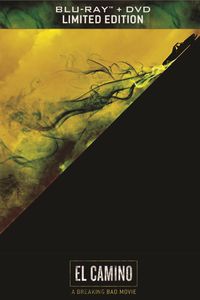
    (Netflix Streaming, December 2020) Like many people, I binge-watched “Breaking Bad” as soon as the entire series made its way to Netflix in 2016ish. Picking up the pieces of the series’ plot in time for El Camino wasn’t as difficult as I would have guessed: while the film dutifully continues the events of the last episode as if no time at all had passed, it also revisits many of the series’ characters in such a way that you can easily remember who was who and what they did. The cameos are usually in increasing order of significance, so just wait and you’ll see your favourites at some point. Acting as more of a bonus coda than anything specifically new, El Camino focuses on Jesse as he escapes from the neo-Nazi compound, then spends the next few days putting his affairs in order and getting enough money to start a new life. Taking its cues from TV show structure, El Camino often feels like a series of short loop episodes, with Jessie dealing with a specific challenge before moving on to the next stage. Robert Forster makes an impression (in one of his last film roles) as an inflexible “cleaner,” and the film does get a pretty good sequence, as Jessie looks for hidden money in the lair of a dead nemesis. (Jesse Plemons is back in his irritatingly evil character, proving the banality of evil in many different ways.) El Camino is probably not work a look if you’re not already a viewer of the show: the story is decent, the production values are nice, but the film doesn’t really intend to stand alone nor offer meaning to anyone but those wanting another hit of “Breaking Bad.” Nothing wrong with that – just setting expectations straight.

  • The Black Hole (1979)

    The Black Hole (1979)

    (Second Viewing, On Cable TV, September 2019) I distinctly remember seeing trailers for The Black Hole on TV—it’s hard to forget the spectacular “meteorite heading for the heroes” shot that capped it off. Viewing the film as an adult is something else—It’s a film with a strong split personality, both aimed at kids with cute robots and terrible logic, but also a dark and nightmarish Science Fiction drama that almost literally ends in hell. (“Event Horizon for kids” strikes far too close to the truth to be a joke description.) As a result, The Black Hole can feel like a schizophrenic experience: a special effects showcase (they aged better than you’d expect), a summer blockbuster clearly taking aim at Star Wars’s success, a horror-lite story with easily guessable “twists,” and a good old-fashioned space adventure. In the middle of so much stuff, the cast doesn’t get enough attention, what with names such as Maximillian Schell, Robert Forster, Anthony Perkins, Yvette Mimieux and Ernest Borgnine—what kind of movie was this? There is stuff in there that is so clearly of the 1970s that watching them today feels alien—I mean: a robot shooting gallery, ESP with robots, a quote-spewing robot? If you haven’t seen The Black Hole in a while, have another look at it. If you haven’t seen it yet, do it now, and strap yourself in for a wild mixture of elements that you wouldn’t necessarily put in the same movie.

  • The Descendants (2011)

    The Descendants (2011)

    (On Cable TV, May 2014) I watch a curiously low number of straight-up dramas, usually out of an unfair suspicion that they are not as interesting as my usual genre movies. But then there are films such as The Descendants, absorbing from the get-go and witty enough to keep my attention until the end. Adapted from Kaui Hart Hemmings’s novel (a literary origin that can be felt in the complex back-stories for most characters) by veteran screenwriter/director Alexander Payne, The Descendants works partially because it never quite does the expected thing, and partly because it can count on an exceptional, world-weary performance by George Clooney. Expectations are quickly subverted, as the opening monologue discusses the disillusionment of day-to-day life in Hawaii and then moves on with a surprising lack of sentimentality in discussing the burden of a man dealing with the terminal coma of his wife. (It’s a measure of how unconventional The Descendants can be when the brain-dead wife gets verbally harangued on her deathbed by grieving family members no less than three times.) When the quasi-widower discovers the unfaithfulness of his nearly-ex-wife, it’s up to him and his daughters to deal with the situation. Blend in an extended subplot about land stewardship, and you’ve got the makings of an interesting script no matter the execution. But Payne’s touch suitably lets Clooney own the lead character, and display a wide range of emotions that more than reaffirm his abilities as an actor. Shailene Woodley has a career-launching role as a teenage girl who ends up far less rebellious than initially portrayed, while Robert Forster has a small but remarkable role as a punch-happy older man. (Judy Greer also makes a striking appearance as a cheated-upon wife who’s a great deal less forgiving than she initially appears.) Often unexpectedly funny, The Descendants offers a slice of life for characters thrown in a difficult situation, eventually reaching an accommodation with their new circumstances. By the time the film ends, we’re reasonably certain that they will be all right… which is for the best given how much we’ve learn to like those characters.

  • D-War [Dragon Wars] (2007)

    D-War [Dragon Wars] (2007)

    (On TV, August 2013) The film’s poster/cover promises dragons attacking downtown Los Angeles in full daylight.  What’s not to like?  As it turns out, almost everything else.  For some unexplainable reason, D-War takes forever to establish its cumbersome mythology before getting to the “dragon wars” part, and viewers can’t be blamed if they start mentally checking out at the blend of age-old mythology, predictable prophecy and meaningless word salad.  Bad dialogue, dull cinematography and laborious directing all add up.  It’s not just uninteresting: it’s executed in the bland plodding way most SyFy original films are made… something made worse by the fact that with a budget about ten times what SyFy movies usually cost, it’s not a SyFy original film.  D-War’s lone redeeming quality of the film is the 15 minutes or so in which the dragons do attack downtown Los Angeles: suddenly, the special effects get better, the human characters disappear, the spectacle ratchets up and the film finally gets a pulse.  Unfortunately, that doesn’t last long and it leads to a downer of an ending.  While Jason Behr and Amanda Brooks don’t completely embarrass themselves in the lead roles, there’s not much here to boast about (and seeing both Robert Forster and Craig Robinson in fairly silly roles is more surprising than anything else.)  If you do want to get the most out of D-War, fast-forward to the dragon attack, and stop whenever they disappear from the screen.