Robert Preston

  • The Last Starfighter (1984)

    The Last Starfighter (1984)

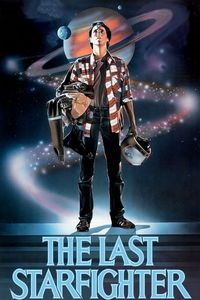
    (On DVD, November 2021) If you ask special-effects nerds, The Last Starfighter’s main claim to fame in cinema history is that it was one of the first feature films to use a significant amount of computer-generated imagery. The details will take you back to a cruder age, with the footage being painstakingly rendered on a Cray supercomputer—for results that now look like they come from a low-end computer game. But that’s almost part of the charm of this Star Wars-inspired attempt to blend then-burgeoning computer game culture with a rather blatant retelling of the Campbellian hero’s journey. (How blatant? Well, let’s just say that anyone who knows the arc will predict what’s about to happen.)  I’m convinced that there will either be a remake or a similar film sometime in the near-future, what with the story being about a gamer whose proficiency with an arcade game ends up being recruitment for an extraterrestrial league of starfighters. As wish-fulfillment fantasy for younger teens, this is way up there. Lance Guest is not bad in the lead role, but it’s Robert Preston (in his last role) who gets the smiles as an alien gentleman who ends up being as much of a flimflam artist as his character in The Music Man. While the special effects are clearly outdated, they do get the point across quite well, and act as a benchmark of sorts for how far we’ve come since then. Fortunately, even if The Last Starfighter is clearly aimed at a younger crowd, there’s just a bit more to enjoy to it than a glimpse at the history of CGI.
  • Cloudburst (1951)

    (On Cable TV, September 2021) Now here’s something interesting: A British film noir set in the post-war years and focusing on a code-breaking protagonist. No, “Bletchley Park” is not mentioned — Cloudburst was completed decades before the extent of the Allies’ code-breaking was declassified—, but there’s something almost reverential in the way the code-breaking is treated here. Part of it is a gimmick (including a sloppy code left on the scene of the crime) and part of it comes from screenwriter Leo Marks, who did work in code-breaking during WW2 (although, ironically, not at Bletchley Park). The Canadian-born protagonist is initially presented as a promising young man with an ideal life and an expectant wife, but then — the wife is killed in a hit-and-run, and the protagonist goes on a roaring rampage of revenge to find and kill those responsible. Using his wartime skills, he makes mincemeat of the first culprit, then hits a wall in tracking down the passenger. Ironically enough, things get moving once again when the authorities bring him the coded message he left on the scene of his first murder and ask him to, essentially, investigate himself. It’s all handled with a certain competence: Francis Searle directs the material appropriately from within a burgeoning Hammer studio, and Robert Preston lends his voice to the lead. It’s a satisfying watch despite some unconvincing staging and some strange plotting oversights — the code-breaking aspect really helps to set it apart from the pack, and Preston’s character gets more and more interesting when he’s stuck between his own revenge and the police closing in. Thanks to all of those added details, Cloudburst remains well worth a look—especially as a slight deviation from the usual noir material.

  • Child’s Play (1972)

    Child’s Play (1972)

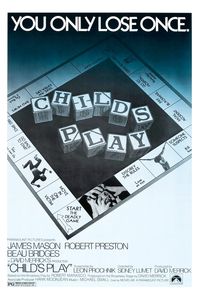
    (In French, On Cable TV, May 2021) A decade and a half before Chucky’s introduction, there was a Child’s Play movie that had nothing to do with killer dolls, and everything to do with… hmmm, that’s actually a good question: What is Child’s Play about? It’s clearly about a boarding school for boys in which two senior teachers (James Mason as the hated one, Robert Preston as the loved one) have it out for each other. It’s also certainly about mysterious escalating events in which the hated teacher is tormented and maybe the loved one has something to do with it. But while it initially appears to maybe involve the supernatural, the ending apparently tells us that it’s not — but director Sydney Lumet maintains the ambiguity as if even he hadn’t made up his mind. Almost no one escapes from Child’s Play with their dignities intact: this is often derided as Lumet’s worst film (which isn’t that much of a dishonour considering the rest of his filmography), but he does manage to imbue something of an atmosphere by exploiting the dark gloominess of a boarding school and amplifying it with kids who clearly aren’t all right. Mason is clearly the least-disappointing one here, imbuing his character with his usual, polished blend of dignity and menace. Preston merely does OK with the role he’s given and the rest of the players are rather inconsequential. (Beau Bridges is just… there in comparison to the two veteran actors.)  In a historical context, Child’s Play feels like an attempt to ride the paranormal possession train launched by Rosemary’s Baby and The Omen, except without the genre familiarity to do anything with that intention. Which isn’t outlandish, considering that the film is adapted from a Broadway play and Broadway playwrights have seldom been acknowledged as being particularly comfortable with paranormal horror.

  • Tulsa (1949)

    Tulsa (1949)

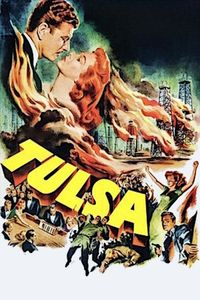
    (On TV, September 2020) If ever you thought that Cimarron didn’t spend enough time in the oil fields, then Tulsa is for you. Bombastically announcing itself as the story of how Tulsa became the oil capital of the world (no less!), it takes us in the early days of the American oil industry by examining the life and loves of a daughter of a rancher who becomes an oil baroness through the years. Susan Hayward is quite good in the lead role, with no less than a young Robert Preston lending his presence and deep voice to one of her main relationships. I quite liked the result, but perhaps more for the procedural aspect of spending time drilling for oil than anything else. A spectacular blowout sequence caps the film (perhaps a bit too suddenly) and netted the film an Academy Award nomination for best special effects. Surprisingly or sadly enough, the TV broadcast I saw was grossly downscaled and presented in black-and-white, whereas Tulsa was originally shot and distributed in colour. But that’s what happens when TV stations start downloading public-domain movies to fill out their nighttime slots. I’m not complaining as much as I should—if nothing else, it will give me another excuse to watch the film later under better conditions. Tulsa is not a great movie, but it’s interesting, and it’s not the paean to big oil that we could have feared from the opening narration when its second half delves so deeply into the perils of excessive greed when measured against the environment. There’s even a half-sympathetic representation of indigenous characters!

  • Union Pacific (1939)

    Union Pacific (1939)

    (On Cable TV, August 2019) I’m not sure how much we twenty-first century sophisticates truly understand the meaning and importance of the first coast-to-coast railway. To put in modern context, it was akin to building the first highway and the first Internet link throughout the country at the same time. The first transcontinental railway (1869 in the United States, 1886 in Canada) did as much to tie the country together as any law. It standardized time, facilitated the mobility of labour, ended the wild frontier, improved the flow of news and information—all things that we now take for granted. We may never be able to fully appreciate that it meant then, but at least there are movies like Union Pacific to make us appreciate the details of how it was done. Focusing on a troubleshooter for a railroad company, this is a film that takes a look at the nitty-gritty of building such a revolutionary endeavour, from shooing away undesirables that prey on railroad workers, to the logistics of keeping such a group of workers fed and productive, to negotiations with the native tribes. Joel McCrea plays the troubleshooter, bringing his usual charisma to the part and helping to humanize a complex subject. Barbara Stanwyck plays the love interest, while you can see (or rather hear) Robert Preston and Anthony Quinn in the supporting cast. But this is director Cecil B. de Mille’s film—an expansive, spectacular subject matter that never misses a chance to stage a large-scale action sequence. While the film does regrettably rely on native attacks as a pretext to action scenes, it does spend more time than was usual back in 1939 showing how those attacks were motivated by the white businessmen breaking their promises to the tribes. Union Pacific is my kind of western—not a celebration of the wild frontier using the usual macho tropes of the genre, but a study in how civilization spread throughout the land and closed the frontier. Some film historians point to this film and Stagecoach as when the Western grew up, but I can only testify as to the interest that it created and sustained over a two-hours-and-fifteen minutes running time: It’s a fascinating railway procedural, and it manages to have a nice human edge to it.

  • Victor Victoria (1982)

    Victor Victoria (1982)

    (On Cable TV, June 2019) Director Blake Edwards built his career with bigger-than-life comedies, so the gender-twisting outrageousness of Victor Victoria does make quite a bit of sense coming from him. See if you can keep up: In 1930s Paris, a gay man convinces a woman to impersonate a man impersonating a woman in a transvestite cabaret show. (We’re deep in Philip K. Dick’s fake-fake territory here.) Still, the film itself is a decent amount of fun. Julie Andrews stars as the woman asked to play a woman, but much of the spotlight goes to Robert Preston (and his great voice) as an aging gay man—his character is treated with some respect (within the confines of a 1982 film taking in place in 1934, that is), helping the film age more gracefully than most contemporaries. There are shades of Cabaret here (especially considering its inspiration, a 1933 German film) but don’t worry: Victor Victoria doesn’t have Nazis and ends on a far more cheerful note. It definitely comes alive during the funny cabaret sequence, especially when they result in musical numbers. The best is saved for last, with a deliberately over-the-top final sequence. While I’m not enthusiastic about Victor Victoria, it’s an easy film to watch and the cheerful atmosphere makes it all feel far more bearable than other comparable films (or musicals) of the era.

  • Mame (1974)

    Mame (1974)

    (On Cable TV, April 2019) Seeing the musical remake Mame only two weeks after seeing the original comedy Auntie Mame was clearly not at the 1974 film’s advantage. While the bones of the story have been transported, simplified, heightened, and set to song and dance, the result is far from being as satisfying as even the uneven original, and bring further credence to my assertion that nearly every musical made in the 1970s was terrible. I’ll admit that the story is a difficult one to tell—episodic, scattered across several years, not quite comic throughout—it challenges even the original film. But this adaptation makes it worse. Generations of reviewers have noted how much Lucille Ball is miscast here (critics were so scathing in their initial assessment that it was the last theatrical film that Ball ever made) so I’m not going to pile up. On the other hand, it’s always fun to see Robert Preston show up even in a momentary supporting role. Elsewhere, well, the comedy isn’t funny, the musical numbers feel laborious and the result is more puzzling than exhilarating. I’d like to say that my impressions of Mame would have been higher if I hadn’t just seen Auntie Mame, but I suspect that’s not true—even after acknowledging that it’s a lesser film, it’s obvious that it’s not much of a good one no matter if compared or not.

  • The Music Man (1962)

    The Music Man (1962)

    (On Cable TV, October 2018) It actually took me two attempts to get into The Music Man. Made at a time when the Hollywood musical had been defined, achieved and was nearing its degenerative phase, it’s a musical that knows it’s a musical and relies a lot on audience expectations in order to achieve its effects. This is most clearly seen in the rough opening sequence where the sounds of a train provide inspiration for an oddly syncopated and arrhythmic first number that will have more than one viewer wondering what the heck is going on. (Cue my second attempt to watch the film.) Things sharply improve once The Music Man hits the sheer singalong hilarity of “Ya Got Trouble” and then on to “Marian the Librarian” and “Shipoopi.” Once you understand what the film is aiming for, it becomes far more enjoyable. Lead actor Robert Preston certainly helps—his distinctive voice is a joy to listen, and his ease with the role (which he performed for a few years on Broadway) shows in the practised charm of his performance. He certainly lends a lot of his comfort to the story itself, which consciously goes back to early-twentieth-century Midwest small town for its atmosphere and plot devices. By the time the story wraps up with (what else?) a big parade, The Music Man has become a musical classic, easily ranking among the best 1960s musicals. I can envision replaying this one for the sheer fun of the musical numbers. If the lead character feels familiar to first-time viewers, it’s probably because of the classic Simpsons “Marge vs the Monorail” episode, in which the huckster character coming to town is very clearly modelled on Preston’s archetypical work here.