
Robert Vaughn

  • Christmas Movie Magic (2021)

    Christmas Movie Magic (2021)

    (On Cable TV, December 2021) By now, I’ve seen enough Hallmark-style Christmas movies that I have resigned myself to evaluate them on their own merits, and to expect the usual formula repeated ad nauseam. These are not meant to be ambitious movies — they follow a formula because the audience demands it, and they go for a no-frill execution because that’s the cost-efficient budget they’re working with. So, imagine my surprise when I realized that Christmas Movie Magic was going for slightly more than the usual “City girl goes back to small town for Christmas, falls in love, the end”: Oh, that’s still the plot, but it doesn’t quite cover the added complications of the details. Here, the story has to do with the journalist protagonist writing about a small town where a classic Christmas film (think something like “It’s a Wonderful Life” with musical numbers) was filmed. This means that Christmas Movie Magic at least has to go through the motions of presenting a credible Holiday classic, figure out the details of its production and voluntarily blur the lines between the present-day action and the re-creation of the classic film. This culminates in a final scene of very unusual ambition for these kinds of film: a musical number blurring both timelines with good production values. Of course, director Robert Vaughn doesn’t have what it takes (budget, actors, time, skills) to do more than being ambitious: it doesn’t quite reach the level where we forget that this is a low-budget Christmas romantic comedy, nor does it embarrass itself with fine writing along the way. But I have to respect the attempt: coupled with the focus on classic cinema (always a way to get into my good graces), Christmas Movie Magic makes a much better and stronger impression than most of the formulaic stuff that plays on cable TV during December. Despite some flat acting and graceless dialogue, I may even give it another go next year. Or at least let it play while I do something else.
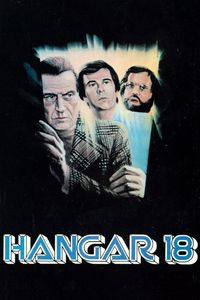
  • Hangar 18 (1980)

    Hangar 18 (1980)

    (On TV, March 2021) I distinctly recall watching at least the vivid conclusion of Hangar 18 as a teenager, meaning that I started this second viewing with the apprehension that I knew how it would all turn out. But as the film advanced, images from another film kept intruding: Capricorn One, which (three years before Hangar 18) also played with a conspiracy theorist’s view of the space program, shadowy officials prepared to kill as part of a cover-up and astronauts involved in car chases (with sabotaged brakes!) to find the truth. But whereas Capricorn One is a good movie, Hangar 18 definitely isn’t. Oh, there are a few interesting moments — the opening sequence set aboard the then-prototypical space shuttle is intriguing despite being ridiculously inaccurate, the car chase sequence has its moments despite basic staging issues, and the sombre machinations by ruthless government managers are enough to make any conspiracy thriller fans happy. Alas, a lot of indulgence is required throughout — the narrative never makes sense on a basic level, whether it’s getting a UFO in a government hangar, or the final flourish of trying to bomb the hangar to keep a secret. (!) The script is hampered by its ridiculous assertions that this is somehow based on a true story and as a result never bother distinguishing most of its characters — something further compounded by casting that largely sought out the same middle-aged white males. (If it helps, Robert Vaughn is in the film and he’s distinguishable because, hey, he’s Robert Vaughn.)  The expected ending feels like a bit of a murderous cheat considering that the white male characters live even as the more diverse supporting cast presumably bites it around them. There’s a sense that the film believes just a bit too much in its conspiracies to be able to create a believable narrative — it seems to address wide-eyed believers, assuming that they’ll accept anything. It’s too bad, because you can recognize here the elements that could lead to a much better film if they were handled with more wit. But instead, we get a B-grade version of a B-grade movie. Notwithstanding that memorable last shot, it’s really not enough.

  • Pootie Tang (2001)

    Pootie Tang (2001)

    (On TV, July 2020) I’m about a generation too late at the Pootie Tang party, and a lot of it has to do with its reputation as a terrible movie. It’s not wholly undeserved, but the film itself is a great deal funnier than expected. Stemming from sketches from The Chris Rock Show and directed by then lesser-known Louis C.K., Pootie Tang is the kind of absurd satirical comedy that either falls flat or strikes a chord. It’s ingeniously dumb, as it revolves around a character (Pootie Tang!) meant as a parody of multi-hyphenates artists in the wake of the blaxploitation era. Pootie Tang (and please decline any drinking game in which the mention of the name is a trigger for alcohol consumption) is a rapper, actor and positive role model whose appeal is largely inexplicable to viewers but deeply felt by the characters in the film’s reality. Lance Crouther is pretty good in the lead role, while Robert Vaughn deliciously shows up at the antagonist, Jennifer Coolidge and Wanda Sykes provide some decent sex appeal, and Chris Rock goofs around in a variety of roles—plus many cameos big and small. Pootie Tang is almost aggressively stupid at times, but darn if I didn’t giggle during a good chunk of it: I liked the anti-corporate message, the semantic tour de force presented by the title character’s dialogue and the unapologetic weirdness of its humour. Don’t go in Pootie Tang expecting an ordinary, let alone good movie: you will know within moments if the absurdity of it all will grab you.

  • The Towering Inferno (1974)

    The Towering Inferno (1974)

    (On DVD, February 2018) I partially grew up on seventies Disaster films (they were a popular staple of French-Canadian TV in the early eighties), and while I don’t remember a lot of about them, there is the occasional ping of recognition as re-watch them in middle age. My fuzzy memories of The Towering Inferno were a disservice to the film, which is quite enjoyable in its own bombastic way. Never mind the fascinating backstory to the film (two studios meshing together similar projects based on different books) when the end result brings Steve McQueen together with Paul Newman in a big cooperative battle of manly heroes. The film is long, but the leisurely opening act does set up a premise of fiendish promise: an enormous skyscraper, fire risks everywhere, and human failings exacerbating an already dangerous situation. It all culminates in a titular conflagration … and it works pretty well. There are a lot of familiar faces here, including O.J. Simpson as a security guard, Robert Vaughn in his usual evilness, and one last great appearance by Fred Astaire in an effective dramatic role. (He won an Oscar for it, properly understood to be about the rest of his career.)  The film hits harder than expected, with plenty of sympathetic character deaths in addition to the expected reprehensible characters burning along the way. At times techno-thrillerish and at others always-getting-worse, The Towering Inferno does benefit from its mid-seventies vintage. The special effects haven’t aged well (mostly by limiting the way the disaster is portrayed—no CGI flybys of a burning tower surrounded by helicopters here) but the overall atmosphere of the film is fun. Far more successful than I expected to be, The Towering Inferno mostly holds up today … but be prepared for a long sit.