Roel Reiné

  • Bear (2010)

    Bear (2010)

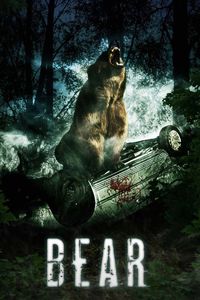
    (In French, On Cable TV, January 2021) I got interested in survival-horror film Bear because it’s directed by Roel Reiné, one of the most consistently interesting direct-to-video action movie directors in terms of visual polish and cost effectiveness. His films usually look great even with miserly budgets, and anything with his signature is on my list of things to watch. You will not, however, see Reine’s name on Bear’s poster: He’s credited as “John Rebel” for a reason, as the film takes place in a very different visual register from his other action-packed films. Aside from a brief expansive opening in which four friends/relatives/lovers drive through a forest “shortcut” and have a flat tire in the middle of nowhere, this is a different kind of thriller. Things get worse and to the point when a bear approaches, they shoot it, and another bear approaches, overturning the van. The rest of Bear is a very intimate thriller set in the side-turned van, with the bear threatening the dwindling number of characters over the entire night. Visually, there isn’t much to do here, although Reine does gamely try to keep things flowing over the film’s 80 minutes. Interpersonal drama and considerations about the mystical nature of bears fill up the rest of the time—it’s not a surprise if the animosity between the two brothers in the van simmers over, nor if the same woman has been involved with them both. While the ultimate impact of the film is decidedly average, the claustrophobic nature of the setting and the film’s willingness to keep to a certain amount of time/space unity is more interesting than your usual man-against-nature thriller. It’s not Reine’s most impressive work, but he keeps the plates spinning until the end, which does mark a success of sorts considering how little he had to work with. But if you’re expecting car-crashing fight-slamming Reiné from Bear, well, this is a John Rebel film.

  • The Lost Tribe (2009)

    The Lost Tribe (2009)

    (In French, On Cable TV, September 2020) Nooo, Roel, you have let me down! The Lost Tribe landed on my DVR thanks to a single distinction; It’s directed by Roel Reiné, a Dutch filmmaker with a remarkable ability to make low-budget movies look ten times as exciting and fun. Well, his run of good luck expired during the making of this low-rent horror film. The story sees five young people run aground on a small island that is home for murderous evolutionary cousins of humankind. What follows is the usual jungle slasher, as members of the party are progressively slaughtered and the script finds weak justification to string along their deaths. But what could have been interesting if well-executed here hits a decidedly un-Reineian wall of blandness: dull, bland visual style, muddy cinematography and uninvolving direction. Really, who kidnapped Reiné? Maybe he finally met a budget so low that he couldn’t make it work. No matter why, The Lost Tribe is just a waste of time. Don’t let the director’s name fool you, and just avoid.

  • Dead Again in Tombstone (2017)

    Dead Again in Tombstone (2017)

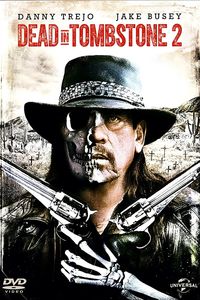
    (In French, On TV, July 2020) If you’ve seen Dead in Tombstone, you will be wholly unsurprised by Dead Again in Tombstone. Once again, Danny Trejo stars as a not-quite-dead outlaw asked to protect the earth from evil forces in a supernatural western. Another person back for a second ride is noted direct-to-video auteur Roel Reiné, who’s able to maximize the budget he’s given into something looking far better-looking than its class. Essentially, we have pretty much the first film — except without the effect of surprise. It’s still a weird western with supernatural elements and a slightly overstuffed plot. Trejo is still up to his usual good standards, even if he can’t handle the action chops required by the role. There are still some visual flourishes, as Reiné plays with the iconography of westerns. But in delivering more of the same, Dead Again in Tombstone can’t escape a growing dullness of effect.

  • Dead in Tombstone (2013)

    Dead in Tombstone (2013)

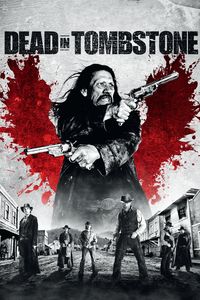
    (In French, On TV, May 2020) No one will ever mistake Dead in Tombstone for what it’s not. After all, it’s a low-budget direct-to-Video supernatural western featuring Danny Trejo and directed by Roel Reiné—all hallmarks of cheap unambitious genre movies made for an evening’s entertainment more than lasting artistic statements. This being said, Dead in Tombstone is better than average within the confines of its chosen lane. Trejo doesn’t just do a fly-by cameo: he’s got the lead role, plenty of dialogue and some action scenes to anchor. Meanwhile, director Reiné is known for maximizing even low budgets, and so the film is packed with slick images and strong visuals. Unfortunately, the film’s choppy editing frequently undermines the visual aspect of the film—for shame. What’s also a shame: that the plotting doesn’t quite equal the strong premise of the protagonist being resurrected for the explicit purpose of taking revenge on those who killed him. I’m also not that fond of Mickey Rourke, even if he’s cast as Lucifer here. Those little slights do damage what the film had to play with. What remains in Dead in Tombstone is not a great movie, but it more than fulfills the modest conditions for its greenlight: it’s reasonably fun, better directed than usual in its class and is a great showcase for Trejo. There can be worse ways to spend an evening.

  • The Scorpion King 3: Battle for Redemption (2012)

    The Scorpion King 3: Battle for Redemption (2012)

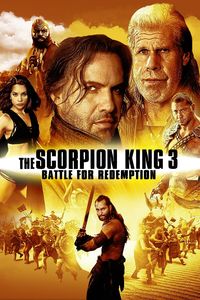
    (In French, On TV, April 2020) Don’t look at me like that—In choosing to watch The Scorpion King 3, I’m here to see how maximum-value director Roel Reiné can do in a fantasy adventure, not out of any specific affection for the Scorpion King series. Dwayne Johnson isn’t in this one, but Dave Bautista, Temuera Morrison, Billy Zane and Ron Perlman all are! Still, this isn’t a particularly good film—being straight-to-video label Universal 1440’s first production, and a third in an increasingly meaningless series, how could it be otherwise? The plot is soporific, the budget is clearly limited and the actors are clearly challenged by even substandard material. This being said… it’s not all bad. Reiné’s near-superhuman powers at stretching his budgets eventually make the film decent enough to watch, even when it’s not being particularly ambitious. The foreign shooting locations in Thailand add some interest, and there’s a good representation by Asian action heroines. For a straight-to-video third instalment in a series, The Scorpion King 3 could have been much worse.

  • Hard Target 2 (2016)

    Hard Target 2 (2016)

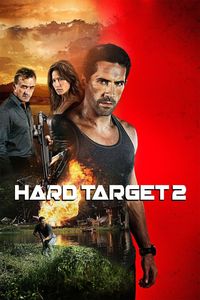
    (In French, On TV, April 2020) It had been a while since I had taken a look at a Roel Reiné film. Reiné, for those unaware, is a reliably competent vulgarian author specializing in B-grade action movies. He does a lot with little, usually shoots in poorer countries with lower production costs and in doing so gets amazing visuals and quality action scenes. This generally holds true for Hard Target 2 as well. A sequel-in-name only to the first 1990s film, this one takes place in Myanmar, with our protagonist being hunted for sport. Decent screen fighter Scott Adkins stars and Rhona Mitra plays a bad girl, but the star here remains Reiné as he uses audacious camera moves, aerial photography and all sorts of other stylistic tricks to give a very high level of polish to this low-budget film and, incidentally, pay homage to John Woo, who directed the first film. Of note: the movie’s introduction sequence/credit sequence is moved to the end of the film—weird. Despite Reine’s efforts at making things interesting on a low budget, Hard Target 2 is not a great movie… but it’s a well-executed one in its genre. Approach it as its own thing rather than a sequel and it will feel more interesting.

  • The Man with the Iron Fists 2 (2015)

    The Man with the Iron Fists 2 (2015)

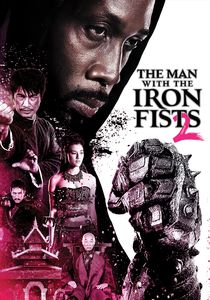
    (On TV, June 2019) I ended up watching The Man with the Iron Fists 2 because I had enjoyed the first one, although my expectations were kept firmly in check by it being a direct-to-video release without most of the first film’s biggest stars (sorry, no Lucy Liu or Russel Crowe this time around). But I was pleasantly surprised to find out that the film was directed by Roel Reiné, one of the most dependable direct-to-video filmmakers out there. Reiné is a visually ambitious action director with a gift for wringing the most value out of his limited budgets, and so The Man with the Iron Fists 2 does look like a far more expensive production—foreign location shooting has its advantages, and Reiné has directed so many action movies by now that he can routinely stage decent action sequences. But filmmaking virtuosity can’t fully patch a herky-jerky script that doesn’t quite manage to bring its pieces together in a coherent fashion. The premise of the film holds promise, and even throws in a half-decent twist leading up to the final battle, but the scene-to-scene narrative is a jumbled mess that takes far too long to become interesting. The low budget also prevents the film from going all-out on its supernatural ambitions, limiting its appeal. The visual polish of the film does help it move along, but it’s a harder journey than strictly necessary. Freed from the shackles of directing but still writing much of the film, RZA is back as the titular wandering knight, er, blacksmith helping foreigners figure their stuff out—a half-inversion of the usual white saviour narrative. Carl Ng is suitably good as a villain, with Cary-Hiroyuki Tagawa turning it a pretty good performance. Still, there isn’t much in The Man with the Iron Fists 2 for anyone who’s not already a martial arts movie fan.

  • Seal Team Eight: Behind Enemy Lines (2014)

    Seal Team Eight: Behind Enemy Lines (2014)

    (On Cable TV, August 2015)  I normally wouldn’t stop to watch a straight-to-video third sequel in a series where most people don’t even know about the second and third film, but it turns out that this fourth film in the not-really-connected Behind Enemy Lines series is directed by Roel Reiné, a surprisingly effective low-budget director who, somehow, always manage to get a few impressive action sequences in otherwise unremarkable films.  So it is that I got my interest’s worth in Seal Team Eight: Behind Enemy Lines, which heads to Africa for a rather predictable story about a SEAL team investigating the acquisition of nuclear material by a local warlord.  The story is a big ball of nonsense (with an mysterious antagonist whose identity can be deducted from the very first briefing scene), and the actors aren’t particularly skilled, but the action sequences and the atmosphere of the film aren’t bad at all – some of the stunts look genuinely dangerous, Reiné gets the most out of his location shooting and he has a knack for capturing striking images. (Alas, one of those is of a human being blown into paste.)  The subpar screenplay hurts the film most toward the end, with a fairly mean-spirited turn into misogyny near its unsurprising conclusion.  Still, as long as you know what you’re looking for (action sequences looking great despite a small budget, that is), then Seal Team Eight: Behind Enemy Lines has something for you.

  • Death Race: Inferno (2013)

    Death Race: Inferno (2013)

    (On Cable TV, May 2014) The narrative pedigree of this film is prodigiously confusing (it’s the sequel to a prequel to a remake), but the results are surprisingly entertaining, especially considering the production values of this direct-to-video effort. Helmed by the cost-effective and visually audacious Roel Reiné, Death Race 3: Inferno squeezes every dollar out of its limited budget for maximum impact. This is a B-grade action film by every measure, so it’s almost surprising to see the cleverness of the script (which manages to find something interesting to say in-between the space left by a prequel and a sequel), the unexpected charm of the actors, the impressive production values and the engaging pacing of the whole. Death Race 3 makes maximum use of its South African shooting location by featuring fantastic local visuals, and relying on captivating local talent for pivotal roles (most notably Hlubi Mboya as game-master “Satana” or Roxane Hayward as a mousy assistant). There are plenty of contrivances and outrageous use of exploitation devices –the nadir being the sadistic “navigator wars” segment. But the backbone of those films, the stunts and visuals, are as accomplished as one could expect from this kind of production, and Death Race 3: Inferno becomes decent entertainment no matter its budget class. You’ll know from the Death Race title whether you’re likely to enjoy it or not.

  • 12 Rounds 2: Reloaded (2013)

    12 Rounds 2: Reloaded (2013)

    (On Cable TV, May 2014) Movie thrillers are built on contrivances almost as a matter of fact. But then there are thrillers like the 12 Rounds series, explicitly depending upon a tower of assumptions that only make sense at the movies. Can you believe in the existence of an ultra-competent vengeful psychopath who takes a year to set up an intricate series of challenges for our capable hero? Suuure. Much like the New Orleans-set 12 Rounds, this Direct-to-Video sequel (filmed in Vancouver but set in AnyBigCity, USA) is a pure genre exercise in implausible plotting, featuring a wrestler set up for an acting career and no real links with the first movie save for the similar premise. Once again, a protagonist is manipulated like a puppet through various games, all leading up to a twisted revenge scenario against imagined wrongs. There isn’t much more to the film, and director Roel Reiné, lately surprisingly good on limited budgets, here seems less interesting than usual in presenting a far more ordinary film than his previous few. Ex-wrestler Randy Orton isn’t too bad as the square-jawed hero –nearly everyone else in the cast quickly gets forgotten in average performances. The contrivances get annoying, but to its credit this sequel does something better than the original, and that’s to give the hero a sidekick so that he can interact with something more than a cell phone and booby-traps. Nevertheless, 12 Rounds 2 doesn’t take it to the next level. It remains a film that’s not too bad by the low standards of most DTV releases, but still quickly fades in memory once the end credit roll.

  • Death Race 2 (2010)

    Death Race 2 (2010)

    (On DVD, December 2011) I won’t try to hide my disdain for the 2008 film that led to this follow-up, especially given how it establishes my low standards for approaching this film.  Can you expect anything good from a Direct-to-Video prequel to a wholly useless remake/prequel?  No way.  And yet, especially by the rising standards of Direct-to-Video action movie, Death Race 2 actually isn’t too bad.  Director Roel Reiné knows how to work with a small $7-million budget, and the film feels just as big as the big-budget 2008 film.  Luke Goss makes for a fine stand-in to Jason Statham as an action hero, Lauren Cohan seems to be auditioning for a chunk of Milla Jovovich’s career (similitudes may not be accidental given Paul W.S. Anderson’s presence as a writer/producer), and there are surprisingly big and enjoyable roles for both Danny Trejo and Ving Rhames.  The concept of the film has been stolen from the 2008 Death Race, but the dialogue has occasional moments, the story leads straight into the 2008 film, and the direction is quite a bit better than what we could expect with moving cameras, ambitious pyrotechnic stunts and audacious shots –some of them in super-slow-motion.  The car chase following the bank robbery looks as if its cost quite a bit, and the film seems to have been able to re-use a bunch of material from the 2008 film.  It’s certainly more colourful than its predecessor, taking away one of the main criticism I had of the earlier film.  No, there certainly isn’t any more social consciousness here compared to the 1975 film.  But it is exactly what it claims to be: a competently-made action film released straight to video.  I even enjoyed chunks of it.  The DVD extras are far more successful in focusing on the making of the film than trying to glorify it as an entry in an ongoing “franchise”; director Reiné is more interesting in discussing aspects of his approach in low-budget film-making.

  • The Marine 2 (2009)

    The Marine 2 (2009)

    (On DVD, June 2011) The original The Marine wasn’t much more than a forgettable action B movie, and that may explain why this sequel feels pretty good, even though it went Direct to Video.  Taking the basic plot of the first film (Marine rescues girlfriend from clutches of bad guys, gun-fights, explosions, etc.) but with new characters, structure and setting, The Marine 2 daringly moves the action to a resort in Thailand.  After the protagonist’s wife is taken hostage, our protagonist spends the rest of the picture killing bad guys; it pretty much ends like you’d expect.  There normally wouldn’t be much more to say about a low-budget action film, but this one actually seems to have good production values and an imaginative director who knows what he’s doing: The first few minutes in Thailand offer some really spectacular scenery, while the action sequences are better-directed than most action films there says.  Director Roel Reiné is fond of using lengthy shots, and as a result one hand-to-hand fight is far more interesting to watch than you’d expect.  Most of his action sequences show a good sense of geography, and it looks as if he was able to push the limits of his budget.  This doesn’t make The Marine 2 a good film: the dialogue is average, all-American-boy-hero-killer Ted DiBiase Jr. is bland as the lead, and there’s a mid-movie lull in which the hero spends 40 minutes going back to the resort to kill more terrorists without much by way of plot progression.  Still, it does make of The Marine 2 one of the increasingly common DTV semi-sequels that have at least some entertainment value, even in isolated bits and pieces.  At a time where theaters and movie-rental chains are getting marginalized as movie distribution channels, non-awful DTV films are a significant development.