Ron Howard

  • The Da Vinci Code (2006)

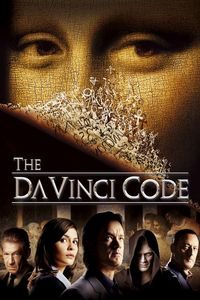
    The Da Vinci Code (2006)

    (In theaters, May 2006) This film is as critic-proof as they come, what with its built-in audience, puffed-up controversy and all-star cast and crew. No matter what anyone say, it’ll make zillions and find a modest place of some sort in film history. Stripped of the hype, though, it’s no surprise to find that The Da Vinci Code is merely an average thriller, competently made but hardly innovative. In many ways, it’s fitting that two of the blandest (but competent) Hollywood stars of the moment, director Ron Howard and star Tom Hanks, would help in delivering the epitome of mass-market cinema entertainment. Perfectly blending French and American cinema, The Da Vinci Code delivers endless conversations rudely interrupted by car chases and modest gunfights. Of the actors, only Ian McKellen is any fun at all as a mischievous historian with a flamboyant streak: Tom Hanks, Paul Bettany, Jean Reno and Audrey Tautou are wasted in roles that either don’t suit them or are cut short without much conclusion. But the film’s most distinctive trait is how it alternates between talky exposition and very average thriller episodes. To be fair, the book was just as bad, except that the roughshod charm of Dan Brown’s clunky-but-earnest prose had a forward rhythm of its own. I expect a huge number of academic papers to be written on the adaptation of this story from one medium to another, especially when you consider that the book seems faster-paced that the film. While the critical knives had been drawn in anticipation of this film, the end result in no way deserves a critical savaging: in most aspects, it’s perfectly serviceable, with a tiny thrill of irreverence considering the subject matter. I’ve seen both better and worse this week. In the end, most people will find this film to be a mirror of their own expectations: Fans of the book will be pleased, curious film-goers will be satisfied and literary critics will find another reason to call Dan Brown the Anti-Christ. Now that’s entertainment for everyone!

  • Ransom (1996)

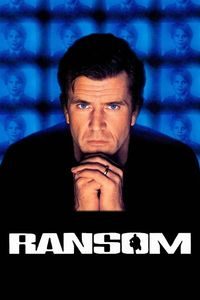
    Ransom (1996)

    (On TV, February 2000) It takes some effort to put together a good thriller, but no one ever accused Ron Howard of not being a professional filmmaker. Here, he draws upon Mel Gibson, Renee Russo and Gary Sinise to set up a sombre kidnapping affair that quickly goes awry. Solid leading-man Gibson is perfect for the role, and Sinise makes the most of his name’s resemblance with sinister as the bad guy. Even though the film feels slightly too long at more than two hours, it moves quickly and the viewer is never bored. The conventional finale disappoints somewhat, as if the scriptwriters didn’t know what to do with their last-minute twists. But Ransom mostly delivers what it sets out to do; a good, fun, crunchy thriller.

    (Second Viewing, On Cable TV, May 2022) So, TCM just had a double-bill with both the 1956 version of Ransom! and the exclamation-less 1996 Ransom remake – I just couldn’t let the occasion go by to compare and contrast.  I had dim but favourable memories of the 1996 film, so I was curious to find out if my disappointment in the 1956 film was a nostalgic artefact or a real appreciation.  Well, the verdict is in and the remake is the best film for two or three reasons.  The first, obviously, is that director Ron Howard had many more tools in his mid-1990s toolbox – decades’ worth of thriller-film formula elements, better equipment, use of colour, slicker sets (including many exteriors) and arguably better actors in Mel Gibson and Gary Sinise.  Which brings us to a second, crucial improvement: showing hero (Gibson) and antagonist (Sinise) trying to outwit each other throughout the film.  Finally, let’s acknowledge that there’s simply more plot to this remake: While the 1956 film essentially concluded on the central idea of both films (offering the ransom as bounty-hunting prize), the remake adds at least an act’s worth of increasingly frantic action as the consequences of this turn play out.  The result being executed with the big budget that standalone thrillers could still command back in the mid-1990s, Ransom still feels like a terrific, clever thriller.  It’s got some style, great anchor performances and a twisty script that throws in one curveball after another, often as the two lead characters change their plans in reaction to one another.  (That tit-for-tat plot leadership may feel like an elementary thriller asset, but you’d be surprised at the number of suspense films where the protagonist is constantly on the defensive from the villain’s plans.)  I had no trouble liking Ransom all over again a few decades after first watching it, and even –especially- when measured against its inspiration.  It makes the 1956 film look like a prototype, which is about the best thing one can say about a remake.