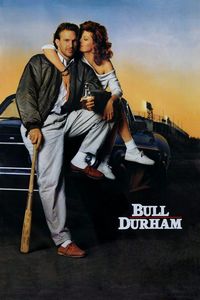
Bull Durham (1988)
(On Cable TV, May 2020) While baseball is integral to Bull Durham, this is not a film in which the entire plot depends on a make-or-break play coming at the very end of the film. It’s more of a baseball-adjacent romantic comedy where the sport plays a load-bearing role, but the real action is elsewhere—in this case, a romantic triangle between a young hopeful (Tim Robbins), a grizzled veteran (Kevin Costner) and a middle-aged woman (Susan Sarandon) who picks one hopeful per year for romance and education. Because of this unusual out-of-focus role for the sport in this romantic comedy, there are a lot of things to like about Bull Durham—the focus on a less-than-stellar league and team, the interesting three-way relationship between the three leads, one of Costner’s best performances, and some telling small-town details. (And let’s not forget that Sarandon is scorching hot here.) Writer-director Ron Shelton drew upon his own experience as a minor-league baseball player in putting together the film and that familiarity shows in many subtle details that make the film even richer. But, more than anything else, Bull Durham is a romantic comedy that both plays with the form and upholds it in the end. It’s not hard to like, even if you’re not a baseball fan.
