Ronald Reagan

  • The Killers (1964)

    The Killers (1964)

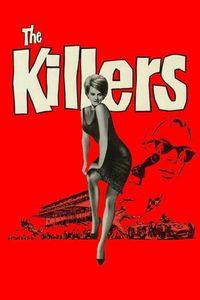
    (On Cable TV, July 2021) As far as remakes of classic movies go, this 1964 take on The Killers has the right idea — take an intriguing premise, develop it in a different direction and throw in a decent amount of talent behind and in front of the camera. The original is good in a classic noir mould, but this remake aptly adapts the story to the sixties: colour cinematography, far more permissive attitudes toward sex and violence, and a lingering amorality that is best exemplified in how the killers become the protagonists moving the story — resulting in what some call the first film of the neo-noir era. Directed by Don Siegel, a veteran filmmaker who would go on to become one of Clint Eastwood’s favourite directors, The Killers is capably handled throughout, especially during its rather overlong pit-stop in the world of professional racing. But it’s the casting that still gets some attention — Lee Marvin is quite impressive as the lead killer, but it’s Ronald Reagan who entertains the most in his last and only villainous role, slapping his moll and gleefully saying, “I approve of larceny” — unlike earlier performances, he here looks enough like his 1980s image that it’s even funnier. It all wraps up into an overlong but entertaining thriller with some great 1960s period detail. As far as remakes go, I approve of this take on The Killers: different enough to be entertaining even when you know where it’s going.
  • Storm Warning (1951)

    Storm Warning (1951)

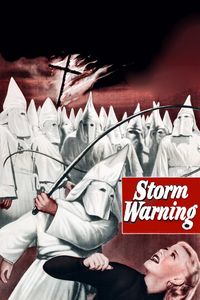
    (On Cable TV, March 2021) The more I dig into Hollywood films (especially the not-so-well-known ones), the more I realize that racism and anti-racism are as American as anything else you’d care to mention. From slavery to the Civil War (fought over preserving racism!) to the Klu Klux Klan (both the original and the revival) to modern white supremacist movements, the United States has often featured both systemic racism and organized reaction to it. A further contribution to this theory is found in Storm Warning, a suspense film in which the KKK (revival edition) are squarely designated as the villains in a small-town murder thriller. Surprisingly enough for such a hard-edged topic, the film stars no less than Ginger Rogers, Doris Day and Ronald Reagan in very serious roles — with Reagan stepping into the film midway through as a crusading district attorney: not a bad film to have on one’s filmography back when Republicans were not running platforms of institutionalized racism. Things being said, there’s a distinction to be made between a noble subject and a less-than-successful execution, and Storm Warning is often better in summary than in execution: the plot is a bit conventional, but worst of all is that the racism of the KKK is not highlighted very strongly. The film seems to presume that the audience knows all about the KKK and doesn’t really touch that topic, leading to a curiously all-Caucasian film about an incredibly racist organization that barely features what they’re best known for. At times, regrettably, you could have replaced the KKK with any other backwoods organized crime outfit and much of the film wouldn’t have played very differently. What a wasted opportunity. But then again, it’s useful to remind ourselves that the film dates from 1951, a time when even the major studios were cutting black-performer numbers from their musicals because Southern USA theatres refused to play such movies. 1951 was a time before desegregation, before the civil rights era, before Loving vs. Virginia, before, well, the latest iteration of racism in American discourse. It’s an ongoing fight, and progress is being made—but even in its watered-down version, Storm Warning is a reminder that the fight should have been over a long time ago—and that many people are now as evil as the KKK was.

  • She’s Working Her Way Through College (1952)

    She’s Working Her Way Through College (1952)

    (On Cable TV, November 2020) The 1950s were a little bit racier than most people are willing to give it credit for, and you could point at movies such as She’s Working Her Way Through College as an example. In many ways, it’s a bog-standard movie musical representative of the times, as it features a small-town college putting together a show and movie viewers seeing the bits and pieces of the musical through the rehearsal process. But it also features Virginia Mayo as a burlesque star going straight as a college student with literary ambitions. For post-1980 viewers, much of the film’s notoriety would come from seeing Ronald Reagan play an academic (!) who, in a drunken stupor (!!), ineffectually tries to punch another man he suspects of hobnobbing with his wife. Later on, we also have Reagan delivering a speech of tolerance in the face of a burlesque star in their midst, which will strike some as mildly tolerant and others as a bit hypocritical. Anyway—Mayo is great, the tone is amiable, the comedy has its moments and later presidential history has made the film a bit weightier than it used to be. Worth a look, frankly, if only for a combination of Mayo’s achievements and Reagan’s somewhat memorable role.

  • Dark Victory (1939)

    Dark Victory (1939)

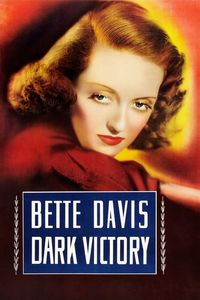
    (On Cable TV, August 2020) The difference between drama and melodrama is often whether it works or not, and Dark Victory does play with highly combustible material, as it focuses on a hedonistic socialite who discovers she has roughly a year left to live. Trying to rearrange her affairs in order to exit with dignity, she discovers love, respect and acceptance. This could have gone wrong in a dozen embarrassing ways, but the big surprise here is how well it manipulates audiences and carries them willingly to a weeper of a conclusion. Dark Victory ranks high on the list of Bette Davis’s performances, and it’s not hard to see why: a lesser actress could have made the material ridiculous, but here she carries the entire film on her shoulders. It’s not just an acting performance: Davis also (says the film’s production history) pushed hard for such a tearjerker to be made in the studio system, believing that she could do justice to the material. Indeed she could, although later generations of viewers could also spot Humphrey Bogart (as a likable stable master, no less) and Ronald Reagan in small roles. Director Edmund Goulding gives Davis all the freedom she needs to nail the character, and the result speaks for itself. Yes, Dark Victory is manipulating your emotions and yes, you’ll see it coming, but it’s not melodrama if it works – it’s crowd-pleasing art.

  • This is the Army (1943)

    This is the Army (1943)

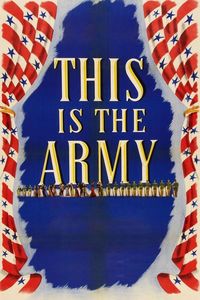
    (On Cable TV, May 2020) It’s sometimes amazing to measure what has endured from a specific era versus what was popular at the time. World War II-era movies are a useful case in point, as most of the production was geared toward outright propaganda meant to motivate the home front. This is the Army is an odd collection of musical numbers loosely connected by a threadbare story, but it did top the 1943 American box office… yet is only remembered these days by film buffs. If you research the film a bit, you’ll realize that it’s largely a filmed adaptation of a WW1-era travelling musical show, updated to WW2 standards and cinema choreography. It becomes a collection of inspirational, patriotic, propagandist musical numbers and comic sketches loosely connected by bits and pieces of wartime melodrama. Clearly belonging to the WW2 propagandist school, it’s clearly meant to whip the audiences into fighting spirit. A young Ronald Reagan shows up, the credits specifically include military ranks, and the film does look rather good in colour. It has been (mostly) forgotten for a reason, though: The musical numbers are pomp and propaganda, not particularly refined or timeless. (It’s very much in one tone—stage-bound choruses of men singing about the merits of their service branch in a theatrical setting. Under those constraints, it does have some good staging.) Other aspects reflect the times of its production: there are explicit impressions of people now forgotten, there’s a minstrel blackface number (oh boy), and quite a bit more crossdressing than you’d expect—despite understanding the limitations of all-male troupes at the time, you can file that one under “things that haven’t aged well.” This being said, what works against the film now may just be the things that increase its interest as a period piece: While This is the Army may be only mildly interesting by itself, it (like many WW2 propaganda movies) remains a fascinating look at another time.

  • Kings Row (1942)

    Kings Row (1942)

    (On Cable TV, February 2019) If anyone wants to illustrate the ways in which the Hays Code stunted the emotional development of American movies for thirty years, a comparative study of racy novels adapted to the big screen would make for a nice case study. In the tradition of the later Peyton Place, Kings Row takes an almost sadistic glee in revealing the sordid underbelly of small American towns. This depiction of a turn-of-the-century Midwestern town starts off slowly as it introduces its young main characters, then turns to the good stuff as they age: Going deeper and deeper in twisted melodrama, we end up with murder, suicide, insanity, fraud, destitution, malicious amputation, class warfare, and so on. The original novel was far wilder (what with incest, nymphomania, euthanasia and homosexuality), but the film does stand out by Hays Code standards even in its adulterated adaptation. (It had a rough view of psychiatry, but that’s to be expected from Hollywood films of the time.) Much of the enduring draw of Kings Row is found elsewhere, though—it’s usually cited as Ronald Reagan’s best performance, and one of the last he did before his military service. Reagan’s career was never quite the same after this interruption due to WW2, and Kings Row is enough to make anyone wonder if he would have gone on to a more successful career as an actor had he not left. He does have a strong role here, and carries much of it on sheer likability. Kings Row will work better if you’re in the mood for some rough melodrama—from today’s perspective, it’s far less objectionable as it once was.