Rosalind Russel

  • They Met in Bombay (1941)

    They Met in Bombay (1941)

    (On Cable TV, June 2021) There’s a wild genre shift midway through They Met in Bombay, as a jewel-theft caper turns into a military adventure in the early days of WW2’s Asian front. Clark Gable and Rosalind Russel initially play two thieves working independently to steal a well-known diamond from a rich heiress — him pretending to be a detective, her playing an aristocrat. The theft of the diamond only takes a few minutes, after which the double-crosses, escapes and even more dangerous situations start. Both Gable and Russell are very likable—but then again, the film doesn’t have merely a caper in mind. Soon enough, the war catches up to them and they’re forced into even more dangerous deceptions just to stay alive. Peter Lorre inexplicably shows up in overdone makeup as a Chinese ship captain, and then the film is off to a roaring war adventure with accidental heroism being a major driving force. It’s noteworthy that since the United States had not entered the war at the time of the film’s conception, production and release, Gable plays a Canadian who assumes a British officer’s identity, joining up with the Winnipeg Grenadiers (a real-life unit that was destroyed while fighting later in 1941) along the way. The zigs and zags of the plot are surprising if you’re going cold into the film, and they do transform the film into something quite different from what it had been. Considering the highly moralistic nature of the film’s conclusion (in which duty to country in the face of wartime adversity is far more important than the illicit acquisition of material baubles), you can interpret They Met in Bombay as a specific example of a larger-scale transformation of Hollywood films around 1941 or 1942, away from the Depression-escapism capers of the 1930s and into the wartime propaganda of the next few years.

  • Night Must Fall (1937)

    Night Must Fall (1937)

    (On Cable TV, April 2021) You wouldn’t necessarily expect a 1937 Production Code film to play so gleefully with the idea of a sociopathic serial killer carrying a previous victim’s head in a hat box, nor to see then-romantic idol Robert Montgomery playing the killer… but here we are with Night Must Fall. Reportedly an experiment by MGM with the larger goal of keeping Montgomery happily under contract, Night Must Fall has aged better than its initial commercial performance suggested — current audiences are liable, despite the creakiness of the static execution, to find more familiar material in the handsome-lead-turned-psychopath twist. Rosalind Russel shows up as the one suspecting that something is afoot, but she’d get better roles elsewhere. Elsewhere in the cast, Dame May Whitty is a bit showier as a cranky old woman. Night Must Fall feels a bit too long and stiff for what it’s trying to do, but the substance remains more interesting than many other crime thriller movies of the time. Those efforts led to two Oscar acting nominations: one for Whitty, but also one for Montgomery’s dark turn as the charmer turned killer, inaugurating one timeless way for good-looking actors to polish their image and be taken seriously.

  • The Citadel (1938)

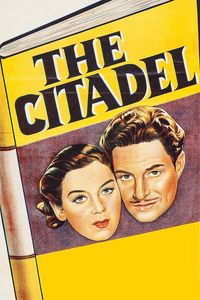
    The Citadel (1938)

    (On Cable TV, March 2020) King Vidor was one of the major directors of the silent age but while his star dimmed significantly when the movies started talking, he still managed to create a few great sound movies. One of them is The Citadel, an adaptation of a then-red-hot novel railing against the medical establishment (plus ça change…). Here, a very likable Robert Donat takes on the role of a medical student who enters the workforce and finds out that the profession isn’t quite as idealistically satisfying as what he’d expected. Part drama, part coming-of-age, part medical thriller, part romance, part courtroom theatrics, The Citadel is a rather enjoyable blend of different subgenres in its story of a heroic doctor in a small mining town who diagnoses tuberculosis at a very inconvenient time for the mine. The plot clearly doesn’t stop there, but that’s the fun of it—Vidor’s surprising instincts leading him naturally to a novel-length story with twists, turns and significant changes for its protagonist. It’s hardly perfect (notably too long in its second half before reality comes back) but Rosalind Russel is there and Vidor demonstrates his touch for character-based drama. For classic cinephiles, The Citadel does fit right in with the other medical dramas of the 1930s.