Roy Del Ruth

  • It Happened on Fifth Avenue (1947)

    It Happened on Fifth Avenue (1947)

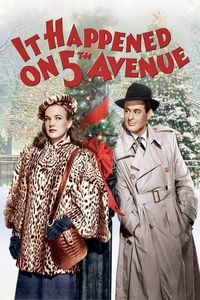
    (On Cable TV, December 2020) Generally speaking, the best Christmas movies are both about the typical values of Christmas (family, generosity, kindness) while having other things on the go than simply waiting for December 25. Such is the case with It Happened on Fifth Avenue, a film that doesn’t necessarily revel in the pageantry of the season, but does its best to showcase Christmas values. The story has, over the years, acquired a patina of period-specific characteristics, as veterans returned from WW2 can’t find places to stay due to a housing crisis, and see themselves left on the margins of society even as able-bodied, skilled people. A solution offers itself to the protagonist of our story, as he’s told about a rich man’s mansion left unoccupied while the owner winters over in another state. Two homeless men living in luxury seems like an ideal arrangement until the daughter of the owner shows up and passes herself off as another vagabond. Then the father comes back and also pretends to be a homeless person in his own house… Pretty soon, the film is awash in romance, hidden identities, crucial choices, a makeshift micro-society in an opulent house, and Holiday cheer as Christmas draws closer and closer. Director Roy Del Ruth does a good job keeping everything humming along, which is supported by Don DeFore as the protagonist, and the very cute Gale Storm as the disguised owner’s daughter. While It Happened on Fifth Avenue is not specifically geared toward being an outright comedy and thus suffers from a few lulls, the entire film is quite charming and Christmas-adjacent enough to be worth a look even if you’re burnt out by Christmas Eve. It’s a crowd-pleaser in the most classic sense, and hits its marks no matter when you see it during the year.
  • Broadway Melody of 1936 (1935)

    Broadway Melody of 1936 (1935)

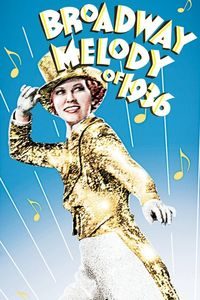
    (On Cable TV, June 2018) While occasionally billed as a sequel to the Oscar-winning The Broadway Melody, this 1936 update is almost entirely unconnected (save for the title song) to the original. On the other hand, those lucky enough to experience both movies as a double-feature evening will be shocked to notice the rapid progress of the Hollywood musical between 1929 and 1935. After a perfunctory opening that suggests a better technical control over sound and dialogue (and clearly sets its mid-thirties Manhattan/Broadway setting), the film hits its early peak with “I’ve Got a Feelin’ You’re Foolin’”, a full musical number complete with furniture popping in and out of the scenery, and even rudimentary (but effective!) split-screen special effects. Clearly, Hollywood had a few years to work out the kinks of musicals, and the result feels far more natural than its predecessor. Adding a plot that largely revolves around journalism is another way to keep things interesting, although by the time the story diverges in an elaborate attempt to promote a non-existing singer, only the repeated punchline of a character slugging another in the face is good to keep things interesting. Director Roy Del Ruth’s Broadway Melody of 1936 is relatively obscure these days, and as such represents your average Hollywood musical of the period. It’s far more interesting as an example of the form than as a particularly interesting film in its own right. Still, I did enjoy it: it may not hold a candle to the Astaire/Rogers musicals of the time, but it’s fun enough to be watched without fuss.

    (On Cable TV, January 2020) Having the occasion to build myself a triple-bill of the last three Broadway Melody movie, I took the occasion to refresh myself regarding the 1936 installment even if all four are narratively unconnected. Much of what I wrote upon my first viewing remains the same — the “I’ve Got a Feelin’ You’re Foolin’” number is good, and the musical is a representation of the state of the art at the time. What I liked less this time around were some of the narrative connective tissue — there’s a running subplot about a snoring expert that’s, well, a snooze (the repeated punching stays funny, though.) What I’m in a better position to appreciate this time around is Eleanor Powell’s work, especially in the final “Broadway Melody” number (“Gotta dance!”) where she gets to strut her long-legged tap-dancing. Broadway Melody of 1936 also serves, along with the other films in the series, to illustrate MGM’s rise as the premier Musical-making studio.