Rudolph Valentino

  • The Sheik (1921)

    (Youtube Streaming, June 2022) I started watching The Sheik fully intending to have something to say about its lead Rudolph Valentino (for whom it was one of the highlights of a surprisingly short career), but by the time the film was over, I had more to say about another film released a hundred years later – the critically panned but immensely popular erotic thriller 365 Days. If you haven’t seen 365 Days, don’t worry, because what I have to say also applies to 50 Shades of Grey, Twilight or many, many other movies released between 1921 and 2021, and the likely history of film going forward. None of the twenty-first century films I have mentioned have been favourably reviewed, and there are some perfectly valid reasons for that. But there’s another reason that is far less respectable, and it’s this idea that movie critics are ill-equipped to deal with films having to do with female desire, especially if said desires don’t reflect a progressive outlook. From The Sheik to 365 Days, a perennial female fantasy has to do with power and reluctance. A story exploring what happens to a woman when she’s reluctantly held by a powerful man intent on conquering her is not respectable… but apparently it worked a hundred years ago and still works today – audiences swooned at the sight of Valentino as a sheik with a crush on a headstrong woman, and many swooned (sometimes secretly) about more modern depictions of the same archetype. (And if you think The Sheik invented it, I have news for you – it’s based on a bestselling romance novel published a few years earlier… exactly like Twilight, 50 Shades of Gray and 365 Days.)  There are many ways in which the film is not so impressive today – blunt-force plotting, refusal to allow the protagonist his ethnicity (as he is revealed to be a British aristocrat raised in the desert, clearing the way for a happy ending) and shaky technical production values. On the other hand, you can see what charmed audiences about Valentino, and there are some impressive desert battle sequences in the mix. Still, what’s perhaps most notable about The Sheik is another reminder that nothing is really new, and while the setting may change, the same human quirks are what drive stories. Women have long been intrigued by the idea of being seduced by powerful men and will continue to do so well into the next century and beyond. (Important note — then, now and forever: Non-rich, non-powerful, non-attractive men should not apply, because what’s hot in a lavish fantasy setting becomes creepy horror when it’s in a mundane suburban basement.)
  • Beyond the Rocks (1922)

    Beyond the Rocks (1922)

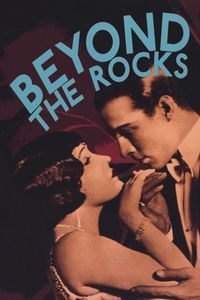
    (On Cable TV, March 2021) As much as I try to be sympathetic toward silent drama movies, it doesn’t always work out — watching them is a reminder that the art of film advanced considerably with the advent of sound, and perhaps nowhere as much in the ability to present melodrama as something more subtle. Perhaps the best reason to watch Beyond the Rocks is because you’re curious about the legendary romantic icon Rudolph Valentino, or silent film star Gloria Swason — the film is a melodramatic romance featuring both of them, and it’s an illustration of what filmmakers considered irresistible at the time. Modern viewers will have trouble seeing past Valentino’s slicked-back hair or Swason’s bob — but that’s part of the point. What’s less easy to forgive is a script that delights in having the male lead rescue the female lead from a series of dumb dangerous outdoor sports accidents, and a final act that draws out something very obvious. On the flip side, the film clocks in at a refreshing 80 minutes, whereas silent movies often ran much higher in-between interminable title cards and slack editing. I still don’t quite like the result, but I feel better knowing that the film is no longer considered a lost film, as it was between the 1940s and its rediscovery in 2003. As such, the occasional moments when the image is completely garbled are a reminder of how that one singly copy is how close we were of losing Beyond the Rocks entirely.

  • Four Horsemen of the Apocalypse (1921)

    Four Horsemen of the Apocalypse (1921)

    (On Cable TV, February 2020) I had three reasons to watch the 1921 version of Four Horsemen of the Apocalypse and none of them can be considered good ones. First, I wanted to measure this film against its far more popular 1962 remake; second, it was as good a reason as any to experience a Rudolph Valentino role away from his popular image as a seducer; and third, it was right there at the top of my list of the most popular films of 1921 that I hadn’t yet seen. Perhaps the most interesting point of comparison between this story of a family divided by war and its remake is that this one is about World War I; the remake would update it to include Nazis. As a nearly hundred-year-old film, Four Horsemen of the Apocalypse is unsurprisingly rough, and not just around the edges: while it was among the best that Hollywood could offer at the time, it’s not always an easy watch. As usual for films of the time, the camera never moves. As is specific to this film, the copious dialogue (adapted from a novel) regularly interrupts the flow of the film through title cards. But it’s still interesting: the production clearly had money to spend in large-scale sequences, and the resolutely anti-war message of the film remains effective. Meanwhile, Rudolph Valentino is both the Latin lover of legends and not too bad in a dramatic role. As a dive into 1921 cinema, this is probably as good as any film not from Chaplin, Keaton or Lloyd ever gets: it’s a serious drama that toys with ideas that would be once again very relevant less than twenty years later, and it does show the beginning of cinema as a feature-length narrative form. Four Horsemen of the Apocalypse didn’t go beyond my expectations, but it wasn’t a disappointment either. (I still like the flawed remake better, though.)