Ruth Roman

  • Down Three Dark Streets (1954)

    (On Cable TV, June 2022) Late-noir-period police procedural Down Three Dark Streets is most notable for being an amalgam of three subplots distantly connected by a framing device – a forerunner, in a way, to some modern police TV shows. The filiation isn’t all that accidental, as the film was adapted from a novel titled Case File: FBI, with the intention of showcasing the work of the Federal Bureau of Investigation in spotless glory. (Not that you’ll have any doubt about that after the film’s self-important introductory voice-over telling you it’s going to be about the heroes of the FBI.)  The result is… not that good, albeit not without a few occasional moments of interest. The protagonist is played by a grumpy Broderick Crawford, and Ruth Roman populates one of the subplots. It all ends at the foot of the Hollywood sign. But the biggest problem of Down Three Dark Streets remains that the three subplots are thinly integrated – there’s little chance for thematic resonance or unexpected links when the film is meant as an umbrella on top of three shorter films glued together. The obvious FBI propaganda is familiar to anyone who’s seen movies of that era celebrating the work of the Bureau without any distance or skepticism. The result is middling at best, although it’s delivered with professionalism – Down Three Dark Streets is not that good on its own, but it looks better when compared to much-cheaper productions that didn’t even master the elementary elements of filmmaking.

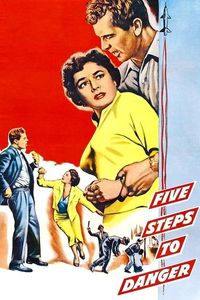
  • 5 Steps to Danger (1956)

    5 Steps to Danger (1956)

    (On Cable TV, November 2021) While 5 Steps to Danger may begin as a film noir in the Detour tradition, it soon turns into a cold war thriller when our everyman protagonist becomes involved with a plot to steal American nuclear secrets. Sterling Hayden stars as our likable hero, with Ruth Roman playing what initially looks like a femme fatale, but ultimately becoming not much more than a standard love interest in a lovers-on-the-run suspense film. Writer-director Henry S. Kesler moves his pieces without too much fuss, but 5 Steps to Danger is perhaps best appreciated as a representative first-generation Cold War thriller than a particularly good example of the form. It evokes plenty of other better films, especially when our lead couple goes on the run to find the truth among so many lies and deceptions from Soviet agents. Some sequences still work well — perhaps most notably a confrontation deep inside a military base in which enemy agents are flushed out. The southwestern desert makes for an effective backdrop, but 5 Steps to Danger seems self-limiting in how lazily it uses its own best elements. While the result is still very watchable, there’s little doubt that a better filmmaker would have been able to do much better.