Sam Peckinpah

  • Convoy (1978)

    (Tubi Streaming, July 2021) Considering that I was three years old when Convoy came out and something like six when it made its way to broadcast TV, I have this diffuse familiarity with the film, yet no specific recollection of having seen it. Hence, perhaps, my eagerness to watch it as soon as I saw it pop up on Tubi’s lineup — for all of the commercial success that it was at the time, Convoy doesn’t appear all that often on streaming sites and TV channels. Now, after watching the film, I’m open to the suggestion that it’s not a very good movie. If you’re approaching it as a piece of director Sam Peckinpah’s filmography, you’d bound to be disappointed by its lack of bite and almost cartoonish approach to violence. If you’re the kind of person who cares about tonal unity, you will be disappointed by some abrupt gear shifts between serious(ish) drama and comic(ish) hijinks. If you’re after stunts and action, you may be disappointed at the limited number of set-pieces. If you’re thirsting for a movie that goes to the next level, you’re probably not going to like how it glances at some issues, then ricochets without digging too deep. But here’s the thing: Save for a third-quarter lull, I had quite a good time taking in Convoy as my Saturday night movie. Coming from a decade of outlaw chic, it goes for some relevant commentary on police abuse of authority and some gentle grittiness. There’s some intriguing racial casting (most notably Madge Sinclair) alongside superstar Kris Kristofferson and Ali MacGraw (who answers the question, “What does a supermodel with a terrible haircut look like?” with the obvious “Still a supermodel!”) It helps that I’m fond of the highway outlaw movies of the time, from The Cannonball Run to Smokey and the Bandit and others — that “55 speed limit” thing really ignited some fun movies back then. While the number of stunts in Convoy may pale compared to some of those other movies, there are still a few good moments here — and I was amused to find out that one of my favourite stunts in the film, the truck turning over in a tight turn, was a completely unscripted accident that was hurriedly written back into the narrative. Peckinpah fans may be reassured by rumours that much of the film was directed by James Coburn (!) due to Peckinpah’s substance abuse. Many of Convoy’s contemporary reviews mention it coming too late in the CB/trucker craze to impress, but that issue has been considerably flattened by more than four decades — it’s now a fascinating period piece whose datedness is part of the charm. Oh, I won’t argue that Convoy could have been much better if there had there been a better screenwriter at the helm and a more reliable director than Peckinpah. But even without that, it’s a very enjoyable film as it is.
  • Ride the High Country (1962)

    Ride the High Country (1962)

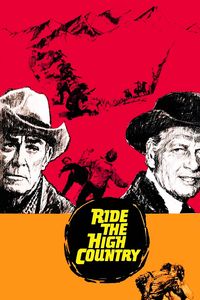
    (On Cable TV, October 2020) If you start watching Ride the High Country and see Sam Peckinpah’s name as a director, you may end up making a few unfortunate presumptions as to how the film is going to go. But seven years before The Wild Bunch made him define his own brand of ultraviolence, Peckinpah was still developing his skills as a filmmaker when he put together Ride the High Country, and while the result does show many of Peckinpah’s later trademarks, it’s also something much closer to traditional westerns. The plot has to do with two aging gunslingers taking on an assignment to transport gold from a miner’s camp back to the bank. But things get more complicated when they encounter a man with a daughter, and trouble follows them all the way to the miner’s camp. If you watch the film based on Peckinpah’s reputation, you will be surprised at some of the over-comedic touches of the film’s first half (complete with amusing musical cues), yet dreading the inevitable descent into violence that is sure to come. But while I’m no big fan of westerns, this one does things slightly differently enough, and well enough, that I found myself gradually taken by the result. By the time a rather dour finale rolls by, the film is actually quite remarkable, and we can understand those who call it Peckinpah’s first success. Former Golden-age Hollywood leading men Joel McCrea and Randolph Scott both get one last role here, with Peckinpah getting an early chance to showcase one of his predominant themes—the end of the wild west. Ride the High Country is both a representative western and an unusual one as well—the result is good enough to be worth a look even for those who don’t regard westerns with any particular affection.

  • Cross of Iron (1977)

    Cross of Iron (1977)

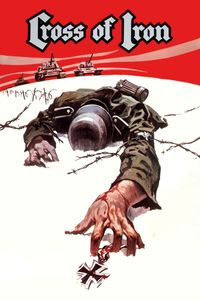
    (On Cable TV, September 2020) Director Sam Peckinpah and war movies seem like an ideal match, and one of the surprises of his filmography is that there are so few of them in there. Maybe producers couldn’t trust him with the budget of a war movie; maybe he felt that there were only so many ways he could say he was anti-war. No matter the reason, at least we have Cross of Iron to fall back on—a gritty, non-sentimental, harsh and nihilistic view of WW2 as seen from the German officers fighting against the Soviets. (The question of their allegiance to Hitler is minimized—one character admits to hating Hitler, and the Nazi political officer is a reprehensible person even by the standards of the film.) The story is substantial, having to do with a glory-seeking officer facing off against a more pragmatic one, but the real worth of Cross of Iron is in the implacable battle sequences filled with explosions, death and futility. Peckinpah is in his element here, as he apparently revels in the senseless violence, the machismo of the soldiers, and the innate ugliness of it all. At least we get decent performances out of James Coburn, Maximilian Schell, James Mason and David Warner. Cross of Iron isn’t for everyone: even those viewers familiar with Peckinpah’s brand of violence may be put off by the unrelenting pace of this film and the way it sees no way out. But that does put Cross of Iron squarely in-line with the rest of the 1970s war films, digesting Vietnam through increasingly meaningless war films that were much closer to the war-is-hell end of the spectrum than war-is-an-adventure Hollywood movies of an earlier generation.

  • Peckinpah Suite (2019)

    Peckinpah Suite (2019)

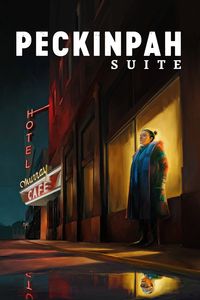
    (On Cable TV, July 2020) If you’re looking for an overview of Peckinpah’s movies and career, documentary Peckinpah Suite is not the ideal film. It’s best approached by Peckinpah fans who want to know more about a specific moment in his life—namely, the period during which he retired from Hollywood and went to the small Montana town of Livingston to stay at the Murray Hotel (in a room since renamed the “Peckinpah Suite”) and then a mountain cabin. The viewpoint character here is Peckinpah’s daughter, who travels to Livingston in an attempt to retrace her father’s steps and reconnect with his memory. The pretext is thin (the site’s suite has been remodeled to cover the director’s bullet holes, and his cabin has changed owners a few times—what can possibly remain of Peckinpah?) but it’s not a bad excuse to hear about Peckinpah from his estranged daughter. It ends with a semi-elegiac overview of Peckinpah’s death. Visually, the documentary does feature good visual material, especially in its use of drone footage for sweeping overhead shots featuring the natural beauty of Montana. While it provides some interview footage and an overview of Peckinpah’s influence (through interviews with local film students), Peckinpah’s Suite belongs to “for the fans” category rather than a standalone piece.

  • Pat Garrett & Billy the Kid (1973)

    Pat Garrett & Billy the Kid (1973)

    (On Cable TV, June 2020) Like most 1970s westerns, Pat Garrett & Billy the Kid is grimy, dirty, dispiriting and violent. In his rush to do a revisionist take on the genre, director Sam Peckinpah goes back to his old standbys of violence, nudity (not arousing), dusty sets and unhappy endings (even when it’s shown first). Yet another brick in the mythological wall erected by Hollywood at the memory of Billy the Kid, this film stars an aging lawman, Pat Garrett, hired to kill his friend Billy the Kid. Much of the film is a chase, although one tempered by a sense of fair play and friendship. There are some interesting names in the cast, mind you: James Coburn as Garrett is a good idea, Kris Kristofferson has an early role (without facial hair) as Billy the Kid, and Bob Dylan not only scores the film (writing the classic “Knockin’ on Heaven’s Door” for it) but has a small part at the edges of the narrative. Fans of Hollywood history may want to have a peep at the film’s very troubled production history, with a booze-fuelled Peckinpah constantly at odds with the studio up and including the studio chopping up the film for distribution. (Thanks to TCM, I saw the definitive “director’s cut” rather than the theatrical version.) You can find plenty of laudatory reviews for Pat Garrett & Billy the Kid, but this won’t be one of them. I can’t muster up much enthusiasm for what feels like an undistinguished revisionist western, adrift in a long, long list of similar films made during New Hollywood and later. I’m not saying it’s bad—I’m just saying that I didn’t care for it.

  • The Getaway (1972)

    The Getaway (1972)

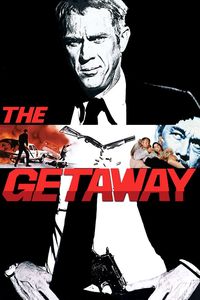
    (On Cable TV, June 2020) Ali MacGraw, as an actress, and The Getaway, as a film, both have something in common: they’re not particularly good, but they’re certainly striking and it’s not hard to see why they both created a fuss. The story of two lovers on the run, The Getaway is best known as one of director Sam Peckinpah’s biggest commercial hits, a union of this eccentric filmmaker with Steve MacQueen and Ali MacGraw (who began an affair on set and would eventually marry). It’s a big Texas crime story, as the two leads run for the border after a robbery gone wrong, and under Peckinpah’s attention the film inevitably turns very, very violent. Far too violent, even if standards have changed since then. Still, it’s better than most such films (and there were many of those in the 1970s)—while episodic, it’s filled with recurring characters and ongoing tension between the two lead characters. On a filmmaking level, it’s got some decent Texas cinematography, and it edited so snappily that it still works rather well today. MacQueen remains a limited actor, but he’s well in his range here as a charismatic tough guy. Meanwhile, Ali MacGraw has seldom been better—as mentioned: she’s not good, but she is definitely striking.

  • Straw Dogs (1971)

    Straw Dogs (1971)

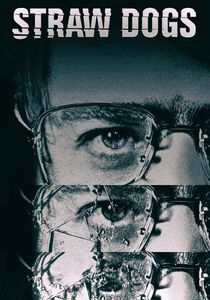
    (YouTube Streaming, December 2019) It almost amuses me to realize that even after nearly fifty years of increasingly gory cinema, we can still point at Sam Peckinpah’s Straw Dogs and say, “Wow, that’s an incredibly violent film.”  That’s part of its point, I think: Violence can be an attitude more than red-splashed visuals and there’s still something profoundly disturbing in how the film was put together and presented. The story of an American intellectual heading back to his wife’s childhood rural home in England, Straw Dogs gets going once the locals don’t take kindly to someone quite obviously unlike them. The film hits its most violent peaks when the wife is raped in an excruciatingly long sequence, the locals decide to kill them and the protagonist decides to take revenge. As an exploration of when normal people decide to become instruments of revenge, Straw Dogs is not meant to be clinical and detached: the later half of the film constantly sinks lower and lower in exploitation thrills (including the threat of a second rape sequence) in order not only to make its points, but to ensure that no one can possibly miss them. The result is fundamentally ugly even today. (The remake softens a few things along the way.)  I don’t particularly like the result, or anything that violent for that matter, but there’s clearly a daring element from Straw Dogs that is indissociable from the New Hollywood of the early 1970s, daring the old-school audiences to be offended while providing blood-soaked revenge thrills to the younger audience that was fuelling movie theatre profits at the time. It’s one of the many reasons why I dislike the New Hollywood period, but not the only one—and Straw Dogs provides almost all of them, including the grainy gritty cinematography, the abandonment of heroic characters (what with Dustin Hoffman being the designated protagonist), the messy script and the ugliness of the results. I can see what the fuss about Straw Dogs is about—but I don’t have to like it.

  • The Wild Bunch (1969)

    The Wild Bunch (1969)

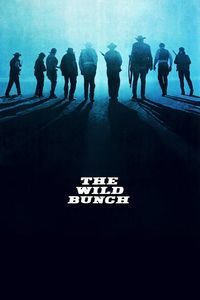
    (On Cable TV, January 2018) I may be a jaded cinephile, but there are a few things that I still don’t like. I’m a big fan of action scenes, for instance, but I don’t like violence all that much, and gore even less. Given this, it was almost a foregone conclusion that I wouldn’t be all that happy with Sam Peckinpah’s The Wild Bunch, a film whose reputation is tied to its brutal depiction of western violence. The opening sequence concludes on a bloody and depressing heist, and much of the film that follows doesn’t get any better—the characters are criminals escaping justice, but the lawmen aren’t more virtuous. Though visually a western, The Wild Bunch is set in 1913 and the end of the Far West era hangs upon the film like a curse—much of the film is about the characters realizing that there is no place left for them or their tools in the world. The automobile is replacing the horse, and the machine gun is far more efficient than the six-cylinder gun. There’s clearly a Vietnam-era attempt to deglamorize the western archetypes though blood squibs and dishonourable character. It must have been quite a sensation back in 1969, but today The Wild Bunch feels redundant. Worse; its unpleasantness lingers after the film has so little to teach us. I can admire the craft of the production (many of the action sequences feel surprisingly modern) but I can’t love the result. Even in the not-so-narrow field of revisionist westerns, I can think of a few better examples.