Sam Shepard

  • The Legacy (1978)

    The Legacy (1978)

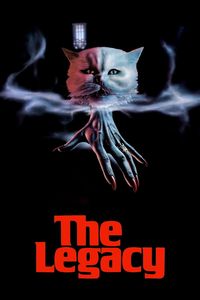
    (In French, On Cable TV, February 2021) If you absolutely have to pick a reason to watch The Legacy, the best is probably the lead casting — young Katharine Ross and Sam Shepard (with dark hair and moustache!) in the film where they met before getting married a few years later. Otherwise, there’s not a lot of intellectual nourishment or entertainment satisfaction in the rest of the film. In a convoluted tale of how a British aristocrat turns to occult satanic practices to keep up family traditions, director Richard Marquand is at his best in creating an atmosphere, and at his worst when turning to generic death sequences as a structural device. (No, but seriously: kill off all the sacrificed at once rather than go through individual risky death sequences — no fuss, no trouble and you’re done. But that doesn’t make for a feature-length horror film.)  The Legacy feels a bit more old-fashioned than its production date — although technology does deliciously intrude over the gothic atmosphere in what is perhaps the film’s most intriguing scene. Ross and Shepard spend most of the film running around screaming, and while the ending does bring everything up a notch, it’s too late to make The Legacy more than a passable curio for dedicated horror fans.
  • California Typewriter (2016)

    California Typewriter (2016)

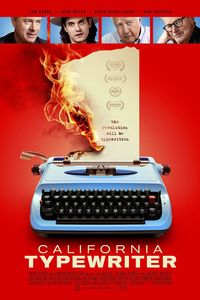
    (On Cable TV, July 2020) Why should you watch a documentary mythologizing typewriters? Well, how about if I tell you that it features Tom Hanks at his meanest? It’s true! The noted typewriter enthusiast has cutting words for anyone who dares think that an email is a replacement for a typewritten note: “I hate getting email Thank Yous from folks. ‘Hey, we had a great time last night.’ Or, ‘Hey, I really appreciated it.’ So, really, you appreciated it so much that you took seven seconds to send me an email. Now if they take 70 seconds to type me out something on a piece of paper and send it to me, well, I’ll keep that forever. Otherwise, I’ll just delete that email!” Hanks is at ease in Doug Nichol’s California Typewriter, as the film becomes an overwhelming 103-minute-long paean to the lost romanticism of typing on paper. It’s sometimes overdone—some interviewees describe their limitations with computers with details that I can’t even make sense of. Later, the film makes parallels with Spiritism by extolling how their creative process is mysteriously changed by a machine and once again I’m left wondering that they’re thinking. (Or why the typewriter-machine is better than the computer-machine.) Oh yes, this is a feature-length portrait of a few eccentrics, selling typewriter, repurposing their pieces for art, digging into their history and getting together at conventions. All stories are meant to be uplifting—the artist getting known for his art, the repair shop picking up customers and the historian getting his hands on a coveted machine in a museum. The film does start on a strong note, with the death of a typewriter as thrown from a moving car. Now, let’s make something clear: I’m curiously sympathetic to the idea of typewriters—I learned how to type on one, I own an Underwood as objet d’art, I’m even arguably trying to recreate much of the feel of a typewriter by using a very loud mechanical keyboard even as I type this review. But there’s a limit to that affection and California Typewriter frequently went beyond it. Yet don’t let me discourage you from having a look: Sam Shepard and John Mayer show up in talking-head interviews, and there’s a great segment on a typewriter orchestra. One could even argue that of all the topics in the world ripe for a documentary, typewriters are not a bad premise at all. Just prepare yourself for exactly what California Typewriter is meant to do: make you think that typewriters are the most important thing in the world.

  • A Star is Born (2018)

    A Star is Born (2018)

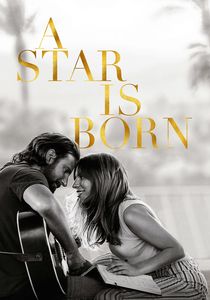
    (On Cable TV, June 2019) There are a couple of levels on which the 2018 version of A Star is Born can be appreciated. Perhaps the least interesting one is to take it at face value without any knowledge of its lineage or production history: As a story in which an aging rock star discovers a promising young talent and nurtures her to stardom while his own career fades. The music is exceptional, the chemistry between the two leads is off-the-chart, the plot moves efficiently between the set-pieces and it wraps up on an elegiac note that consciously brands the film as high drama. It’s enjoyable and perhaps even a bit rare in an environment that doesn’t give much of a chance to mid-budget romantic dramas. But, of course, 2018’s A Star is Born is not merely just any romantic drama—it’s the fourth (or fifth) version of a traditional Hollywood story played and replayed every twenty years since the mid 1930s, unexplainably skipping over the 1990s. Compared to previous versions (and I’ve seen all of them, including the two versions from the 1930s), this 2018 version is closest to the 1976 one, taking inspiration in rock and pop music rather than Hollywood—expanding the 1954 version’s idea to take on musical aspects to broaden the story’s appeal proves correct once more, and the male lead’s characterization owes a lot to Kris Kristofferson’s performance. The female lead is something a bit new—more organic to the story than Streisand was in her own pet project, but more likable than Garland in 1954. I think it’s probably my favourite version of the story, currently running slightly above the 1934 and the 1976 version. (Not being a Garland fan, I’m lukewarm about the 1954 one.) Much of this liking has to do with the strengths of both leads—previous versions have often short-thrifted the male lead in favour of the female upstart, but this version is more even-handed, and heightens the ending tragedy by making it feel inevitable. And that, in turn brings us to the third level of appreciation for 2018’s A Star is Born—one informed by a torrent of contextual material about the making of the film and its lineage. You can quite admire writer-producer-director-star Bradley Cooper’s decision to pause a highly successful acting career for two years in order to put together the project, learning musical chops along the way to deliver an incredibly convincing performance as an aging rocker on the decline. Or you can talk about Stefani “Lady Gaga” Germanotta’s quasi-revelatory performance as a skilled dramatic actress in addition to her undeniable vocal musical talents. (I say quasi-revelatory because even casual Gaga fans have long known that there was quite a bit of depth beyond the pop-star image.) You can also talk about the real-life chemistry of the two leads, the way Sam Shepard’s growl was integrated in the plot, or the integration of new technology in an old story—in short, there are levels of meta-textuality here that would be worth discussing even if the film itself wasn’t any good. Fortunately, this take on A Star is Born is actually quite decent, and defies expectations by one-upping several of its predecessors.