Sean Penn

  • We’re No Angels (1989)

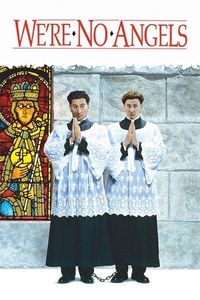
    We’re No Angels (1989)

    (On Cable TV, September 2021) On paper, We’re No Angels sounds unusual enough to be interesting. A remake of a 1955 film I’m unfamiliar with, it stars Robert de Niro and Sean Penn as two convicts who, during the 1930s, travel north to Canada but end up in an upstate New York monastery (shot in British Columbia) through a set of unusual circumstances, where they are mistaken for priests and develop a conscience. The big names are on the creative side as well: script from David Mamet, directed by Neil Jordan, with the female lead played by Demi Moore and an unbelievably young John C. Reilly in a minor role. Alas, the result quickly becomes underwhelming. Shot in dull shades of brown to assert that they’re not romanticizing the period, We’re No Angels feels duller, dumber and far less interesting than it should be. It’s not quite a religious film and yet not a religious film either. For a putative comedy, it feels slow, laborious and (fatally) unfunny. It meanders like its characters, vaguely bidding its time until only so many minutes are left before the epiphany that announces the ending. We’re No Angels is too slickly produced to be terrible, but it’s still not all that good.
  • The Gunman (2015)

    The Gunman (2015)

    (In French, On TV, February 2021) You can make a workable argument that The Gunman is a technically accomplished but generic action movie with a miscast lead and an awkward aspiration to deliver a humanitarian message. A visibly aged Sean Penn (55 at the film’s release) plays a mercenary who goes on the run after completing a nationally destabilizing mission on behalf of powerful multinationals, only to be lured back a few years later when the multinationals start tying loose ends. Director Pierre Morel directs the globetrotting film with his usual good form, although that style is practically undistinguishable from countless other mid-budget action films: there’s little distinction in the way the shootouts and chases are executed, lending a forgettable sheen to the entire enterprise. Unfortunately, Penn is a bigger problem for The Gunman than its middling execution: too old to play the role, Penn is further out of his element, considering a screen persona that did not include many action-driven roles — and he’s far too old to start, even considering that Morel helped Liam Neeson find a third career as an action hero. (The difference is that Neeson has the imposing physicality and gravelly voice to pull it off — Penn does not.)  I’m also going to blame Penn (who also co-wrote and co-produced) for attempting to jam some socially relevant material in a film that could have used a much lighter touch in that area — the hypocrisy of a run-and-gun action movie claiming a social conscience in denouncing the influence of multinationals in the affairs of a nation-state is a bit rich. Capable supporting roles from Javier Bardem, Idris Elba and Jasmine Trinca can’t quite elevate the material either. It’s not surprising if The Gunman has faded away from any kind of cultural relevance in the past five years — it’s unremarkable in most ways except for its biggest issues. Penn himself is probably happier seeing it slink back into obscurity.

  • The Falcon and the Snowman (1985)

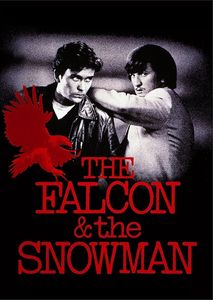
    The Falcon and the Snowman (1985)

    (On Cable TV, January 2021) You can always watch The Falcon and the Snowman for being one of Sean Penn’s early performances, but I found something more interesting in director John Schlesinger’s depiction of a specific time and place—the mid-1970s Southern California defence tech industry, and how the political disillusionment of the time could drive otherwise normal young Americans to propose information to the Soviets thanks to some ill-defined ideal of détente. Or at least that’s what one of the two characters believes, because the dramatic linchpin of the movie is the duelling relationship between the two leads—an idealist competent (played by Timothy Hutton), and a far less reliable friend (Penn) who acts as the go-between with the Soviets. Taking up in spycraft and the complex relationship between source and case officer, except with the inverted perspective from what we usually see, The Falcon and the Snowman remains a mildly effective thriller in which we do root for the spies to be caught red-handed (and one of them more than the other). Perhaps delighting in inversion from spy movie clichés, it’s specifically about spies who end up vastly outclassed by the demands of the lifestyle, and soon seek to get out of it once it doesn’t live up to their romantic notions of it. It does all amount to an effective period piece, down-to-earth and somewhat merciless in puncturing the clichés of the genre while still being effective in its procedural details. No wonder it’s based on a true story.

  • Casualties of War (1989)

    Casualties of War (1989)

    (In French, On Cable TV, August 2019) You can certainly argue that Casualties of War seldom gets as much love as other similar movies. You can even offer a few perfectly reasonable explanations for it: Coming as it did right after Platoon (1986) and Full Metal Jacket (1987), perhaps it couldn’t measure up to those films. Perhaps having Michael J. Fox and Sean Penn in the lead roles made it more about the actors (especially Fox, then and now better known for comedic roles) than the substance. Perhaps Brian de Palma was seen as working too far outside his element. Perhaps the subject matter of war crimes as committed by American troops was harder to take than even an unflinching description of combat hell. No matter the reason, Casualties of War isn’t as likely to be mentioned as a great Vietnam movie. (Although it is receiving a growing critical reassessment.) Now, I’m not going to be a Tarantinoesque contrarian and claim that it’s a hidden gem, but it’s probably worth a look. De Palma keeps thing humming along, Penn makes for a fierce antagonist, Fox doesn’t do too badly as a baby-faced innocent confronted with war atrocities, and the subject matter is indeed more daring than many other takes on Vietnam. It may not be the most entertaining, most evocative, most credible Vietnam film, but it comes in at a sufficiently different angle to be worth a look as a complement, not necessarily as an inferior imitation.

  • The Weight of Water (2000)

    The Weight of Water (2000)

    (In French, On TV, June 2019) I came to The Weight of Water with expectations that were far too high. As one of the few movies I still hadn’t seen from director Kathryn Bigelow, I was really looking forward to it. Bigelow has a long track record of entertaining movies, but The Weight of Water is something else. Despite a murder mystery and a cast headlined by Sean Penn and Elizabeth Hurley, it turns out to be a disappointing bore. The premise has to do with a modern photographer investigating a centuries-old murder mystery, with the movie flashing back to the earlier era to show us what happened. Or may have happened, or what they wished had happened—it’s that kind of film where the first act goes so deep into fantasy that anything may happen and it would be infuriating if we hadn’t stopped caring well before that point. The narration across two centuries doesn’t really bring anything together, the drama seems to repeat itself endlessly even in a relatively short picture and the film is far duller than the director’s reputation may suggest. The irritating overblow cinematography does nothing to make the film any less lifeless or uninteresting. Yes, I dozed off at some point and didn’t feel I had missed anything—I certainly did not feel as if I had to rewind and re-watch. I’m glad I’m a bit more of a Bigelow completist now, but not that happy about The Weight of Water itself.

  • Dead Man Walking (1995)

    Dead Man Walking (1995)

    (In French, On Cable TV, May 2018) Some movies stay with you and some movies leave without much of a fuss, and writing this capsule review a few weeks after seeing Dead Man Walking, I’m having trouble remembering anything specific about the film. This may or may not tell you more about the film than myself. After all, the film was a modest hit upon release, sparking discussions about faith, revenge and the death penalty. It’s executed soberly, and director Tim Robbins gives a wide berth to star Sean Penn and Susan Sarandon to show what they can do as actors. It touches upon a highly dramatic subject, what with a nun trying to help a death row prisoner atone for his sordid actions. It even leads to the kind of life-and-death climax that ought to leave an impression. Alas, my attention checked out early, perhaps motivated by the realization that I had seen this kind of Oscar-baiting movie countless times before, perhaps encouraged by the certitude that I would not see anything here outside of the usual Hollywood mould for issues drama. Once the premise is clear, so is its execution and conclusion. The film runs through expected paces, and the chosen tone of the story limits what it will do on its way to a foregone conclusion. I certainly do not expect anyone else to react the same way as a jaded cinephile such as myself would do—in fact, I would applaud strong reactions to the film by others. I can only report about what I think of the film, or how quickly it has evaporated in my mind.

  • All the King’s Men (2006)

    All the King’s Men (2006)

    (On DVD, February 2018) Watching the original 1949 All the King’s Men quickly led me to this remake, languishing on my unseen-DVD shelves. While undoubtedly slicker than the original, this remake has issues of its own. Despite a terrific cast, fantastic atmosphere and Steve Zaillian’s moody direction (wow, that use of an engraved floor map of the state in the opening and closing sequences…), the film struggles with time, with motivations, with having something interesting to say at a time when political movies all seem to turn around the same ideas. The film was a notorious flop, which is too bad, because it does have quite a few things going for it: the cast alone is amazing, and comparing the slickness of the film’s production with the rough-hewn charm of the original is incredibly eloquent regarding the evolution of Hollywood movies in fifty-five years. Sean Penn isn’t particularly well cast as the lead—we can believe in him as a corrupt politician, but he somewhat misses the mark in the film’s first-act evolution of an idealist into a political machine boss. The film also misses the mark by compressing decades-long events into a mere few years: while the protagonist’s arc is a bit tighter, it’s far too fast for describing the corruption of an idealist populist. Otherwise, there’s a lot to like in the way the film looks, from costumes to sets to the overall atmosphere. Still, when you take it all in, this remake of All the King’s Men feels sluggish and overwrought. It certainly doesn’t replace the original film.

  • The Pledge (2001)

    The Pledge (2001)

    (On Cable TV, November 2017) I will vigorously defend the right of filmmakers to make the movies they want to make … but then again I will also defend the right of viewers to have the reaction they want to the movie they’re seeing. This is relevant to The Pledge insofar as director Sean Penn wanted to make a movie that upended the traditional conventions of a crime thriller. (Warning: Spoilers.) The point of the script—based on a novella significantly titled “The Pledge: Requiem for the Detective Novel”—is to show that not all investigations end up finding the culprit, and some of the time this can be a mere stroke of luck (or bad luck). The ending doesn’t go for full bleakness by killing the killer without the investigator knowing about it, but such meagre comforts do nothing to save the protagonist from ending up a ruined alcoholic mumbling to himself about his failure. Such a downer ending, coupled with the grim premise of a child killer, means that The Pledge will never become a crowd favourite. There are plenty of vastly more entertaining and deliberately satisfying crime thrillers out there if you’re looking for that kind of stuff. On the other hand, there’s quite a lot to like in The Pledge despite its intentionally downbeat nature. Jack Nicholson turns in one of his last good performances as an out-of-persona retiring detective who comes to obsess about the murder of a young girl, and promises to her mom that we will find the truth. Director Sean Penn delivers a rather good movie, handled with some care and unusual flourishes despite insisting a bit too much on some elements at time. I also suspect that Penn is the reason why the film is studded with known actors in small roles, from Benicio del Toro’s early brief turn to people such as Hellen Mirren, Vanessa Redgrave and Mickey Rourke in rather minor roles. There’s even an intriguing plot point midway through, as the protagonist spends his retirement funds buying a gas station in order to gather more information on possible suspects. The Pledge works much better when considered as a drama rather than a thriller: it places more emphasis on the cost of obsession (even justified) and less on the achievement of detection. Still, it is a kick in the gut and I can certainly understand why many won’t like that.

  • Fast Times at Ridgemont High (1982)

    Fast Times at Ridgemont High (1982)

    (On DVD, November 2017) Fifteen minutes in Fast Times at Ridgemont High, I experienced a sudden and unexplainable feeling of nostalgia for malls as they existed in the nineties (with bookstores, record stores, movie theatres and other niceties that are being paved over by the march of digital progress) which is really weird considering that as a teenager in a small town, I spent nearly no time at all in malls until my twenties, and even then not that much. Such is the effectiveness of the film, given that it presents high schoolers as they navigate between school, home and the mall (usually as a workplace). It’s directed by Amy Heckerling, from Cameron Crowe’s first script (based on his own book as an undercover high-schooler) and it’s still a cutting, unflinching look at the teenage experience, even when bathed in movie magic. While billed as a comedy, it gets unexpectedly serious at times (such as with an abortion subplot that exemplifies a major betrayal between so-called friends) yet does not really dive deep into misery despite the protagonists’ reversals of fortune. The cast of the movie is amazing—not only does it feature solid performances by Sean Penn (as a stoner surfer hilarious far away from his current persona), Jennifer Jason Leigh, Judge Reinhold, and Phoebe Cates, it also features near-cameos by then-newcomers Nicolas Cage and Forrest Whittaker. Good characters, organic plot developments, an interesting soundtrack, and a cheerful refusal to bow to conventions help make Fast Times at Ridgemont High still interesting today even after thirty-five more years of teenage high school comedies. No wonder it’s become a cultural touchstone—and now I know firsthand what everyone is talking about, including the infamous poolside scene.

  • Carlito’s Way (1993)

    Carlito’s Way (1993)

    (On DVD, February 2017) While I gather than Carlito’s Way was only a middling financial and critical success back in 1993, it’s one of those films that grow even better with time. I have a few theories as to why the decades have been kind to the movie. For one thing, I think it’s the kind of top-class crime thriller that were omnipresent for a while, and then not so much. So what if it’s similar to Scarface and The Untouchables? Those movies were awesome! In 2017, Carlito’s Way is a quasi-refreshing throwback to muscular crime cinema back when it was synonymous with A-class budgets rather than straight-to-video releases. It features Al Pacino in terrific younger form (sporting a glorious beard), which is best appreciated now rather than at a time when he was almost over-exposed. It benefits immensely from director Brian de Palma’ kinetic camera work, swooping and gliding into scenes, cackling as it prepares straight-up suspense sequences and delivers all of the cheap thrills that we can expect from a crime thriller. Carlito’s Way may not measure up to Scorcese, but it has strong thrills to deliver in an endearing exploitative way. David Koepp’s script cleverly packs a lot in a decent time, taking a look at a killer trying to get out of the business but predictably failing to do so. Sean Penn is almost unrecognizable (yet iconic, as per GTA: Vice City) as a completely crooked lawyer, while Penelope Ann Miller, John Leguizamo and Luis Guzman turn in good supporting performances. (Pre-stardom Viggo Mortensen even shows up in a non-glamorous role as a disabled ex-gangster) It all adds up to a slick, enjoyable crime drama the likes of which we don’t see enough these days. Carlito’s Way has grown in stature over the past quarter-decade and a fresh look at it today only confirms that it’s a strong film.

  • U Turn (1997)

    U Turn (1997)

    (In French, On TV, September 2016) There’s something unusual in seeing Oliver Stone delivering a small-town crime thriller like U-Turn: Stone usually takes on wider-scale topics, even in movies like Natural Born Killers where the crime spree is an excuse to talk about violence as a social phenomenon. Here, we’re down to a man (Sean Penn, not bad) unwillingly stuck in a small desert town and getting embroiled in the simmering madness of its inhabitants. Of course, this being a nineties Stone film, it’s quite unlike anyone else’s take on the same topic. Even as a small-scale dark crime comedy, it’s handled with multiple film stocks, quick cuts, impressionistic directing and a dream-like effect. It’s as if Stone reused the Natural Born Killers bag of tricks in service of a B-grade thriller just to see what would happen. As a result, U Turn may not be a classic, but sure holds our attention. It helps that there’s some terrific casting here. Billy Bob Thornton is menacing as a mechanic with uncommon power over our protagonist; Nick Nolte is imposing as a man willing to have his wife killed; Clare Danes and Joaquin Phoenix show up as a dangerous couple, while John Voigt pops up as a blind Indian beggar. But the film partially belongs to Jennifer Lopez, cranking up the heat as a femme fatale. (Being arguably miscast as a Native American doesn’t matter much given the craziness quotient of the film.) As a sunny noir thriller, U-Turn is wild, expressionistic, exploitative and overwhelming, but it’s never dull.

  • Into the Wild (2007)

    Into the Wild (2007)

    (On DVD, June 2015) Well, I’m torn: What happens when you try to review a decently-made film that practically sanctifies someone who’s done something really, really stupid?  I’m not much for the whole “throw away your shackles, take a hike, enjoy life” narrative: I think we’re made stronger by being part of a civilization with rules, ties and obligations.  I’m not against traveling and having new experiences, but seeing the protagonist of Into the Wild give away his money, sever ties with his family, spout incoherent feel-good nonsense and head away from civilization in such a way as to sacrifice any chance of survival doesn’t make for a hero.  And yet, Into the Wild is captivating.  Sean Penn’s directorial debut is heartfelt, benefits enormously from location shooting, knows how to best use its actors (Emile Hirsch steals the show as the protagonist, but even Vince Vaughn has an uncharacteristic role) and manages to make even its most depressing moments mean something almost profound.  It does suffer from its length, though: clocking in at a far too long two hours and a half, Into the Wild often feels as if it’s waiting for something else and seems even longer given the dumb decisions made by the so-called hero of the story.  At the end, I’m more saddened by the film than uplifted by its attempt to glorify a series of bad decision by someone who may have had significant mental issues.  Have I liked Into the Wild, or not?

  • I Am Sam (2001)

    I Am Sam (2001)

    (On TV, February 2015)  Am I allowed to say that I really disliked I Am Sam?  It’s not as if I’m going to deny its strengths: it’s got an Oscar-calibre performance by Sean Penn at its heart, as he portrays a mentally-challenged man caring for a daughter who’s becoming perceptibly smarter than him.  Legal complications ensue.  Having seen Penn at work elsewhere, this is a fantastic chameleon-like performance that rings true to the character being portrayed.  But it’s in service of a film that’s unabashedly manipulative, even as it presents a heart-breaking premise with no satisfying way out.  It doesn’t help that the film is very, very long and wallows in the misery it creates.  Michelle Pfeiffer brings some interest back in the film when she enters it as a fire-breathing high-powered lawyer, but she’s soon subdued in mawkish sentiments and character development.  To his credit, writer/director Jesse Nelson knows exactly what kind of film she’s making, and she hits her own targets with a decent amount of skill.  It’s really my fault that I wasn’t receptive to the material, and increasingly antsy to make it sane to the end credits.  I did a considerable amount of writing during I Am Sam, which at least helped me deal with my reviews backlog. 

  • It’s All About Love (2003)

    It’s All About Love (2003)

    (On-demand, September 2012) When writers with no understanding or affection for science-fiction turn to the genre, the result is often a mixture of pretentious philosophy, incoherent fantasy and plot-free structure labeled SF in the misguided conviction that you can use the genre label to say anything without scrutiny.  So it is that in It’s All About Love’s near-future, we get a blend of human cloning, people dropping dead in public places, Uganda experiencing country-wide weightlessness, all water periodically transforming into ice.  These elements make no sense in a literal fashion, but trying to figure out the metaphorical link in-between those events and the on-screen adventures of a divorcing couple soon turns to indifference.  Who really cares when the film fails to achieve any kind of narrative momentum?  Deadened by terrible dialogue, dark cinematography, arthritic camera moves and major actors who seem stuck in roles they didn’t want, It’s All About Love mystifies more than it enlightens.  Joaquin Phoenix mangles an Italian accent while Claire Danes looks bored and Sean Penn seems to have shot all of his plane-bound scenes in half a day.  Mark Strong makes an impression in an early minor role, but the doubt remains: how did all those actors end up in this inert and ponderous film?  It’s All About Love keeps going long after it should have concluded, and writer/director Thomas Vinterberg doesn’t seem interested in making any part of his film accessible to the audience.  With this results (and that’s not even going into the now-legendary tales of the hostile reception the film got at Sundance in 2003), little wonder that It’s All About Love sank without a trace and can now be seen only by sheer happenstance.  Some movies are best forgotten.

  • Fair Game (2010)

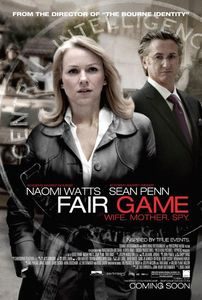
    Fair Game (2010)

    (In theaters, December 2010) One of the most unfortunate consequences of the neo-conservative fumbling in Iraq is that, for years to come, they will have to endure I-told-you-so reminders from liberals who were dead-set against the invasion in the first place.  So it is that Fair Game is a politically engaged re-telling of the events surrounding the White House’s public outing of CIA Valerie Plame in retaliation for her husband’s public dissent on whether Iraq had weapons of mass destruction.  The story will be most familiar to those who have paid attention during the Bush administration, but the film does a fair job at contextualizing the issues in a way that should be accessible to those for whom this is a new story.  Righteously angry and not shy about letting some of this anger show, Fair Game is fodder for left-wing moviegoers in much the same way that Green Zone was.  (Extra trivia point for those who remember that Fair Game director Doug Liman directed the first Jason Bourne movie, after which the series was taken over by Green Zone’s Paul Greengrass.)  Shot docufiction-style with a camera that jerks around even in conversation scenes when it doesn’t need to, Fair Game is most fascinating when it offers a deglamourized portrait of real-world intelligence and the way partisan politics bandwagons can destroy people’s lives.  As for the rest, well, the film needs to be taken with a grain of salt, given the usual Hollywood dramatizations to make it all feel more interesting.  Sean Penn continues to prove that he’s becoming a more interesting actor with time, but it’s Naomi Watts who shines as Plame, a rare multi-faceted female character balancing work and family life.  While praise for the film is likely to cut along partisan lines, Fair Game itself is a fine piece of work, suspenseful while reasonably realistic.  It’s a deft dramatization of complex events, and despite a bit of a late-film lull, it achieves what it wants to do.