Sissy Spacek

  • The River (1984)

    The River (1984)

    (In French, On Cable TV, December 2020) Sissy Spacek and Mel Gibson are struggling farmers trying to keep it together in the face of regular floods and economic pressures in The River. It’s directed with the kind of gritty blue-collar graininess characteristic of the 1970s – there are no glossy golden-hour shots of the farm here when the focus is on intractable social issues. It gets even worse when, in a bid to avoid financial problems, the male protagonist accepts a steel-working job and realizes to his dismay that he’s been asked to go past picket lines during a strike. But the bank remains the ultimate enemy, especially when the farmer sits in the middle of an area slated for large-scale geoengineering. The River is such a downbeat picture that the happy(er) ending comes across as surprising and unrealistic. It doesn’t help that the entire film, even the flooding scenes, comes across as dry and unlikable – we cheer for the underdog by habit, but there comes a point in the film where we just want the farmers to take the money and run in the face of nature wanting their lands for flooding. (It probably doesn’t help that, over the past few years, climate change oblige, twenty-first century audiences are getting far more sensitized to the concept of deliberate flooding zones: our sympathy for mounting insurance bailouts is getting shorter.) While The River may hold some appeal for Gibson and Spacek fans, the resulting film had too little reason for other audiences to care.
  • Missing (1982)

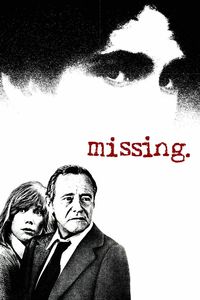
    Missing (1982)

    (On TV, January 2020) To anyone used to Jack Lemmon’s comic body of work, it can be jarring to see him at work in Missing, a film about as humourless as any can be. Here, Lemmon plays an American businessman travelling to Chile an unnamed country after a coup to investigate his son’s disappearance. He teams up with his son’s wife, but their relationship does not start harmoniously and it’s further tested as their investigations either produce no results, or lead them to darker and darker certainties. Eventually, writer-director Costa-Gavras, working from real events, accuses the US government of complicity in the coup and the numerous deaths that ensued. Missing is absolutely not a happy movie: the atmosphere of a post-coup authoritarian country is utterly nightmarish, and the central mystery at the heart of the film has a merciless resolution. Lemmon, as one could expect, is quite good in a much darker role than usual, channelling righteous anger as he portrays a father looking for his only child. Alongside him, Sissy Spacek is also quite good in a more difficult role designed to clash with the older man. (Both of them earnest Academy Awards nominations for their roles) Where Missing stumbles is in not focusing tightly on the story it wants to tell—Costa-Gravas is a bit too self-satisfied and goes on numerous tangents (the opening twenty minutes, for starters) that don’t necessarily improve the result. Still, Missing is a film with weight, anger, and a thick atmosphere you’ll yearn to escape.

  • Badlands (1973)

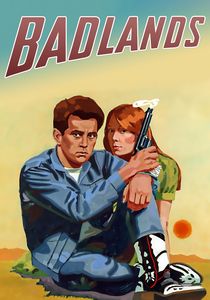
    Badlands (1973)

    (On Cable TV, March 2019) There were a surprising number of high-profile “romantic criminal couple on the run” movies during the New Hollywood period, with seemingly everyone (including Spielberg!) taking a shot at it. Badlands is Terrence Malick’s debut feature and it fully embraces the subgenre, while being perhaps a bit more entertaining for Malick completists than the impression left by his later features would suggest. A summary of the story sounds like genre material: a girl meets a guy who ends up killing his dad and then go on the run together, killing more people along the way. From Gun Crazy to Bonnie and Clyde to Natural Born Killer (and others!), this is an American archetype. But Malick makes everything sophisticated rather than trashy by using voiceovers and a kind of languid pacing that never abandons the small-town atmosphere even as the bodies pile up. Badlands spends a lot of time in rural America in ways rarely seen in other movies, adding credible 1950s details in ways that stick in mind, whether it’s recording physical records at coin-operated machines or filling up a car from leaking gas stations. Sissy Spacek and Martin Sheen both star, with Sheen looking uncannily like his sons would two decades later. I really expected to dislike the film, based on my reactions to later Malick films, overall lack of appreciation for New Hollywood and familiarity with the subgenre… but I didn’t. It eventually won me over slightly, thanks to the period detail and flourishes such as a climactic car chase. It certainly helps that Badlands isn’t as bleak as other films of the subgenre, most of which can’t be bothered to be more imaginative than to have their leading couple go down in a hail of bullets. Malick is definitely after something else here, and the film thrives on that intention.

  • Coal Miner’s Daughter (1980)

    Coal Miner’s Daughter (1980)

    (In French, On Cable TV, October 2018) Even considering that I’m not a country music fan, it took me far longer than I care to admit to realize that Coal Miner’s Daughter wasn’t just a musical drama, but a biopic about major country music star Loretta Lynn. (To be fair, I did start to suspect something once Pasty Cline started playing a role in the film.) So, speaking about a perspective as ignorant as it’s possible to be, I must say that the film works well. It spends a lot of time detailing Lynn’s upbringing in a desperately poor Kentucky community, the first few years of her marriage (including a bit of domestic abuse too quickly glossed over) and only then her ascension to the top of the country charts. The struggles of an up-and-coming musical are convincingly rendered, and so are the other kinds of challenges that come with success and fame. The inclusion of a tragic subplot featuring Cline does add a bit of complications not usually found in most music biopics. Sissy Spacek is compelling in the title role as she transforms herself from a poor teenage bride to a country music superstar; Tommy Lee Jones has an early (and not entirely glorious) role as her husband. While I’m not a natural audience for that kind of film and even if the musical biopic subgenre has a history of repeating itself, Coal Miner’s Daughter remains a well-executed example of the form, with its 1980s patina further enhancing its look at 1960s country music.

  • Carrie (1976)

    Carrie (1976)

    (On TV, October 2016) The original Carrie has become a pop-culture reference, but watching the film nowadays is a reminder of both how good Brian de Palma could in his prime, but also how far more fast-paced movies are nowadays. Especially teen thrillers. (The remake, which I saw immediately after this original, clocks in at half an hour shorter despite keeping most plot pieces intact.) I’ve read the Stephen King novel too long ago to faithfully evaluate whether the film is faithful to the novel (I think so), but the main draw here is the way de Palma injects some movie magic in even the simplistic framework of a teen horror movie. Witness the long shots, the split screen, the editing…. It all comes together during the infamous prom sequence. Sissy Spacek is very good as the titular Carrie, sympathetic despite ending the film as a homicidal maniac. John Travolta shows up in an early role. Otherwise, it’s a fair period piece, often far too long for its own good, and overly dramatic in portraying its central mother/daughter conflict—culminating in an overlong climax. Carrie still works thanks to great direction, and the seventies atmosphere is good for a few nostalgic throwbacks.