Stacy Keach

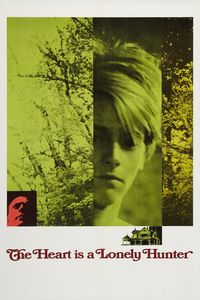
  • The Heart Is a Lonely Hunter (1968)

    The Heart Is a Lonely Hunter (1968)

    (On Cable TV, April 2021) Hollywood has always been in love with social-issue films, but until the mid-1960s there was only a very narrow range of social issues worth discussing under the Production Code. Things improved in a hurry from the mid-1960s onward, as the code was replaced by ratings, and the range of permissible, even desirable topics expanded at the same time as moviegoers expected more from American studios. But in films like The Heart Is a Lonely Hunter, you can almost feel the repressed pile-up of social issues crowding each other for recognition — disabilities (physical, sensorial and cognitive), fatal diseases, racism, sexism, alcoholism, classicism, discrimination, sexual awakening, suicide and small-town violence all show up in the strange brew of this melodramatic adaptation of a best-selling 1940 novel. If it sounds like a lot, it is a bit much at times — especially as the film tries to keep up with a busy novel in barely more than two hours. If it’s any comfort, the cast is reliably more interesting than the narrative: Alan Arkin as a deaf-mute protagonist, Sondra Locke’s screen debut, and appearances by Cicely Tyson and Stacy Keach. Still, the film does feel like what we’d call Oscar-bait these days — a comparison that’s made easier by the film’s two Academy Awards nominations (for Arkin and Locke) among other recorded honours. It doesn’t exactly make The Heart Is a Lonely Hunter compelling viewing, though — unless you like that kind of overdone drama at a time when Hollywood was expanding its palette of permissible topics without necessarily getting more subtle about how to tackle them.
  • Body Bags (1993)

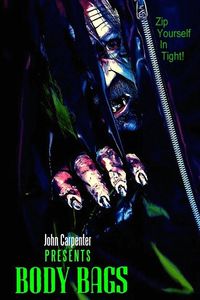
    Body Bags (1993)

    (In French, On Cable TV, September 2020) Clearly a film by and for horror fans, Body Bags can best be described as another horror anthology movie (patched together from a failed proposal for an episodic TV series), with a moody framing device (John Carpenter playing a morgue worker messing around for the audience) setting the stage for three twenty-some-minute-long segments. The first is “The Gas Station,” featuring Alex Datcher as a student taking up a gas station attendant job in the middle of the night, and (rightfully) feeling scared when a killer is identified as prowling around. Directed by John Carpenter, this a rather straightforward action thriller segment is well-executed but familiar in its topic matter. The second segment, “Hair” (directed by Tobe Hooper), is somewhat more comedic, as a middle-aged Stacy Keach takes increasingly drastic steps to reverse his increasing baldness. It ends in creepy-funny material, although the abrupt end once the joke is explained seems unsatisfying—at least it takes the time to properly dissect the various reactions of its characters to encroaching baldness. The third segment, “Eye,” lands us in straighter horror territory as a baseball player (Mark Hamill with an unfortunate moustache) who lost an eye in a car accident is the recipient of a transplanted eye… who belonged to a serial killer. The eye predictably takes over with disastrous results. As an anthology film, Body Bags is not all that bad—but its most distinctive feature is its unapologetic appeal to horror audiences: There are tons of cameos from horror director here, and the tone is the kind of horror/comedy that reaches as far back as the early EC comics. It’s not world-changing entertainment, but it’s a chance to see a few familiar names having fun, and one of Carpenter’s last good films.

  • Roadgames (1981)

    Roadgames (1981)

    (In French, On Cable TV, May 2020) As far as atmospheric concepts go, Roadgames scores an impressive success in setting much of its narrative on Australia’s south-eastern highway—a place of near-endless distances and nowhere to go as it crosses a vast desert. On this unusual backdrop, writer-director Richard Franklin sets a serial-killer thriller in which a truck driver works with a hitchhiker to unmask a serial killer who, they suspect, is travelling in the same direction as they are. It’s ludicrous and yet it sort-of-works in an ozsploitation kind of way. Having Stacy Keach as the hero-trucker protagonist is fine, but having Jamie Lee Curtis as the sidekick does work very well. Roadgames is dirty and grimy and doesn’t quite always live up to its own premises (the budget doesn’t help) but the concept is interesting and the execution is halfway decent. Even those not usually interested by serial-killer movies may be charmed by the film’s ever-moving setting and the impact this kinetic backdrop has on the narrative.