Stanley Donen

  • Saturn 3 (1980)

    Saturn 3 (1980)

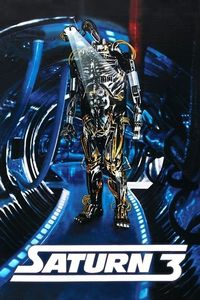
    (TubiTV Streaming, December 2021) I barely recall Saturn 3 from my childhood, but considering the racy violent content, it’s probably less for remembering the story than because it was a science-fiction film at a time when I was really interested in those. Ironically, the film’s plot is the kind of thing better suited to undemanding young audiences than anyone with the slightest appetite for complexity or subtlety. The most amazing thing about it for a middle-aged cinephile is probably the cast and (some) of the crew — featuring no less than Kirk Douglas and Farah Fawcett as a “don’t ask questions about their 31-year age difference” couple of scientists whose existence is disrupted by a dangerous man (Harvey Keitel!) and his homicidal robot. Saturn 3 is also directed by musical legend Stanley Donen, from a script by acclaimed novelist Martin Amis and Academy-Awards-winning Star Wars production designer John Barry. That’s one spectacular pedigree, but the difficult making of the film was reportedly an adventure that barely explains the mess on-screen. The story feels remarkably cheap and redundant, once reduced to the most basic gibberish of a killer robot attacking a young woman. The production design is terrible, with robots not even passing the indulgent muster of early-1980s special effects. Some of the early world-building is intriguing, but the script feels like a race to the known value of a killer-robot conclusion. Douglas, Keitel and Fawcett look embarrassed (something confirmed by Keitel’s later comments about the film) and by the time the film ends, the audiences won’t feel any prouder. So much talent for so little result — Saturn 3 is the kind of naïve Science Fiction film that makes the good one look so much better in comparison.
  • The Pajama Game (1957)

    The Pajama Game (1957)

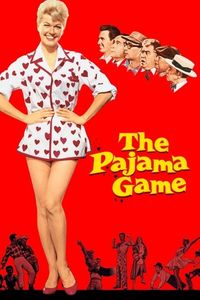
    (On Cable TV, November 2021) The more you dig into the history of the Hollywood musical, the more you find some… unusual material. I’m consciously not using the word “weird” here because The Pajama Game is about as conventional as musicals go: With Broadway roots, Stanley Donen directing and Doris Day in the lead, it’s about as innocuous as these things are. But here’s the unusual thing: The Pajama Game is a romantic comedy musical in which a union takes on management for a pay raise and wins. By 2020s standards, following the regrettable erosion of union power and public perception thereof, this would almost certainly brand the film as socialist propaganda in some of the nuttier American circles — what do you mean, unions as the good guys? It’s become such a fleeting sentiment that pro-union films have become about as rare, remarkable and subversive as it’s possible to get in recent American discourse. (I’m allowing for some distance here because one of the better consequences of the early-2020s COVID crisis recovery has been far more power taken back by employees. But I digress.)  I don’t particularly enjoy that The Pajama Game has so much political baggage now (and I’m writing this from a unionized Canadian’s perspective), but there we go — the 1950s reaching us about progressivism. As for the film itself, there’s not as much to say in strict moviemaking terms: it’s competently handled, with tunes that are snappy without being memorable, and dancing that’s competent without being awe-inspiring. (This being said, it was Bob Fosse’s first major film as choreographer.)  Day is wholesomely bland but still good in the lead role, while the film does have fun making light of a topic matter that led to much darker films. (If you want to make a double feature with this and quasi-contemporary On the Waterfront, hey, go ahead.)  The Pajama Game ranks in the solid middle of 1950s musicals, but I don’t expect it to come up all that often in discussions, except for mentioning the pro-union sentiment.

  • The Grass Is Greener (1960)

    The Grass Is Greener (1960)

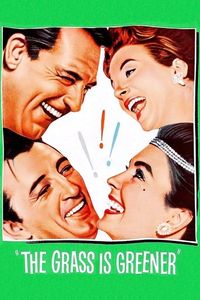
    (On Cable TV, September 2021) The cast alone would make The Grass is Greener worth a look: Robert Mitchum playing the cad trying to romance Deborah Kerr away from Cary Grant, while Jean Simmons looks on in amusement? Yes, that is the kind of film that even twenty-first viewers can enjoy. It’s not that good of a movie, but it has enough high moments to be fun. Grant isn’t quite in his persona here, as a British aristocrat fallen on hard times that must find a way to keep his wife away from a charming American oil baron while keeping the decorum we expect from his social class. As expounded in long but enjoyable soliloquies to other characters, too forceful a response would drive her farther away — he’s looking for a better solution. That eventually leads him to invite his rival to the estate for a weekend, and eventually initiate a pistol duel (!) in the corridors of the mansion. Mitchum plays an interesting mixture of wolfishness in a meek presentation, being utterly charming even as he tries to steal a wife away from her husband. Kerr does modulate carefully between her temptation and her duties as a rather bored wife, while Grant couldn’t have been better in a tricky role. It’s all presented in the very entertaining style of the 1950s looking back at the sophisticated Lubitschian comedies of adultery of the 1930s, but clearly anticipating the more permissive 1960s. There’s one standout sequence from director Stanley Donen in which split screens are brilliantly used to show parallel conversations taking place by phone — the rest of the film is far more sedate from the directorial aspect, but that one scene is terrific. The cast is great, but the story also works well. The Grass Is Greener all wraps up in schemes revealed, the lead couple reuniting and the oil magnate getting a quirky American heiress for his trouble. In other words, the kind of amusing romantic comedy that pokes at temptation but makes sure everyone goes home happy.

  • Cover Girl (1944)

    Cover Girl (1944)

    (On Cable TV, March 2021) Just as I thought I had seen all of Gene Kelly’s better musicals, here is Cover Girl to reassure me that I’d missed at least one. A good musical by most standards, Cover Girl was singled out by at least one film historian as the first in an illustrious series of musicals in which the plot was advanced during the songs, and the first collaboration between Gene Kelly and Stanley Donen. It’s also one of Kelly’s first efforts at choreographing his own dance numbers, and a film that hones in the typical self-aware style of Classic Hollywood musicals with wit and humour. Rita Hayworth shares the screen with Kelly, a pairing that works surprisingly well. The dance numbers are varied and well-executed, with a decent amount of visual innovation throughout the film. Surprisingly enough, it’s not an MGM musical — Kelly was loaned to Columbia (for their first colour musical) on the promise that he’d be able to stage the film’s numbers, but MGM definitely took notes when the film was a box-office success. Latter MGM/Freed films would come much closer to the example set by Cover Girl, and the result was an extraordinary string of timeless musicals. As for Cover Girl itself, it’s good — not great, but interesting enough in its own right that it’ll charm musical fans. Oh, and there are plenty of cover girls to gawk at, so the title is not misleading advertising.

  • Indiscreet (1958)

    Indiscreet (1958)

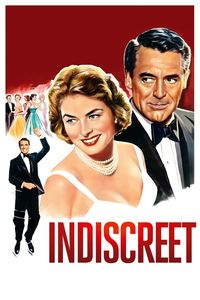
    (On Cable TV, February 2021) There’s a freshness of approach in Indiscreet that makes it one of Cary Grant’s most satisfying late-career films. At the time, the fifty-something Grant was branching out in producing his own films, and starting to struggle with the growing age gulf between him and his on-screen love interests. What makes Indiscreet special in the middle of such films as Houseboat and Charade is that it’s a romance between two middle-aged protagonists —and an age difference of merely eleven years between Grant and co-star Ingrid Bergman, practically insignificant by Hollywood standards. (By comparison, Grant/Hepburn was fourteen years, Grant/Day was seventeen years, and Grant/Loren was twenty years —not that they all played their age.)  This meeting-of-equals of the characters (him a respected economist, her a well-known actress) gives Indiscreet a level of maturity not often seen in romantic comedies of the time, as both of them have ghosts to exorcise before committing to each other. To be fair, I found Indiscreet’s first half more classically interesting than the second — the process in which both characters cautiously choose to enter a relationship and have fun in its early days (all the way to a synchronized split-screen scene, said to be the first film to do so) is more interesting than the increasingly contrived complications keeping them apart in the second half. Grant is his usual smooth self here, with Bergman looking as radiant as she usually does. As directed by Stanley Donen, the film is a bit lighter on laughs than you’d maybe expect, but it remains mostly lighthearted throughout, as the obvious exception of the climactic sequence in which everything seems lost (but isn’t). Indiscreet remains a good example of how polished the Cary Grant persona was at that point of his career (he simply has to appear for the characters to go “wow!”), and without the lingering problematic implications of him being involved with much younger co-stars.

  • Two for the Road (1967)

    Two for the Road (1967)

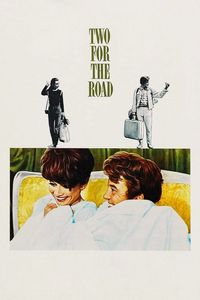
    (On Cable TV, July 2020) There’s something very unusual in Two for the Road’s premise, as it shows the evolution of a marriage (with its ups and downs) through the conceit of following the couple along a road trip from England to the south of France—repeated five times over twelve years. The narrative jumps in time as landmarks take the couple back to their courtship, early marriage and later breakdown of the relationship. It ends up being a very satisfying romantic comedy (even if the comedy does get thin at times) about a bickering couple. While Albert Finney is good with bon mots and debonair wit, Audrey Hepburn is the star here—it’s interesting that, to portray her at her youngest, the filmmakers gave her long hair opposite her usual gamine hairstyle—and we even get to hear her speak a few lines of French as well. There are a few dramatic moments later on, but this being a comedy reassures that it will conclude on a sunny note. Director Stanley Donen’s approach feels unusually modern through its mixed chronology structure, which allows us to go back and forth as the characters evolve and react ironically to similar situations. The film does sport a variety of humour from the high concepts to the low physical stuff. It’s all quite fun and not overly dated except for the party scene toward the end that powerfully reminds us that it was filmed in the mid-1960s after all. While likely to be a hit with a wide audience, Two for the Road will be a special treat for Francophiles, Hepburn fans and fans of good romantic comedies.

  • It’s Always Fair Weather (1955)

    It’s Always Fair Weather (1955)

    (On Cable TV, April 2020) A very strong selling point for It’s Always Fair Weather is that it reunites a good number of people who worked on Singin’ in the Rain: Director Stanley Donen, choreographer-star Gene Kelly, dancer-actress Cyd Charisse, and so on—this was, after all, one of the “Freed Unit” musicals handled with impeccable craftsmanship by people who knew what they were doing. The lineage from Singin’ in the Rain to The Band Wagon to It’s Always Fair Weather is not only obvious—it’s playful and very much self-aware. There is a lot to like here: Many distinctive musical numbers (trashcan tap-dancing, roller-skate tap sequence, boxing-ring serenade), innovative filmmaking (decade-passing montage, triple-split screen), some cultural commentary (poking at the advertising culture of TV, with a live-confession climax that must have felt far more innovative back then), clever musical touches (such as the brilliant use of Blue Danube as an internal musical number) and a far more wistful tone than you’d expect from a 1950s movie musical. Plus, well, there’s Cyd Charisse—her green dress is wonderful, her first long scene in a taxi is a delight, and those are only two of the reasons why she gets here one of her most substantial roles—singing, dancing, comedy and romance, almost as much as in Silk Stockings. It’s not exactly perfect—the missed opportunity to make this a sequel to On the Town still rankles—but sometimes, even its flaws are endearing. The wolf-whistling bit, for instance, is awful by today’s standards, but it’s so dated, so overdone (and kind of cute) that it becomes hilarious. The 1950s were a very strong decade for musicals, and the production history of It’s Always Fair Weather suggests that this was the beginning of the end of an era at MGM, with slashed budgets and less interest in the result. No matter—I’m ranking this film high on my list of top 1950s musicals, and if it signals the end of an incredible streak, then it’s a pretty high note on which to go out.

  • Deep in My Heart (1954)

    Deep in My Heart (1954)

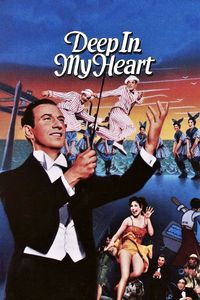
    (On Cable TV, April 2020) Sigmund Romberg is largely forgotten these days, but once upon showbiz history, he was considered famous enough as a Broadway composer of successful operettas to warrant a full-length MGM musical about his life. Deep in My Heart, in assembling a jukebox of his most famous hits loosely arranged in-between fanciful sketches about the composer’s life, wasn’t even an outlier but the latest in a subgenre that tackled other composers’ work. (I have a specific fondness for Till the Clouds Roll By, but more for Lena Horne than Jerome Kern.) The advantage of a revue-style structure is that beyond the main biographical cast (featuring no less than José Ferrer, Merle Oberon, Walter Pidgeon and Paul Henreid), you can bring in very special guest stars in specific musical numbers. This is where Deep in My Heart may be most interesting, because the mid-1950s MGM roster was stacked with great bit performers. Here we get Gene Kelly in a fun vaudeville dancing duet with his brother Fred (Fred’s only screen credit despite an accomplished dancing career). We get Cyd Charisse (dubbed, but spectacular), Ann Miller looking terrific as the “It” girl, Ferrer dancing romantically with his then-new wife Rosemary Clooney, and a few other distinctive numbers as shows-within-the-show. Ferrer’s performance is occasionally terrific: at one point, he gets a breathless showcase with a one-man-show presentation of an upcoming show; at others, he speaks magnificent French dialogue. Alas, those individual performer highlights are really what Deep in my Heart is about—the film itself is fairly unremarkable and classical in matters of execution. Director Stanley Donen’s heart was obviously in the musical numbers more than the rest of the film, and who can fault him? Working with stars to deliver their standalone numbers ensures that the film is still worth a look today for fans of mid-century musicals.

  • Take Me Out to the Ball Game (1949)

    Take Me Out to the Ball Game (1949)

    (On Cable TV, March 2020) Part of the fun of watching Hollywood history is seeing talented performers getting paired up even when the match isn’t quite harmonious. Frank Sinatra—brilliant singer. Gene Kelly—terrific dancer. Both of them together? Well, you have to see Take Me Out to the Ball Game how they play together… and having Esther Williams as the female lead doesn’t hurt either. A prestige song-and-dance show from MGM (in Technicolour!), it blends its leads’ skills with America’s sport and the usual trappings of musical comedies. The highlight is the theme song, but there are a few good moments elsewhere too: Esther Williams inevitably dips into a pool at some point, and while director Busby Berkeley’s imprint on the film is faint (he only shot a small portion of it, and the rest was reportedly completed by Kelly and Stanley Donen), there are still traces of it in the finished product. On the other hand, there’s some weird stuff as well: the references to suicide and pedophilia in the middle of an upbeat wolf-whistling song are a bit off-putting to say the least. Also not quite as controlled for twenty-first century viewers: double standards in how a determined woman is portrayed compared to the equally persistent male characters. Ah well—this is from the late 1940s, after all. Still, a muddled average and no high peaks means that Take Me Out to the Ball Game suffers in comparison to other Sinatra/Kelly vehicles like On the Town and Anchors Aweigh. They can’t all be perfect. In this case, it still means we get Sinatra singing and Kelly dancing.

  • Funny Face (1957)

    Funny Face (1957)

    (On Cable TV, January 2019) On paper, Funny Face looks like a perfect combination: A musical comedy with Fred Astaire, Audrey Hepburn and Paris. Thankfully, the film lives up to expectations: Fred Astaire dances as well as he can, and while Hepburn isn’t quite as much of a dancer as some of Astaire’s other screen partners, she did have dancing (and singing!) chops and couldn’t possibly be cuter as an intellectual bookseller—even Hollywood’s idea of an intellectual bookseller. Paris and Hepburn were a regular item (“Bonjour, Paris !”), but they look great together and the film doesn’t miss a chance to use a French stereotype when it can. (I had to laugh at the spat between two bohemian Parisians: “Salaud ! Dégueulasse ! *Slap* *Kiss*”) Unlike some musicals, Funny Face does have strong comic elements: The look at a fashion magazine—Astaire plays a fashion photographer—is amusing, and seeing both Astaire and Hepburn as black-clad undercover beatniks is hilarious especially as they skewer the philosophical excesses of Left-Bank thinkers. (Alas, Funny Face does have an anti-intellectual bent, but so it goes in musicals.) The romantic ending is more conventional and not as interesting, but as usual the fun is getting there. Less fortunately, you do have to get over the usual Astaire romantic issues in liking the film: His characters are often written as having revolting ideas about consent in the face of romantic persistence (“No” usually means “try again later with more charm” in his movies) and there’s a thirty-year difference between Astaire and Hepburn. That last item used to infuriate me, but then I recently realized that very few people could keep up with Astaire as a dancer—younger actresses at least had a chance to move as quickly and gracefully as he did. (It’s not much of an excuse, but it’s the one I cling to.) If you can manage to get past that, Funny Face is a perfectly charming and enjoyable musical, somewhere between a classic and a strong representative entry in the genre. (While technically a Paramount production, a number of key crewmembers such as director Stanley Donen were from MGM’s legendary Freed unit.) Plus, of course, it’s an essential piece of Hepburn’s filmography by showcasing her at her best.