Stanley Tucci

  • The Eighteenth Angel (1997)

    The Eighteenth Angel (1997)

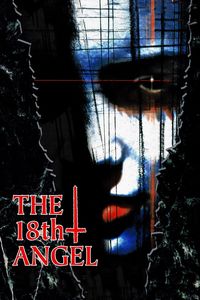
    (In French, On Cable TV, June 2021) An intriguing cast is certainly no guarantee of success, and while you may feel bad for skipping over horror film The Eighteenth Angel given its top-billed cast, I can assure you that you haven’t missed a thing. Sure, here you have Christopher McDonald, Rachael Leigh Cook, a young Stanley Tucci (an actor who has aged remarkably well) and Maximilian Schell in a story about a father/daughter pair battling an apocalyptic cult obsessed with hastening the return of Satan. But the execution is soporific in ways that defy prediction. For a film delving into prophecies, satanic rituals, age-old cults and the weight of a mother’s death (much of it against the backdrop of rural Italy), The Eighteenth Angel seems detached, almost entirely uninterested in what it’s presenting. The narrative is dull, and the slow-moving, pedestrian execution does nothing to improve on the substance. While it’s true that there have been many, many, many more similar films since then, it really doesn’t excuse the failings of The Eighteenth Angel. Just ignore the cast and go watch something else.

  • Supernova (2020)

    Supernova (2020)

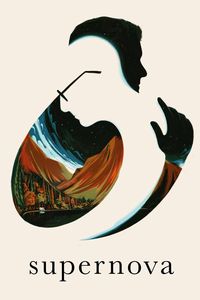
    (On Cable TV, June 2021) This is the third film named Supernova in twenty years, and it’s easily the least science-fictional of them — the word here is used as a metaphor, considering that the story is about a couple reacting to decline and impending death. Colin Firth and Stanley Tucci are impeccable leads here, playing a likable couple of very creative individuals (one a concert pianist, the other a novelist) contemplating how their twenty years together are about to be changed by the inevitable cognitive decline of one of them. Quite a bit of the film plays like a road movie, as they embark in their RV and head north to meet old friends for one (last) get-together. A film of moments rather than overarching narrative, Supernova is an actor’s showcase, as both Firth and Tucci play against a thin plot and fill out the gaps. Questions of loss, grief and euthanasia inevitably rear their heads, and even the ending is far less dramatic than anyone would expect. Writer-director Harry Macqueen’s film is difficult to criticize, as he knows exactly what he’s going for, and no one wants to appear churlish for not liking the result. This being said, I strongly suspect that those who will get the most out of Supernova will be those looking to see Tucci and Firth at their best, and simply take in the atmosphere of a long-time couple facing the fact that each day from now on will be worse than the last. It’s a film to see for the silence between the lines of dialogue rather than the dialogue itself.

  • Shall We Dance (2004)

    Shall We Dance (2004)

    (On TV, November 2020) I haven’t seen the Japanese film on which Shall We Dance is based, but the American remake is, in a word, charming. It’s about a married man who starts attending dance classes in an effort to escape his increasingly boring life. The wife soon suspects something, and ends up hiring a private detective who’s amused to find out that the truth is not about adultery. There are additional shenanigans thanks to the other dancers, and a competition that consumes much of the third act, but the film is really about dancing in a way that has grown increasingly rare since the end of the golden era of musical comedies. (Fittingly, there’s a shout-out to The Band Wagon.) Richard Gere is quite likable in the lead, helped along with supporting performances from a motley crew of Susan Sarandon, a superb Jennifer Lopez, Bobby Cannavale and Richard Jenkins, with an unusually good turn from Nick Cannon in a supporting role and a very enjoyable performance from Stanley Tucci. I liked the unusual romantic angle of the film, with the main character interested but not exactly pursuing another romantic interest at the dance studio, providing inspiration for the other woman but ultimately returning even more strongly to his wife. The direction is unobtrusive most of the time, although it does let the actors show off some dance movies (including a surprisingly buff Tucci), and ends with a very nicely stylized epilogue. Shall We Dance is not supposed to be particularly deep or meaningful, but it’s pleasant enough to be watchable without effort, and pleasantly harkens back to an earlier tradition of dance movies.

  • Kiss of Death (1995)

    Kiss of Death (1995)

    (In French, On Cable TV, May 2020) The first thing anyone will notice about Kiss of Death is—holy moly, what a good cast of actors: David Caruso (back when he thought TV stardom led to a cinema career), Samuel L. Jackson (looking young!), Nicolas Cage (as a crime lord!), Helen Hunt, Stanley Tucci (with some hair!), Michael Rapaport, Ving Rhames… I mean, that’s interesting. The second thing one notices after the credits is—wow, this was a completely unremarkable crime thriller. Directed in solid but unspectacular fashion by Barbet Schroeder, it’s an update to the 1947 film noir classic that transposes the story in the 1990s, but doesn’t really do anything all that exceptional with it all. It’s not uninteresting—at the very least, you can say that it’s watchable without trouble. But it’s not anything more: moments where the film is overwrought (thank you, Nicolas Cage) almost give a glimpse into what this Kiss of Death could have been with more verve from everyone. In its current state, though, it’s having a really hard time distinguishing itself from the middle of the pack of 1990s crime thrillers: admittedly a good decade for those, but not an excuse for a film that doesn’t quite reach its objectives.

    (Second Viewing, In French, On Cable TV, July 2021) I know, I know – it makes absolutely no sense that I would see Kiss of Death for a second time in a year when there are far, far better movies that I have either not seen or seen only once. But as seasoned reviewers will tell you: no movies are as hard to review as the indifferent ones. You can be eloquent about the great or good movies; you can be acerbic about the bad or the terrible ones, but those movies firmly in the middle? Good luck even remembering them. So it is that I decided to have a second go at the 1995 version Kiss of Death, largely because I’d just seen the original 1947 one, and there was the remake playing again right now. Alas, I don’t have much to report – the remake is just as featureless and forgettable as the first time. The casting remains interesting, what with David Caruso, Samuel L. Jackson, Nicolas Cage, Helen Hunt, Ving Rhames, and Stanley Tucci (in the awkward balding phase of his career). And while the cast slightly elevates the material (with particular mention to Nicholas Cage, who’s given the unenviable task of measuring up to Richard Widmark’s iconic performance in the original film) it’s really not enough to distinguish what remains a somewhat humdrum mid-1990s thriller. I can understand the desire to strike a mark away from the original noir classic, but in setting out to do its own thing and update the material, this remake forgoes the psychotic vileness of the antagonist, the strong atmospheric cinematography and the impending feeling of doom for the protagonist. (The happy-ish ending is not a surprise like it was in the original, but par for the course of such thrillers.) What we’re left is largely undistinguishable from so many other thrillers of the time, executed with mere competence but no real flair. I’m reasonably confident that I’m going to forget nearly everything about this remake within days, so you may get a third viewing in the next few months.
  • Billy Bathgate (1991)

    Billy Bathgate (1991)

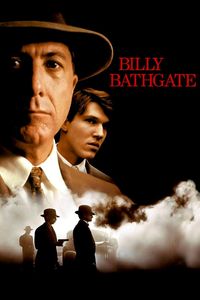
    (In French, On Cable TV, May 2020) At first glance, Billy Bathgate looks like the kind of slam-dunk entertainment that 1990s Hollywood made so well—a mixture of coming-of-age drama set within a fascinating gangster context, with a little bit of romance to sweeten the whole thing. Throw in the 1930s period recreation, a bestselling source novel written by EL Doctorow, a strong cast of actors, plus story elements so familiar that they become comfortable, and Billy Bathgate looks like a ready-made audience pleaser and potential awards contender. Except that it didn’t turn out that way.  Production of the film was marred by endless rewrites, significant cost overruns and Doctorow distancing himself from the adaptation. Things didn’t get better upon the film’s release, as critics savaged it and audiences ran away. Now a largely forgotten relic of a decade now long past, Billy Bathgate has become a curiosity. It hasn’t improved with age—the blend of coming-of-age drama with gangster thrills is still awkward, and curious creative decisions keep haunting the film and making it duller than it should be. On the other hand, it does have some nice period detail, a fun episode set in a small upstate New York town, a rather amazing cast made of then-known names (Dustin Hoffman, Nicole Kidman, Bruce Willis) and people who would later become far more prominent (Stanley Tucci, Steve Buscemi), as well as far more nudity from Kidman than you would expect from the nature of the film. For film reviewers, it’s not a bad idea to go back in time to see not only the classics, but also the failures like Billy Bathgate. Decades past the media pile-up that often happens in such cases, it can be instructive to look at the wreckage and wonder—well, what happened here?

  • Beethoven (1992)

    Beethoven (1992)

    (In French, On TV, April 2020) At least the logline of this film writes itself: “Family adopts a very big dog, mayhem ensues.” Written by John Hughes under pseudonym, Beethoven is so clearly and directly aimed at family audiences that its single-minded determination to crack that market is almost admirable. A multiplicity of subplots further widen the appeal, ensuring that at least someone will get something out of at least one plot strand. (Fittingly enough, I most identified with the harried father—a suitably comic performance from Charles Grodin.) Given this, it seems almost churlish to point out that the film ekes a mediocre result. The same forces packaging the film for maximum audience sympathy also prevent it from going anywhere interesting. There is one exception, and it’s a bad one—one scene is surprisingly bloody for a family film, and that’s not even getting into the wisdom of putting animal experimentation in a family film in the first place. On a happier note, this film is amazing for a few young up-and-coming actors getting supporting roles, whether it’s David Duchovny as an arrogant venture capitalist, or both Stanley Tucci and Oliver Platt as hoodlums. None of this makes Beethoven that much better, but at least it’s something to watch while the youngsters are happily cheering the dog along.

  • The Life and Death of Peter Sellers (2004)

    The Life and Death of Peter Sellers (2004)

    (In French, On Cable TV, May 2019) Few biographies have as much naked contempt for their subject matter as this unexpectedly fascinating biography of famed comedian Peter Sellers. After all, The Life and Death of Peter Sellers exposes Sellers as an unstable, gluttonous, credulous, and self-hollowed figure, cruel to children and lovers, unable to depend on a solid inner core and all-too-willing to escape through his characters. I suspect that my admiration for this film has as much to do with its willingness to break down the structure of typical biographies than my growing knowledge of Sellers’s work (It’s a lot of fun to see the film recreate and nod at movies of the period, even some Sellers-adjacent ones in the Kubrick repertoire—the 2001: A Space Odyssey reference is blatant, but there’s a not-so-subtle one to The Shining as well). Structurally daring, The Life and Death of Peter Sellers reinforces its thesis about Sellers taking on roles as a substitute for his inner life by having Sellers occasionally portray people around him, delivering monologues that either reflects these people’s opinions of Sellers, or Seller’s best guess at what they thought of him—it’s not rare for the film to step in and out of sound stages, further breaking the thin line between fiction and moviemaking. The all-star cast helps a lot in enjoying the result: Geoffrey Rush is surprisingly good as Sellers, the resemblance between the two getting better and better as the film goes on. Other notable actors popping into the frame include Emily Watson and Charlie Theron as two of his four wives, John Lithgow as Blake Edwards and no less than Stanley Tucci as Stanley Kubrick. The tone and look of the film shift regularly to illustrate Sellers’s state of mind, his circumstances or simply the movies he played in—as an expressionist take, The Life and Death of Peter Sellers is frequently surprising, delightful and rewarding the more you know about Sellers. It did cement my unease with Sellers’s work (you’d be surprised at how many Sellers movies I don’t particularly like—click on the Peter Sellers tag to know more) but it informed my half-grasped notions about his life. Now I’ll have to read a biography to know more. [June 2019: And I did! As it turns out, the real story is even stranger, even worse for Sellers and just as disdainful for its biographer.]

  • The Pelican Brief (1993)

    The Pelican Brief (1993)

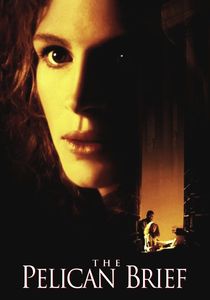
    (In French, On TV, March 2019) In retrospect, it does make sense that a straightforward crowd-pleasing novelist like John Grisham would lead to a handful of straightforward crowd-pleasing movie adaptations. I’m not complaining! In fact, I miss those solid, medium-budget standalone thrillers. Take The Pelican Brief, for instance—an average but competent thriller in which a young woman stumbles upon a conspiracy by linking the death of Supreme Court justices to land development shenanigans. If the film has a stroke of good luck, it’s in being able to depend on a few capable actors (Julia Roberts and Denzel Washington, obviously, but also John Lithgow, Tony Goldwyn and Stanley Tucci in a rare role as a terrorist) as helmed by veteran director Alan J. Pakula—who clearly knows how to wring every drop of suspense out of a given sequence. The early-1990s atmosphere of The Pelican Brief is getting quainter and more charming by the day as it reminds us of how difficult it was at the time to get any kind of information without the Internet: the movie would be about an hour shorter if they just had access to Google. But then again, maybe that’s the way they’re going to go with a remake: have a blogger spew a joke conspiracy theory that happens to be true, rather than have a law student speculate as in this film. Ah well—I’m not really asking for a remake. This one is good enough.

  • Patient Zero (2018)

    Patient Zero (2018)

    (On Cable TV, February 2019) Medium-low budget films about the zombie apocalypse are a dime a dozen these days, and Patient Zero doesn’t do much to distinguish itself from the undead pack even when it pretends that’s not really a zombie story. This is one of those films that posits that the humans are the real enemy, and the inevitable degradation of the bunker environment feels like another retread of Romero’s Day of the Dead. Struggling with having anything to say, Patient Zero hovers around I am Legend thematic concerns without quite making the leap into the advantages of the replacement solution. I’ll be honest: Most of my motivation in watching the film was in seeing another role for Natalie Dormer, and while she does make for a fine leading couple along with Matt Smith, it’s really Stanley Tucci who steals the show, no doubt relishing the opportunity to play a ripped zombie leader and earn some muscular action antagonist credentials. The script is where the problems start: In trying to show a world where zombies are creating their own language, the film barely creates the scaffolding of an intriguing premise (is it a new or modified language? Does it lead to a distinct culture? How much of it is different from human?) before giving up and wallowing into the clichés of the genre. Of course, there’s a trigger-happy colonel who relishes shooting nearly every promising character, existing solely for making things more difficult. Of course, there’s a quasi-magical antidote-from-Patient-Zero nonsense, something that even the film doesn’t believe even if its (so-called smart) characters do. A better screenwriter would have been able to do better, but I’m not sure that the end result would have been much improved considering the uninspired direction from Stefan Ruzowitzky. From its very dull generic beginning to a disappointing Adam-and-Eve conclusion, Patient Zero constantly threatens to become better without never actually doing so. Some of the action sequences almost work well, but they’re not enough. I strongly suspect that the film was abandoned by its studio: Shot in 2015 with then-popular actors, the film was ultimately dumped without fanfare in 2018 almost as if they wanted to wash their hands off the result and let it fade among so many other similar movies.

  • Wild Card (2015)

    Wild Card (2015)

    (On Cable TV, January 2016) Jason Statham starring in a William Goldman script? Well, yes: Apparently, veteran director Simon West dug up an old Goldman screenplay and polished it to Statham’s persona, although the result remains more Goldmanesque than playing to Statham’s usual action thrillers. Taking place in the seedier corners of Las Vegas, Wild Card revolves around a British-accented hard-boiled bodyguard with a gambling problem. As the movie begins, an old acquaintance asks for help in exerting her vengeance, a new client wants pointers on how to be tougher, and our protagonist starts thinking about the amount of money it would take to get out of the business. Add some mobsters, a cinematography that practically lives in the seventies, a restrained number of action scenes and you have a movie that actually provides Statham enough substance to show that he’s a better actor than most people are willing to consider. The compromise has a cost, though: The few fights may not make his fans happy, and it’s certainly nowhere near thoughtful enough to aspire to art-house respectability. So it is that Wild Card often feels as if it’s sitting halfway between an action thriller and a gambling drama. There are a few good moments: In West’s capable hands, the fights are fine, Stanley Tucci has a very likable quasi-cameo as a mobster and Michal Angarano isn’t too bad as a nebbish millionaire trying to toughen up. Wild Card almost harkens back to an older era of filmmaking, not quite as rigidly bound by formulas and willing to punctuate drama with action rather than the other way around. But while the result may be fitfully interesting, it’s not enough to be memorable: it plays like far too many Statham films, as merely serviceable filler.

  • Maid in Manhattan (2002)

    Maid in Manhattan (2002)

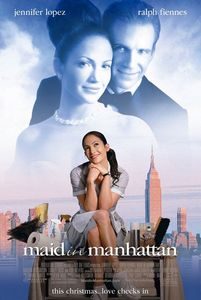
    (On TV, April 2015)  I’m usually a good audience for romantic comedies and/or anything featuring Jennifer Lopez, so imagine my disappointment at my disappointment for this film.  A fairy-tale recast in modern setting (i.e.; a Manhattan maid in disguise as a wealthy guest catches the eye of an up-and-coming politician, leading to romantic complications), Maid in Manhattan seems intent on self-destructing before it ends.  It is, of course, about class issues… but doesn’t offer much in terms of criticism beyond a pat “work hard and you too can become part of (or marry into) the upper class.”  It never properly convinces audience of the perfect match between the two leads.  It doesn’t offer much to do for Jennifer Lopez, who seems to have been cast almost solely on the basis of finding an attractive Latina with name recognition.  It meanders through a series of obligatory scenes whose point is painfully obvious even when they begin.  Poor Ralph Fiennes seems to wander in the film, lost and confused as to what he’s doing there, never credible as a rising political star.  Even Stanley Tucci is stuck in a caricature and can’t escape the irritating mediocrity of the result.  By the time the stock ending is assembled out of the obvious plot-pieces, it feels more like a relief that the entire film is over more than any heartfelt affection for the reunited characters.  Maid in Manhattan classifies as a comedy on the basis that it’s not much of a drama and certainly not a tragedy –but you’d be hard-pressed to find laughs here.  Neither will you find anything else worth remembering.

  • Jack the Giant Slayer (2013)

    Jack the Giant Slayer (2013)

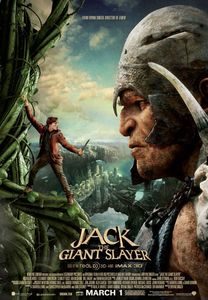
    (On Cable TV, May 2014) The past ten years have seen a mini-boom of sort in fairy tales and fantasy books converted to the screen through the same screenwriting formula, all eventually leading to the climactic shock of two armies running into each other. Snow White, Alice in Wonderland, Narnia, Jack and the Beanstalk: nothing is safe from the Hollywood fantasy paradigm. In Jack the Giant Slayer, two fairytales become an action fantasy epic about kingdoms going at war, a peasant winning over a princess and assorted shenanigans to take over the throne. While the results can be interesting in bits and pieces (the depiction of a giant beanstalk has a can’t-be-missed patina of realism), it usually boils down to a familiar and ultimately boring template. While director Bryan Singer is a seasoned professional who knows what he’s doing, there simply isn’t much to the script. Nicholas Hoult does a bit better as the titular hero, although it’s easy to wonder what could have compelled Ewan McGregor and Stanley Tucci to take on such minor and thankless roles. It’s not an unpleasant film to watch… but the biggest problem with Jack the Giant Slayer is that it’s dull and almost instantly forgettable. Save for a highly pretentious final scene that somehow feels the need to link with the present, it’s a film that’s too middle-of-the-road to be noticeable. The perfect example of how quickly pop-culture can dispose of movies that have involved years of work by hundreds of talented craftsmen.

  • Margin Call (2011)

    Margin Call (2011)

    (In theaters, December 2011) Obviously inspired by the financial crisis of September 2008, Margin Call is a rare thriller in which conversations, analysis and boardroom meetings take the lead over car chases, explosions and gunfights.  It starts with a mass layoff at an unnamed Wall Street trading firm and a dire warning from one fired analyst to his still-employed protégé: “Be careful.”  Before long, our intrepid boy wonder has discovered that the firm is about to go bankrupt, and the news spread upward in a series of meeting with ever-more-important people.  Strategies are discussed, blame is tentatively assigned, speeches are made, decisions are taken and, eventually, a terrible no-return strategy is adopted.  The film isn’t as good as it could be: Margin Call’s low-budget and first-time director shows in the static cinematography, tepid pacing, overlong shots and lack of a fully satisfying conclusion.  But the achievement here is considerable, starting from the terrific cast assembled here: Kevin Spacey gives a far more humane take on his usual screen personae; Paul Bettany is terrific as a high-flying trader who realizes the danger of his current situation; Jeremy Irons makes an impression as a point-one-percenter with gravitas; Stanley Tucci is wonderful as usual as an engineer turned financial analyst; and so is Zachary Quinto (looking a lot like a prettier Ewan McGregor in Rogue Trader) as the pivotal character who flags the crisis.  The dialogue is sharp, the dramatic dilemmas are unusual, the characters are well-developed and the themes are current at a time where an increasing number of Americans are openly questioning the social usefulness of the business described here.  While the dialogue-heavy piece won’t appeal to everyone, Margin Call  is a clever and efficient film that fully exploits the limits of its budget to deliver a striking result.

  • Captain America: The First Avenger (2011)

    Captain America: The First Avenger (2011)

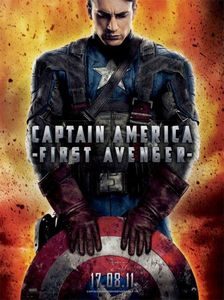
    (In theaters, July 2011) The inherent nationalism of the Captain America character makes it a tricky sell outside the United States.  How best to translate a superhero originally developed to tap into pro-American anti-Nazi fever to an international audience that, to put it politely, may not believe as much in American exceptionalism?  Nazis, unsurprisingly, are part of the answer: This Captain America not only takes places during World War 2 (albeit a dieselpunk-verging-on-atompunk fantasy version of WW2) and squares off against a supernatural Nazi opponent, but director Joe Johnston also adopts an un-ironic filming style reminiscent of classic adventure films.  Fortunately, it all fits together, with a little surprise at the end: Trying something a bit different from other films superhero films proves to be a good idea, and Captain America turns into a refreshingly old-fashioned entertainment.  A good chunk of the fun belongs to Chris Evans, who takes on the square-jawed heroics with unselfconscious honesty; good supporting roles also go to Hugo Weaving as the villainous Red Skull, Stanley Tucci as an eccentric mentor and Tommy Lee Jones, chewing on the kind of gruff military man role he’s so naturally suited for.  The story plays itself out over a few years, with a few unexpected hooks and references to the real-world history of Captain America: keep your eyes out for a reproduction of the real Captain America #1 cover during the film’s amusing showbiz digression.  Fans of the Marvelverse put on film will love the references to Thor and the Iron Man hooks with the importance given to Tony Stark’s father.  Add to that a few good supporting characters, a decent romance with chronological room to grow, a nifty coda and some fascinating special effects and Captain America isn’t just good enough to become a high point of Summer 2011 in Hollywood, but a superb lead-in to 2012’s The Avengers.

  • Burlesque (2010)

    Burlesque (2010)

    (In theaters, December 2010) Burlesque does quite a few things blandly or badly, but the real test of musical comedies is whether they deliver the expected music, laughs, dance choreographies and smiles whenever the final credits start to roll.  So it is that we can’t really fault the film for an intensely familiar structure, predictable plot developments, weaker tunes or a very PG interpretation of “burlesque”; not as long as it has enough song-and-dance.  There are plenty of good news: Christina Aguilera proves to be a credible actress, Cher looks amazingly good for her age (and you can see this as an invitation to cue all of the usual cosmetic surgery jokes), Stanley Tucci is as good as he usually is, the somewhat better-than-usual banter probably comes from Diablo Cody’s screenwriting and in terms of choreography, Burlesque has more or less what we can expect from a contemporary musical.  Unfortunately, there is little here to set the film apart from more notable musicals: The songs are instantly forgettable (the one exception, a maudlin solo number by Cher, stays in mind because it uses the flimsiest of pretexts to stop the entire film dead in its tracks), the plot offers few surprises, the choreography of each number blurs into an indistinct mush, and the choice to play much of the story earnestly rather than as ironic camp seems like a modestly wasted opportunity.  There’s no risk-taking here, and the film’s family-friendly take on neo-burlesque is a telling clue as to what kind of middle-American target the filmmakers were aiming for.  Fortunately, there are still enough fancy fishnet stockings on display to resort to sheer sex-appeal when the film’s other qualities prove defective.  No matter what, there is at least some redemption in the mud: Burlesque may be ordinary, but it’s not often boring.