Step Up series

  • Step Up 2: The Streets (2008)

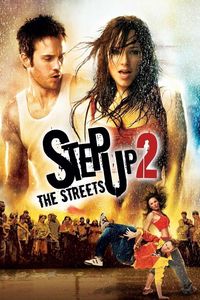
    Step Up 2: The Streets (2008)

    (In French, On TV, March 2021) It’s been a wild ride through the Step Up series, as I (let’s check my notes) onboarded on the third in theatres in 2010, waited eight years before seeing the first, then followed it up every six months by the fifth, then the fourth and finally the second film. Whew. In retrospect, the second film is the one that shaped the series — we may talk about Fast Five as a major pivot point in its series, but Step Up 2: The Streets extended the romantic comedy aspect of the first film into the dance musical extravaganza of the next few instalments and codified both the style and the recurring characters. Even from a narrative perspective, the film almost begins anew — Chaning Tatum shows up briefly in an early scene to bring the lead character into the fold and then disappears. Suddenly, with director John M. Chu taking ownership, the street aesthetics of the series become more pronounced, the mood lightens up, Adam Stevani makes his introduction as the compelling “Moose” (never the lead, but always invaluable as supporting actor), and the series moves toward intricately choreographed spectacle, setting the tone for the next movies. Don’t tell anyone, dear Internet, but (looks around carefully and whispers) I dearly love this series. It’s the closest recent American cinema ever came to recapturing the undiluted joie de vivre that was previously found in the best of Classic Hollywood musicals. The blend of dancing, music and vivid cinematography takes advantage of all facets of movies as an art form, and the result is impossible to watch without a smile. Never mind the perfunctory plot — the fun of Step Up 2: The Streets is in the dance set-pieces all the way to a rain-drenched street demo as a climactic sequence (an idea so good that it was reprised in the next film in the series, where it was also a showcase). The cast of characters is quirky enough to be interesting, and the film has the good sense not to talk too long on the way to the next dance sequence. It’s all kinetic and fun, with great beats and even better choreography. I suspect that one of the reasons it took me so long to watch all five films is that, now that I’m done, I feel sad: The series stopped in 2014 (save for a Chinese spinoff in 2019), and there isn’t even a tidy box set available for fans. Too bad — I’d be first in line to get a copy.

  • Step Up Revolution (2012)

    Step Up Revolution (2012)

    (On Cable TV, May 2020) I’ve bounced all around the five-film Step Up series, from seeing the third in theatres to going home to watch the first and then the fifth and now the fourth. (Don’t worry—I’ll see the second soon.) The decision to locate Step Up Revolution in sunny colourful Miami is a good one, although the dubstep and flash-mob fascination date this film more solidly in 2012 than anything else I would have imagined. The plot itself, what with its promoter-destroying-neighbourhood hook, is rather jejune and more fitting to a kid’s movie starring a dog, but the point of the movie is the dance sequences, and there are quite a few good ones here. Never mind that our ragtag dance troupe requires props and costumes that would bankrupt any professional dance group. There are a few callbacks to the previous entries of the series (Moose shows up!), but Step Up Revolution generally stands alone. The calling card of the series is that it’s about as close as we’ll get to modern MGM musicals, and in that regard this fourth entry delivers the goods in energetic fashion: It’s best to look at it as a collection of dance numbers than a cohesive narrative. From that angle, the film’s highlights include a massive number on Ocean Drive, a cute bit at the Miami Museum of Fine Arts that pays homage to Miami’s art scene, a hilariously on-the-nose bit featuring a “businessman” flash mob and a finale set against a colourful stage made of shipping containers. The plot makes no sense, but the numbers are high-energy, Cleopatra Coleman has a supporting role, and the anti-capitalist message is good for the kids. All told, I can’t find any problem with Step Up Revolution. Why isn’t there a box-set of this series available for purchase?

  • Step Up All In (2014)

    Step Up All In (2014)

    (On Cable TV, April 2020) If I’m an unlikely fan of the Step Up series, it’s because it’s the closest that twenty-first century Hollywood (so far) has come to a series of Classic-Hollywood dance musicals. From a somewhat dull and unpromising first instalment, the series has grown into a modern showcase for dancing and spectacular choreography. Sixth instalment Step Up All In isn’t particularly interesting from a plot perspective (dance contest in Las Vegas, blablabla) but that’s not why we’re watching the film—this is about the dances, the numbers, the choreography, maybe even the recurring characters a little. (Moose definitely levelled up by growing up!) This final instalment wisely chooses to bring back as many characters from previous films as it can, which ends up giving a nice send-off to the series. Vegas makes for an exuberant backdrop to the action, and the money has clearly been spent in the lavish choreography of the dance numbers—and the soundtrack’s pretty good too. While I’m an easy audience for this film, Step Up All In is almost pure fun—and I really should make an effort to see the few instalments of the series I haven’t yet seen.

  • Step Up (2006)

    Step Up (2006)

    (Video on-Demand, November 2018) There’s a deliberately mercenary intent to Step Up that makes the film more interesting to watch as a Hollywood product demonstration than for any of its intrinsic qualities. A spirited blend of very mid-2000s youth culture components, it mixes urban violence with dance numbers in an attempt to spit out a complete date movie for the boys and the girls. It would be almost completely forgotten today if it wasn’t for a few lucky breaks that led to its many sequels ensuring de facto influence. (To be fair, the sequels are often one step up from the original in terms of sheer enjoyment—I particularly liked Step Up 3D.) The film’s biggest luck was to choose a then-unknown Channing Tatum as the male lead, playing a hip-hop dancer from the wrong side of the tracks who (through handy contrivances) comes in contact with an upper-class girl studying ballet. They’re fated to be together, obviously, which lead to a ballet/hip-hop fusion that leaves the inevitable judges inevitably dazzled right in time for him to transfer to her better school, get the girl and dance their way to the end credits. It’s pure formula stuff, with a direction so ordinary (except for the rooftop dance cinematography, maybe) that you’ll be forgiven for mistaking this for Save the Last Dance or Honey or Fame (2009) or other similar movies from the era. But that’s kind of the point—the clichés write the plot and hopefully the teenage audiences won’t have seen any of the other movies because teenagers are an evergreen resource of movie history ignorance. (Well, not really—Hollywood usually severely underestimates teenage media savviness.) Step Up remains a bit of an oddball entry even in its own series because it’s a bit darker and not quite as pure a dance musical comedy as later instalments would become. But that’s Hollywood for you: figure out the kinks in the first film, remove those, add more of what the kids want to see and voilà a series.