Stephen Frears

  • Mary Reilly (1996)

    Mary Reilly (1996)

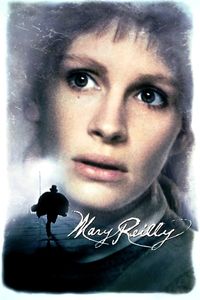
    (In French, On Cable TV, May 2021) I can’t count the variations on Doctor Jekyll and Mr. Hyde that I’ve seen so far, and it’s somewhat ironic that perhaps the biggest budgeted of them, Mary Reilly, would end up being one of the most forgettable. Explicitly setting out to be a feminist take, it tells the familiar story through the eyes of the housemaid in the Jekyll residence. It has a visibly high budget, a good director (Stephen Frears), big stars (none other than Julia Roberts and John Malkovich, among many other known actors in supporting roles) and was marketed as a prestige studio release back in 1996. Alas, the result isn’t much to talk about. Visually, it’s about what we expect from a Victorian tale. Narratively, it doesn’t do much to interrogate the original story or present it in what feels like a novel fashion. You’ll get far more psychological exploration or narrative variations from other takes on the material (Compared to Doctor Jekyll and Sister Hyde, for instance, Mary Reilly is very weak stuff). Perhaps worse than anything else is the film’s inability to justify its own existence: it falls flat, bores viewers, doesn’t do much with its female-centric perspective (such a film would be given to a female director these days, most likely to better results) and doesn’t leave much of an impression once it’s done being stultifying. It’s even more remarkable in that the source material is interesting and provocative — but this time, it’s as if everyone involved in the production agreed to minimize the strengths of the original, while boosting the least interesting aspects of it.
  • Hero (1992)

    Hero (1992)

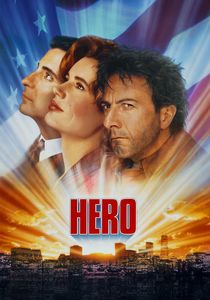
    (On Cable TV, August 2019) What I like best about Hero is the way it engages with a question that most would rather avoid—the nature of heroism. Especially in movies, where heroism is the kind of pillar value of spectacular entertainment. Movies are not where regular people live—it’s where we get to indulge in idealized characters doing things that go beyond the ordinary. Accordingly, it’s refreshing to see the film focus around a small-scale criminal who suddenly finds himself in a position to perform an act of undeniable heroism—even as he uses the situation to his advantage. The ethical questions that follow are fascinating and rarely explored—weighing public perception versus private intentions, feelings of shame and further complications. It’s fertile material, even if Hero doesn’t quite manage to execute its material in better-than-average fashion. There’s a lack of focus to the film that eventually makes it feel longer than it should (even at 112 minutes), with its philosophical questioning more diffuse than it would have been in a more concise format. There’s a lot to like in Dustin Hoffman’s lead performance, though—under Stephen Frears’ direction, he’s able to take on a thankless role with a great deal of panache—I wonder how many A-list actors without Hoffman’s dramatic background would have been willing to take on such an inglorious role. There’s a decent depth to the supporting casting, all the way to numerous uncredited cameos. Hero’s not a perfect film, but it does ask unusual questions and manages an honest result despite a number of missed opportunities.