Sterling Hayden

  • 5 Steps to Danger (1956)

    (On Cable TV, November 2021) While 5 Steps to Danger may begin as a film noir in the Detour tradition, it soon turns into a cold war thriller when our everyman protagonist becomes involved with a plot to steal American nuclear secrets. Sterling Hayden stars as our likable hero, with Ruth Roman playing what initially looks like a femme fatale, but ultimately becoming not much more than a standard love interest in a lovers-on-the-run suspense film. Writer-director Henry S. Kesler moves his pieces without too much fuss, but 5 Steps to Danger is perhaps best appreciated as a representative first-generation Cold War thriller than a particularly good example of the form. It evokes plenty of other better films, especially when our lead couple goes on the run to find the truth among so many lies and deceptions from Soviet agents. Some sequences still work well — perhaps most notably a confrontation deep inside a military base in which enemy agents are flushed out. The southwestern desert makes for an effective backdrop, but 5 Steps to Danger seems self-limiting in how lazily it uses its own best elements. While the result is still very watchable, there’s little doubt that a better filmmaker would have been able to do much better.

  • Johnny Guitar (1954)

    Johnny Guitar (1954)

    (On Cable TV, October 2020) I don’t normally like Joan Crawford (Mommy Dearest didn’t help), but she is a force of nature in Johnny Guitar, a film that, despite its title, actually revolves around her. The titular Johnny (played by Sterling Hayden) initially gives us the impression that he’s going to be one of those singing cowboys matinee idols as he enters a saloon in the middle of nowhere and starts strumming and crooning. But the drama quickly displaces the music, as Crawford’s character (the owner of the saloon) comes in and sets the plot in motion. Her saloon is not built in the middle of nowhere as much as on the path of a future railway; nearby townspeople are insanely envious, and she has close ties to one of the local hoodlums. Our guitar-toting hero is also an ex-flame, and when the local bank is robbed in her presence, everything goes up in flames. A somewhat unpredictable screenplay and a steady descent into heavier and heavier drama do help make the most out of Johnny Guitar’s western elements. Crawford finds an equally impressive opponent in Mercedes McCambridge’s vengeful antagonist (a somewhat unusual case of a female antagonist in western films, if I’m not mistaken)—it’s said that the two women wouldn’t stand each other off the set as well. Nice outdoors colour cinematography also helps in wrapping up a package that’s far more interesting than your usual western.

  • The Asphalt Jungle (1950)

    The Asphalt Jungle (1950)

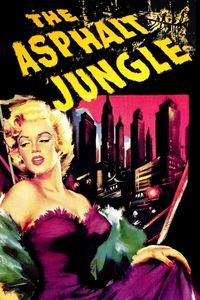
    (YouTube Streaming, May 2020) There is something both familiar and comfortable in the very enjoyable film noir heist movie The Asphalt Jungle. It was a bit of a sensation at the time—a film that stripped away the glamour of Hollywood to approach cinema-vérité and spent more of its running time with the criminals planning a heist than the policemen hunting for them after the crime. Those are now standard features of crime movies, of course—and this may mask some of the impact of the film as it was perceived back then. Fortunately, John Huston’s direction here is masterful and has aged very well. While The Asphalt Jungle can’t escape a certain scattered effect in the midway section, it tightens up in time for the conclusion. The mid-century Midwest atmosphere is very convincingly rendered, and it’s supplemented by the corrupt characters and unescapable fatalism so beloved of the film noir genre. Sterling Hayden turns in one likable lead performance in an otherwise fairly grim cast—although there’s an early turn by Marilyn Monroe to make things even more interesting. The Asphalt Jungle makes for compelling viewing even with the familiarity of its narrative—when something works, it works well enough decades later.