Steve Buscemi

  • Tales from the Darkside: The Movie (1990)

    Tales from the Darkside: The Movie (1990)

    (In French, On Cable TV, April 2021) It’s amusing how horror is the only genre to reliably sustain the anthology format. There’s a good reason for this — horror often works best in small doses, and having shorter stories one after the other can let filmmakers play with one idea at an ideal length, then move on to another. As far as anthology movies go, Tales from the Darkside is in the solid average, although some casting choices may bring it up one notch in some viewers’ esteem. The framing device has to do with a suburban cannibal preparing her meal while the main dish, a paperboy, stalls his cooking by narrating three stories from within his cage —not bad as a setup, but the conclusion seems a bit too convenient without the panache that such a tidy ending would warrant. The first story, “Lot 249,” is probably the most impressive from a casting standpoint, what with the much younger Steve Buscemi, Julianne Moore and Christian Slater all backstabbing each other horribly for academic purposes — alas, the narrative is a bit bland once you get over how great Moore looks. “Cat from Hell,” the second story, is far more interesting with its narrative hook, as a hitman is hired by a rich infirm to kill… a cat. A murderous cat, seeking revenge from pharmaceutical animal experimentation. It’s George Romero adapting a Stephen King short story, so it’s no accident if this is the most distinctive story in the film, even as it can’t quite avoid some silliness. Finally, “Lover’s Vow” goes for erotic gore with a story of death and promises between an artist and a mysterious woman. Rae Dawn Chong looks amazing here and the story does feel more violent than the others, making it a definitive climax to the film even if it’s a bit on the longer side. Tales from the Darkside can’t quite escape the uneven nature of horror anthologies, but it’s more interesting and varied than many others, and generally well-executed throughout. The surprising casting does add quite a bit to the final result — especially for those who went on to have long careers during which they visibly aged and developed their own screen persona.
  • Airheads (1994)

    Airheads (1994)

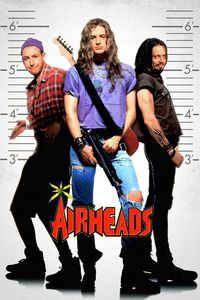
    (On TV, October 2020) I wasn’t expecting much from Airheads—another rock and roll comedy about dumb characters? Meh. But I hadn’t paid attention to the main cast nor the specifics of the plot before watching, and there was no way of guessing ahead of time the strange alchemy between its elements. But by the turn of the first half-hour, I was curiously invested in the adventures of our three rocking protagonists, unsuccessful musicians who end up, almost despite themselves, taking an entire radio station hostage. Much of the interest of the film these days will have to do with the lead trio of actors assembled to play the protagonists: Brendan Fraser, Steve Buscemi and Adam Sandler in an early pre-stardom role. The film does make the most out of its comic premise, escalating the situation even further with the hostages cheering for their captors when it becomes clear that the radio station is headed to a format change to easy-listening music. Lesser-know comic actors populate supporting roles from Chris Farley, Ernie Hudson and Joe Mantegna as a rock DJ. The soundtrack is stellar, beginning with “Born to Raise Hell” on the opening credit sequence. The supporting characters all have funny details to contribute, and the restricted setting of the film, once it’s done with the throat clearing, does add an interesting atmosphere. Airheads is not meant to be a good or particularly ambitious film, but I found it easy to like and surprisingly engaging once it gets started.

  • Mystery Train (1989)

    Mystery Train (1989)

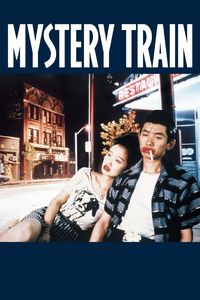
    (On Cable TV, June 2020) Not everyone likes writer-director Jim Jarmusch’s filmography, starting with myself. But compared to what else I’ve seen from him, Mystery Train is somewhere in the middle, perhaps even itching up toward the upper tier—a mixture of experimentalism in keeping with his early oeuvre. Its narrative is built on three stories about around a Memphis hotel and strangers who are in the city for a specific purpose. The first story is about a Japanese couple constantly arguing while visiting Elvis’s legacy. Another is about an Italian widow spending a one-night layover while waiting for her husband’s body to be brought home. Then, finally, a third aimless narrative is about three small-time criminals. It barely comes together at the end, but this is really a film of atmosphere and small moments and isolation and what it feels to be somewhere that’s not home. The playful chronology and repeating motifs may charm viewers. Casting includes such notable as Screamin’ Jay Hawkins and Steve Buscemi. Jarmusch fans ought to like this, but that’s not guaranteed for those who fall outside his appeal.

  • Billy Bathgate (1991)

    Billy Bathgate (1991)

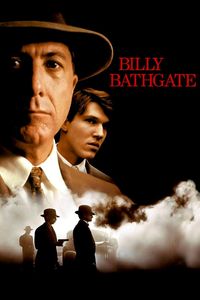
    (In French, On Cable TV, May 2020) At first glance, Billy Bathgate looks like the kind of slam-dunk entertainment that 1990s Hollywood made so well—a mixture of coming-of-age drama set within a fascinating gangster context, with a little bit of romance to sweeten the whole thing. Throw in the 1930s period recreation, a bestselling source novel written by EL Doctorow, a strong cast of actors, plus story elements so familiar that they become comfortable, and Billy Bathgate looks like a ready-made audience pleaser and potential awards contender. Except that it didn’t turn out that way.  Production of the film was marred by endless rewrites, significant cost overruns and Doctorow distancing himself from the adaptation. Things didn’t get better upon the film’s release, as critics savaged it and audiences ran away. Now a largely forgotten relic of a decade now long past, Billy Bathgate has become a curiosity. It hasn’t improved with age—the blend of coming-of-age drama with gangster thrills is still awkward, and curious creative decisions keep haunting the film and making it duller than it should be. On the other hand, it does have some nice period detail, a fun episode set in a small upstate New York town, a rather amazing cast made of then-known names (Dustin Hoffman, Nicole Kidman, Bruce Willis) and people who would later become far more prominent (Stanley Tucci, Steve Buscemi), as well as far more nudity from Kidman than you would expect from the nature of the film. For film reviewers, it’s not a bad idea to go back in time to see not only the classics, but also the failures like Billy Bathgate. Decades past the media pile-up that often happens in such cases, it can be instructive to look at the wreckage and wonder—well, what happened here?

  • The Death of Stalin (2017)

    The Death of Stalin (2017)

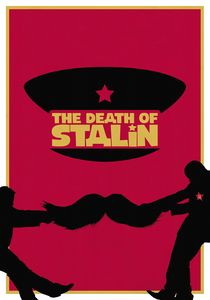
    (On Cable TV, July 2019) Calling The Death of Stalin a comedy only works if you include the darkest, most uncomfortable sort of comedy, describing life under a tyrannical regime in absurdist life-or-death fashion. Nominally a historical work (albeit one taking many, many liberties), the film follows the last moments of Joseph Stalin and the weeks following his death, commenting on the inherent instability of an authoritarian regime suddenly stripped of its leader. Following absurd orders and pretending everything is normal is the least of the characters’ worries when even a hint of disloyalty can get you shot. The political shenanigans to succeed Stalin grows complex even before the funeral is underway, and if the actors all have a talent in common, it’s to play this deadly eeriness with a deadpan expression. The terrific cast includes names such as Steve Buscemi, Jason Isaacs, Michael Palin and Jeffrey Tambor among many others—considering writer-director Armando Iannucci’s pedigree, the dialogue-heavy, almost theatrical script is an actor’s dream to play. The film would act as a powerful warning to anyone tempted by the lure of authoritarianism that such regimes are actively dangerous to everyone including the person at the top—but one suspects that anyone tempted by dictatorial regimes today are nowhere near Iannucci’s target audience. Alas, the effectiveness of the premise is not completely met by its execution: Considering that The Death of Stalin had been on my radar for more than a year before seeing it, I found myself underwhelmed by the actual film—while interesting, it’s not as gripping or amusing as I’d hoped. It didn’t help that I had a self-censor tripping up whatever amusing moments I found myself enjoying: This is a film that places a lot more emphasis on the dark of dark comedy.

  • Handsome Harry (2009)

    Handsome Harry (2009)

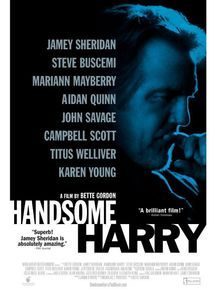
    (On Cable TV, June 2012)  As far as low-key low-budget dramas go, Handsome Harry is about as representative as it gets.  The cinematography is washed-out, the scenes drag on, the pacing is slow and the silences are numerous.  As a man sets out to re-acquaint himself with old navy buddies in a search for truth and absolution, the film is a series of staged set-pieces allowing actors to play against each other.  Steve Buscemi is announced as a headliner, but he’s on-screen for less than two minutes: the real star of the film is Jamey Sheridan, turning in a great performance as the conflicted lead of the film.  Surrounding him are a few other actors doing their best, which turns into a formulaic series of conversations in which things quickly turn wrong.  Still, the film’s not unpleasant to watch, and even the lengthy third act isn’t enough to spoil things.  Handsome Harry probably could have been a bit better, a bit snappier and a bit more memorable with a few tweaks, a bigger budget and a faster-paced third act, but what’s on-screen isn’t too bad already, and the actors all do a fine job.

  • Reservoir Dogs (1992)

    Reservoir Dogs (1992)

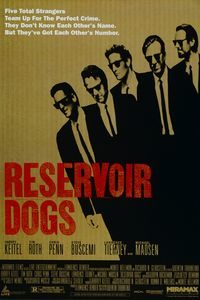
    (On VHS, December 1999) In retrospect, a rather promising debut by a guy named Quentin Tarantino. It’s also surprisingly theatrical, for such an obviously cinematographic film. Steadily -though blackly- amusing throughout, with great performances by Harvey Keitel and Steve Buscemi. A solid rental.

    (On DVD, February 2009) This talky crime thriller has aged pretty well, all thing considered. The dialogue gets better, the lack of action isn’t as surprising, and the cut-ear scene seems positively restrained given the excesses that Tarantino and his imitators have committed ever since. The 15-year-anniversary DVD edition is filled with interesting material, from interviews with/about the fascinating personalities involved in the project, a look at the impact of the film on the indie circuit and other assorted tidbits.