Stockard Channing

  • Six Degrees of Separation (1993)

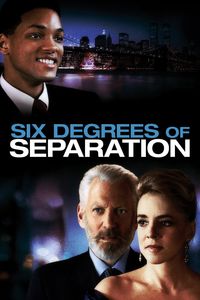
    Six Degrees of Separation (1993)

    (On TV, March 2020) An early entry in the “Wil Smith can act” section of Smith’s filmography designed to eventually get him an Oscar, Six Degrees of Separation is tonally very different from the films that ensured Smith’s success: It’s a rather quiet comedy-drama (adapted from a stage play) in which Smith plays a gay conman insinuating himself in the lives of upper-class Manhattanites. Smith looks impossibly young here—this was his first big role, and it happened right in the middle of his Fresh Prince of Bel-Air run. Not that he’s the only one worth noting here: In addition to a pair of lead performances from Stockard Channing and Donald Sutherland, the film also sports Ian McKellen, Heather Graham and, improbably, J. J. Abrams before he turned from screenwriter to showrunner and director. Six Degrees of Separation itself is a bit more interesting than expected—not solely content with the con at the heart of it, it goes on tangents about degrees of separation, a discussion of Cats-the-movie (in which McKellen would later star), honours given to Sidney Poitier, and, perhaps most devastatingly, how a significant incident in our lives can become nothing more than someone else’s party anecdote. The theatrical origins of the film mean that the dialogue is better than average, and Smith is already quite impressive in a role that runs on pure charisma. We know how the rest turned out.
  • Thoroughly Modern Millie (1967)

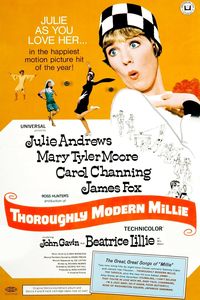
    Thoroughly Modern Millie (1967)

    (On Cable TV, February 2020) Common wisdom has it that the 1960s were terrible years for the movie musical, but I don’t quite agree with that—the overly serious 1970s were far worse, and there are plenty of enjoyable 1960s musicals to be watched now… even if the box-office receipts at the time were less than the studios expected. Thoroughly Modern Millie is a particularly fun and weird take on the genre. It’s a sixties-style musical set in the 1920s, with a flapper protagonist played by Julie Andrews. (I’m not a big fan of Andrews, and was particularly amused to find that the opening makeover number makes her less attractive and closer to her persona at each step.) Despite my own reservations about Andrews (legend has it that Mary Tyler Moore was intended to be the film’s lead until Andrews signed up, at which point the film was recentred around her and made into a musical), the result is a fun farce with inventive musical numbers. I quite liked the xylophone dancing in “Jazz Baby,” or the entire “Tapioca” number, which best showcases the exuberant filmmaking of the movie. Going well beyond musical numbers, there are flashy scene transitions through irises in/out, title cards to tell us what the heroine thinks as she looks at the audience and a lot of practical comic effects (such as an apple deflating). The twice-stylized 1960s execution and 1920s setting make for a doubly interesting viewing experience. As a farce, it’s probably a bit too long for its own good at more than two hours and a half (weariness sets in the second half), and the easy Asian stereotypes have not aged well at all. Still, it’s cute and fun most of the time—I would have preferred Mary Tyler Moore than the androgynous Andrews as a heroine (while keeping Stockard Channing as the film’s MVP), but Thoroughly Modern Millie remains a fun farce, amply earning a spot on a list of good 1960s musicals.