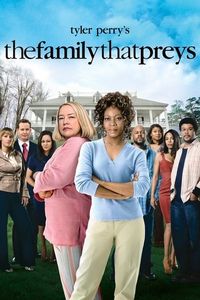
The Family That Preys (2008)
(On Cable TV, October 2021) Anyone wondering about Tyler Perry’s early-film-career strengths and weaknesses (not that there’s been much of a change since then) can always have a look at The Family that Preys, a middle-of-the-road effort that does feature the usual highs and lows of his film work. On the good side, we have a heartfelt look at black characters, with an emphasis on female characters. There are effective sequences supporting a strong sense of humanist morality, religion and family. There’s often (but not always) a clear-cut distinction between good people and bad ones, with the virtuous getting their rewards at the end. He manages to attract very interesting acting talent, and his flair for populist entertainment is far better than most other filmmakers, especially in playing to his specific audience. His penchant for melodramatic plotting (in the neutral sense of the expression) makes for easy, sometimes even engaging viewing—it’s easy to sit down and be swept in the story, even as blatantly plotted as it can be. On the other hand, his excesses are also here—a lack of a clear theme that leads to an unwieldy, sprawling structure that barely sits down to work out its own ideas. The writing is not very elegant (that “memory card” bit is, wow) and the points it makes are not subtle at all. Even the film’s striking moments (such as a man slapping his adulterous wife, portrayed as justified, or a homeless person being revealed as very important) seem very calculated. The caricatural nature of the antagonists is often too broad to be credible (the adulterous son even booking the same hotel room as his adulterous father!) and you know within moments who you’re dealing with—a woman putting down her man’s dreams is obviously up to no good, right? And yet, The Family that Preys rather works if you’re willing to be forgiving. The cast certainly helps—Kathy Bates effortlessly dominates the film as a matriarch, and her rapport with a splendid Alfre Woddard is one of the film’s highlights even if their subplot seems contrived and out-of-place. Sanaa Lathan is wonderfully detestable as the female villain, while pre-stardom Taraji P. Henson plays her good sister, Robin Givens has a striking smaller role and Perry himself has a small role as a construction worker. The ending is a lot of righteous fun to watch, as people get what they deserve from an old-school moralistic standpoint. Blunt but crowd-pleasing, Perry’s films are far more interesting than their critical reputation (largely forged by movie critics outside his intended audience) would suggest. I’m having a surprising amount of fun going through his filmography, even when the films are less than wonderful.