Taye Diggs

  • ’Til Death Do Us Part (2017)

    ’Til Death Do Us Part (2017)

    (On Cable TV, December 2021) You never know what hornet’s nest you’re going to uncover when you do research on a film to inform a review. I was going to open this capsule with “the only thing funnier than a BET-original comedy is a BET-original thriller” and riff from there, but a look at writer-director Chris B. Stokes’ filmography and assorted news items revealed that he’s the one behind some of the most disappointing films of the channel, and that his non-Wikipedia search results are a wild ride of a very lengthy filmography, a previous music career and more tabloid-worthy articles than I care to care about—none of them mentioned in what reads like a scrubbed-clean Wikipedia page. It’s so interesting that I’m having a struggle getting back to the movie ’Til Death Do Us Part, and some of that is due to a lack of interest in the film itself. Why does Stokes, with a filmography of over thirty productions spanning multiple genres, remain so inept at putting a film together? I understand production limits (simply getting movies done on time and on budget will get you far in the industry), but considering that BET keeps hiring him as a writer-director-producer, I’m flummoxed at why the results aren’t better. I’m not saying they’re terrible: there’s usually a spark of lurid interest in most of his films, but that seldom translates into an effective execution. Much of that is true for ’Til Death Do Us Part: As the film begins with the wedding of a picture-perfect couple, it doesn’t take a lot of time for the husband to turn abusive for some reason. What follows is a blend of thrills and romance, as the wife fakes her death, moves away, meets a much better man but then has to contend with a third act in which the husband tracks her down and does the usual attempted-murderous thing. It ends very much like you’d expect. Some of it plays well, although much of the plotting remains arbitrary and clunky. Other elements simply seem melodramatic and contrived, such as having a new mother (and an infant!) battling an intruder in a surprisingly large house. But I won’t begrudge the wildness of the ride, as it’s often the biggest reason to watch, even as everything else is just dumb or trite. Having an excuse to look at Stoke’s filmography, I’m left more bemused than anything else: churning out an average of two movies per year (now with miniseries!), he doesn’t seem able to go beyond a fairly basic level of filmmaking. He does have good actors backing him up in this case (Annie Ilonzeh is not bad, and Taye Diggs brings his usual charm to the supporting role of the better man) but his cinematography is pedestrian and his scripts show clear signs of being slapped together from obvious plot points. The results are perhaps best appreciated at some distance. I’m not saying that ’Til Death Do Us Part is worth a look, but I’m not saying that it’s to avoid either.
  • Brown Sugar (2002)

    Brown Sugar (2002)

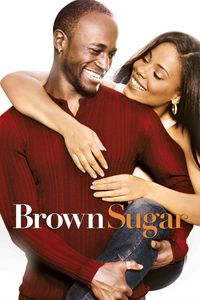
    (On TV, January 2021) I’m fond of saying that an interesting setting can make even a formula romantic comedy seem far more interesting, and this is exactly what happens in Brown Sugar… at least when it remembers what its setting actually is. Set in Manhattan at the turn of the century, Brown Sugar begins with a succession of cameos from hip-hop stars telling us about the moment they fell in love with the genre. A flurry of genre references firmly establishes the film as being about hip-hop, seen through our lead character’s own love for music. The very likable Sanaa Lathan plays a music magazine editor who ends up falling for her long-time best friend (the equally likable Taye Diggs) at the very moment when he’s getting married and she’s getting into a serious relationship. Blending music with romance, Brown Sugar is at its best when writer-director Rick Famuyiwa focuses on the music—which is admittedly less and less so as the film progresses. Lathan and Diggs are great leads for a romantic comedy, but hip-hop fans may be more impressed by supporting turns from Mos Def and Queen Latifah alongside the dozen artists seen in the opening segment. In terms of story, Brown Sugar doesn’t offer much that’s new, although its willingness to portray its central romantic relationship as adultery (albeit on a partner intent on cheating) does remain unusual. It’s not a bad time, though, even if the deviations from reality get more and more noticeable as it goes on—find me a radio station that operates the way “Hot 97” does and I’ll be very surprised. Still, like the characters themselves say, the music is the most important thing—even more than romance, in Brown Sugar’s case.

  • How Stella Got Her Groove Back (1998)

    How Stella Got Her Groove Back (1998)

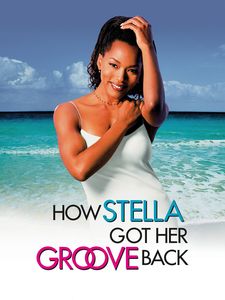
    (On TV, May 2020) Anyone who thinks that How Stella Got Her Groove Back is a one-quadrant romantic comedy solely destined to older black women is missing one thing—late-1990s Angela Basset was the complete package for all other three quadrants—simply a joy to watch given her versatility, precision in her acting choices, and devastating gorgeousness. The film knows it and wastes no effort in reinforcing it—she sports at least half a dozen hairstyles through the film and looks amazing in all of them. The story is also designed to let her go from one peak to another—she hits all of the right notes as the narrative takes her all the way from a tight-haired power broker to a lovelorn single mother to a grieving friend to a woman in limbo to, finally, affirming her own desires in their complexity. Refreshingly, the twenty-year-gap between the protagonist and her younger lover (a breakthrough role for Taye Diggs) is honestly dealt with. While there are no real surprises here (she does get her groove back: relief!), it’s a likable film even when it’s balanced on a bad idea. Add Whoopi Goldberg and Regina King and I’m disappointed I watched the film on a grainy standard-resolution channel. Obviously, your mileage may depend based on how you feel about Basset.

  • Baggage Claim (2013)

    Baggage Claim (2013)

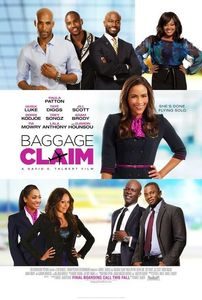
    (Video on Demand, March 2014) There is absolutely nothing new in Baggage Claim, a good-natured but familiar romantic comedy in which a flight attendant frantically sets out to find a husband in thirty days by re-examining her past boyfriends. The conclusion is obvious barely thirty minutes in the film (to the point where the remaining plot elements either feel forced or obvious) and all that remains is enjoying the actors’ performances. Which, frankly, isn’t a bad thing: Paula Patton finally gets a good starring comic role (after what felt like a long series of supporting roles in action movies) and she plays the comedy as broadly as she can, with infectiously charming results. There is also a lot to like in the series of would-be suitors jostling for screen time, from Derek Luke’s boy-next-door charm to Taye Diggs’ power-broker strength to Djimon Hounsou’s effortless smoothness. (Seriously; is that guy even capable of being anything less than totally suave?) While the film’s romantic messages (“Be yourself”, etc.) and airport-set climax were old decades ago, this familiarity works at lowering expectations to the point where the film feels likable even despite having nothing new to say. Romantic Comedies have the built-in advantage of innocuous failure modes: even at their blandest, they’re more forgettable than actively irritating. So it is that Baggage Claim may have flaws, but it’s competently-executed enough to settle for mild entertainment. The actors get to show what they can do, no one will be offended by the results and I can name plenty of films that don’t even meet those two criteria.