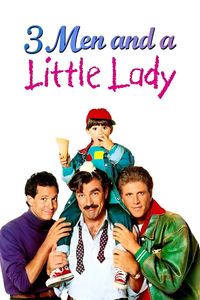
3 Men and a Baby (1987)
(Disney Streaming, August 2021) Perhaps the most noteworthy aspect of 3 Men and a Baby now is outside the film itself, as an evocative example of box-office irrelevance. Upon release, it became the highest-grossing Hollywood movie of the year, outclassing such films as Full Metal Jacket, The Princess Bride, Predator, Lethal Weapon, RoboCop, Spaceballs, Evil Dead II or Wall Street. Of course, the irony today is that any of those movies are significantly better-known than 3 Men and a Baby, and for good cause: they all still have a daring, distinctive quality, whereas 3 Men and a Baby was always meant as a common-denominator kind of comedy, the type of film that families grudgingly compromise on seeing together, especially at Christmastime, which was the film’s savvily-targeted release season. To be fair, it’s not a bad film: The plot seems custom-made for the Christmas season as well, as three bachelors are abruptly forced to take care of a baby, the result of one of their casual romantic trysts. Directed by Leonard Nimoy (a fascinating piece of trivia by itself), 3 Men and a Baby makes good use of the charms of co-leads Steve Guttenberg (in one of his best movies), Ted Danson and Tom Selleck, who’s particularly good at selling the emotional core of the story. The dynamic opening sequence sets the tone of a bachelor’s utopia with a great apartment and a wild party — but the real fun begins as a baby is dropped on their doorstep and they need to figure out everything with minimal female supervision. I’m not sure I ever watched the entire film before, because even if some elements were familiar, the entire criminal subplot felt newish (and unnecessary, even if something had to bring the film to 102 minutes). Otherwise, 3 Men and a Baby is predictable, with big plot strings seen well in advance, and a feeling of comfort amply fulfilled by the big happy finale. You can see why it made so much money… and also why it slipped away from the collective unconscious even as its contemporaries have shown stronger staying power. Here is something to consider when you see dull or terrible films rake in the money even as some fan favourites languish: you can’t always tell what will endure and what won’t.