Temuera Morrison

  • From Dusk Till Dawn 3: The Hangman’s Daughter (1999)

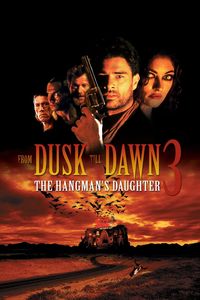
    From Dusk Till Dawn 3: The Hangman’s Daughter (1999)

    (On Cable TV, October 2020) Filmed nearly concurrently with From Dusk Till Dawn 2: Texas Blood Money, From Dusk Till Dawn 3: The Hangman’s Daughter takes an opposite route in going back in time to deliver a prequel. Far closer in structure to the first film than the second, this prequel goes back to the late 1800s to feature none other than writer Ambrose Bierce heading to meet Pancho Villa and encountering a few other characters along the way, converging over the familiar dive bar that forms the nexus of the series. It all culminates into a nicely historical version of that concluding shot, except that we’re expecting it this time around. The point of the film is the concluding half-hour’s worth of gore effects as the characters battle vampires in the Aztec ruins underneath the bar, but there’s some additional ambition in featuring a historical character like Bierce and adapting his cynicism to the setting of the story—Michael Parks nicely drawls though Bierce’s convoluted speech patterns and sardonic outlook, and The Hangman’s Daughter wouldn’t be nearly as interesting without him. (Robert Rodríguez contributed to the story.) The film does have a few other highlights: Danny Trejo makes his usual cameo, Temuera Morrison is reliably good in a small role as the Hangman, and Ara Celi does look nice as the titular daughter. The film is clearly aimed at audiences looking for more of that grindhouse exploitation feel. Others may criticize how the cinematography is yellow-tinged, the story meanders in its first hour, and some moments could have been streamlined. But if you’re looking for a slightly more ambitious take on the same find of western/vampire hybrid of the original, The Hangman’s Daughter isn’t too bad.
  • The Scorpion King 3: Battle for Redemption (2012)

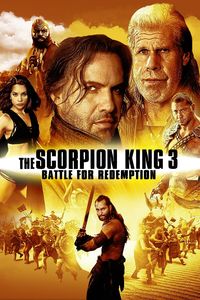
    The Scorpion King 3: Battle for Redemption (2012)

    (In French, On TV, April 2020) Don’t look at me like that—In choosing to watch The Scorpion King 3, I’m here to see how maximum-value director Roel Reiné can do in a fantasy adventure, not out of any specific affection for the Scorpion King series. Dwayne Johnson isn’t in this one, but Dave Bautista, Temuera Morrison, Billy Zane and Ron Perlman all are! Still, this isn’t a particularly good film—being straight-to-video label Universal 1440’s first production, and a third in an increasingly meaningless series, how could it be otherwise? The plot is soporific, the budget is clearly limited and the actors are clearly challenged by even substandard material. This being said… it’s not all bad. Reiné’s near-superhuman powers at stretching his budgets eventually make the film decent enough to watch, even when it’s not being particularly ambitious. The foreign shooting locations in Thailand add some interest, and there’s a good representation by Asian action heroines. For a straight-to-video third instalment in a series, The Scorpion King 3 could have been much worse.

  • Once Were Warriors (1994)

    Once Were Warriors (1994)

    (On TV, April 2019) There’s a good reason why Once Were Warriors remains a landmark of New Zealand cinema even twenty-five years later: It’s a harsh -at times unbearable—film, but it makes a few fundamental points about cultural disconnection and how social policy failures can have real, personal, and violent impacts. The story revolves around a Maori couple that leaves their village to go live in Auckland, but (eighteen years later) find themselves in desperate circumstances with the father of the family unemployed and alcoholic, his rage often manifesting itself in physical violence against his wife. Tough but compelling, it’s a film that hasn’t really aged, and remains relevant well outside New Zealand—as a Canadian, it’s impossible to watch the film and not feel the social indictment of government policies (some of them well-meaning, other decidedly less so) that end up separating First Nation people from their culture. It’s only, suggests the film, by reconnecting to traditions that there is hope. Once Were Warriors is extremely difficult to watch: the very realistic scenes of domestic violence are infuriating and nausea-inducing at once, with even worse material coming up later on. I’m impressed at how director Lee Tamahori was able to make a film that’s expressionistic and realist at once, combining impressive cinematic sequences with very humble moment showing familiar patterns of broken promises, commonplace abuse, casual use of violence and aimless lives. With all due respects to Rena Owen who plays the anchor of the story, this is Temuera Morrison’s film: he embodies charm and violence in a character that’s as magnetic as repellent. The film does have a strange relationship with violence, though—one of Once Were Warriors’ final scenes has a villain getting a much-deserved comeuppance, and now we’re cheering for the blows to land hard. Still, there’s a lot to digest in terms of themes and wider implications: it’s fast paced, seldom boring and some good visuals along the way. You will seldom see a film as hard to watch yet compelling and even admirable.