Teyonah Parris

  • Candyman (2021)

    (On Cable TV, June 2022) I’m usually the last to call for remakes – especially of horror films – but I was definitely curious about a Candyman remake for a few reasons. The first being that Candyman remains one of the good horror films of the 1980s, using horror to discuss racial issues decades before it was cool to do so, with a couple of strong assets – not the least being Tony Todd and Virginia Madsen – in service of its thrills and themes. The idea of revisiting such charged territory in the 2020s, with black filmmakers able to make good use of the material, was impossible to resist. But even I was more than pleasantly surprised at the remake’s impact. This newest Candyman is a top-to-bottom success, artfully tackling themes in ways that make the film far more about social justice than gory thrills. Writer-director Nia DaCosta (with some assistance from co-writer Jordan Peele) delivers a film that’s rich in visual motifs (Bees! Candy!), social issues, carefully restrained filmmaking technique and expressionist moments. It starts well with Sammy Davis Jr.’s “The Candy Man” song over mirrored studio logos and goes on all the way to an eloquent end-credit sequence using shadow puppetry. One of the most striking elements in the tapestry is that, despite the copious amount of blood and violence, it takes until the very end of the film for a death to be graphically shown on-screen – and even then, it’s in soft focus in the background of the lead character doing something else. The script cleverly integrates the first film as a mythological construct that adds depths to the result, and even picks the best elements of the disappointing sequels (a focus on the art world) as part of its script. There’s a real thrill to see the material being presented with visual flair and horror being used not as an end in itself (despite how effective it is) but as a springboard for larger-scale discussions. Teyonah Parris is quite good in the real protagonist role (after an initial focus on Yahya Abdul-Mateen II, also quite good) – and her character even speaks a little bit of French. In many ways, Candyman is an exceptional film, an exceptional remake, and exceptional horror. It steps in Get Out’s footsteps more assuredly than Us, and even crams storytelling into the fabric of its execution.
  • Dear White People (2014)

    Dear White People (2014)

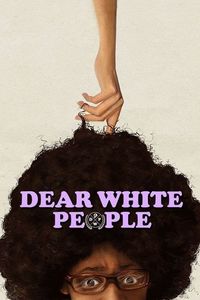
    (On Cable TV, July 2021) My motives in watching Dear White People were not noble or progressive: Like many, many (white?) people, I’ve had a crush on Tessa Thompson for years and here was one of her movies that I hadn’t seen. Arguably the movie that made a number of critics take notice of her, Dear White People features Thompson as a film student and provocative campus activist, notably through her radio show addressed at, well, “dear white people.”  Clearly taking on racism on American college campuses in the early 2010, the film hasn’t lost any of its provocativeness seven years later. Its fast pace, sardonic sense of humour, interesting characters and refusal to be righteous in its racial commentary still give it a distinctive edge over more recent and far more numerous works tackling race relations in America (including a successful spinoff episodic show on Netflix). There’s a welcome vivaciousness to the film’s editing, which flips between title cards, an ensemble of characters, and a framing device taking in the aftermath of a party leading to a race riot. It’s a film that pokes at racists and activists alike, but not in a hypocritical both-sides fashion — the racists are clearly to blame for the racism (even if, at times, the film clearly caricatures them), but even the loud activists take a moment late in the film to reconsider if they’re really making progress, or making themselves feel better for shouting back. It’s a significantly more textured and nuanced look at social activism than the self-satisfied progressiveness that often comes out of recent productions, and there’s something to be admired in the film’s refusal to claim to have all the answers. It also helps the film become a dramedy in its own right rather than a soapbox — the characters have complexities that define them more than stereotypes or roles, and the actors have quite a bit of material to use. Thompson is clearly the highlight, but she has the most flamboyant role even as Tyler James Williams, Brandon P. Bell and Teyonah Parris also have great material and know how to play it. Writer-director Justin Simien’s vision for Dear White People still feels fresh and relevant even after seven years of tumultuous events in American race relation discourse. Go in for Thompson, stay for the witty filmmaking.