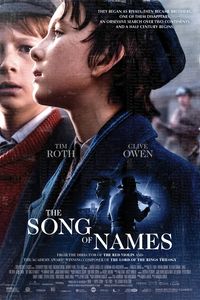
The Song of Names (2019)
(On Cable TV, July 2020) There are times when The Song of Names threatens to sink into familiar dramatic movie clichés—it plays around with a multi-decade timespan, with long-lasting grudges, with a personal quixotic quest. Like The Good Liar, it even twists itself into a dual-period 1940s/1980s piece that showcases The Holocaust, and you don’t get any more blatantly manipulative than that. By the weepy end, which seems to overstay its welcome by twenty minutes in order to deliver the statement that the story structurally couldn’t avoid postponing, it’s obviously reaching for the usual levers of the sub-sub-genre: personal atonement, remembering the dead, providing closure. Still, especially compared to other films of its ilk, The Song of Names does have its strengths. A good lead performance by Tim Roth, repressing his own feeling until they shockingly come out punching in a car, is a solid anchor. Clive Owen shows up late in a role almost opposite to anything else he’s played (or being typecast in) before. There is a strong mystery that provides a solid narrative drive to much of the film’s first two acts, even if its conclusion seems to run a bit too long in order to pull everything together. The use of music is a central element, as with director François Girard’s previous Le violon rouge. Technical credentials are excellent, explaining the film’s various Canadian Screen Awards. In the end, The Song of Names is good but (to repeat) there’s a big gap between good and great, and it remains on the side of good. I expect that it will play for years on Canadian cable TV channels.