Timothy Dalton

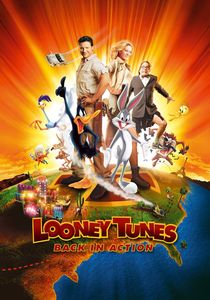
  • Looney Tunes: Back in Action (2003)

    Looney Tunes: Back in Action (2003)

    (On TV, September 2020) I somehow missed Looney Tunes: Back in Action when it was first released in theatres (it had the misfortune of coming out in November, a month where I wrote rather than watched: looking at the release schedule, I probably saw Master and Commander: The Far Side of the World that week), and I still can’t believe I waited so long before catching up. I’ve always had a fond spot for Bugs Bunny and his friends, so seeing them in a feature film was like unearthing a time capsule prepared just for me. The one thing that distinguishes Looney Tunes: Back in Action from most of the movies is the sheer pedal-to-the-metal pacing of the jokes—barely five seconds go by without some kind of gag, and the anarchic humour comes with an added dimension of metatextual movie humour. Highlights include a reference-crammed visit to ‘Area 52,’ closely followed by the technical marvel of a painting-hopping sequence set inside Le Louvre. Brendan Fraser does well in the lead role, with some decent assistance from Timothy Dalton (playing off the Bond archetype) and an ensemble cast of supporting players. I’m not so happy with Jenna Elfman (wow, remember her?), who’s used more like a clothes rack for a suspiciously high number of outfit changes rather than an actress with comic timing (although that Paris outfit—whew). The animated characters do better, but then again, they could be redrawn until perfection. Yet, for all the nice things I can say about its pinwheel of gags, Back in Action isn’t quite what it could have been. Director Joe Dante has spoken cryptically about being heavily constrained during production, which is probably inevitable considering the special effects requirements and the characters being one of Warner Bros’ crown jewels. Still, there’s a stiffness, rarely technical but nonetheless perceptible, that stops the action from being as involving as it should be—some annoying characters are given too much time (yes you, Steve Martin) and some sequences don’t play as well as they should. Still, I liked much the result, and would have liked to see it upon release… even there’s some value into discovering something so long after.
  • The Lion in Winter (1968)

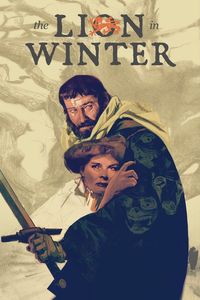
    The Lion in Winter (1968)

    (On Cable TV, February 2020) Film historians and Katharine Hepburn fans can agree on one thing: She became a much better actress as she aged—from a cute funny ingenue in the 1930s, she switched to a matronly appearance throughout the 1940s and became increasingly adept at dramatic roles throughout the 1950s. The Lion in Winter is, in many ways, the apogee of her acting talents. (Significantly, she won her third Best Actress Academy Award for this film.) The film itself seems designed to let actors display how capable they could be—it’s a complex story of court politics and family intrigue set against the Henry II era (1183) and the kind of film that actors and the Academy both love. Casting-wise, there are highlights from several generations here—Hepburn, obviously, but also Peter O’Toole as Henry II, and much more modern notables as Anthony Hopkins (in his first big movie role) and Timothy Dalton. (This is one handy movie in any Six Degrees of Kevin Bacon game, as you can use it to skip from the 2020s to the 1930s quite easily.) As for its impact, well, it’s all quite more interesting than its Dark Ages setting would suggest—I suspect that anyone who was fascinated by Game of Thrones’ exploration of the perils of hereditary succession will also enjoy this one. It has aged, though: in filmmaking techniques, the 1960s feel increasingly artificial, and some of the values of the time have been imposed on the 1183 setting in not-so-elegant fashion. But that does add a layer of interest that wasn’t in the film when it was first released. At least Hepburn is timeless.

  • Licence to Kill (1989)

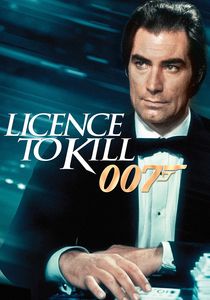
    Licence to Kill (1989)

    (Second Viewing Perhaps, On Cable TV, September 2019) I could have sworn that I had seen Licence to Kill once on TV in the early nineties, perhaps distractingly, but now that I have seen it, I’m not so sure — Unlike most of the other Bond movies that left deep impressions, this once felt almost brand new. Of course, it also felt far more generic than the others. The Timothy Dalton years were weird ones for the Bond franchise — The last of an era for many of the earliest collaborators of the franchise, but also a reset away from the silliness of the Moore movies and a harbinger of far darker interpretations of the character. Dalton was a more serious Bond, a more violent one as well, and Licence to Kill is often surprising in how it portrays him as a cold-blooded revenge instrument, going after a drug kingpin for maiming friend Felix Leiter and killing Leiter’s bride. Alas, for much of its duration Licence to Kill feels like a very ordinary 1980s American action revenge film with some familiar names sprinkled in — A Chuck Norris film featuring the Bond theme, Desmond Llewellyn hamming it up as Q and a decent budget for stunts. Per Bond standards, we’re stuck away from espionage and far too long in a murky narcotraficante story that would have been a subplot in other Bond films. (There’s a thirty-second intersection with Hong Kong policing, but that’s it for a film focused only on the Florida Keys and Mexico playing a renamed Panama.) The Bond Girls are not bad (Talisa Soto is beautiful but doesn’t have much to do — while Carey Lowell is plainer but has the plum action role.) but their role marks a noticeable change (for the better) from the usual Bond formula — They even both survive at the end! Heck, even Wayne Newton shows up playing a TV preacher caricature, not to mention an early role for Benicio del Toro as a menacing thug. This off-brand direction for the movie meant that it didn’t do particularly well with audiences or reviewers at the time — After Licence to Kill, the Bond series underwent its longest eclipse until 1995’s revitalized Goldeneye. Of course, in hindsight, Dalton’s run doesn’t seem as bad today, sandwiched between the debonair silliness of both Moore and Brosnan, and its more serious tone prefigures Craig’s tenure. Still, let’s not praise Licence to Kill as an overlooked gem: It’s surprisingly dull for much of its duration, only showing signs of life in action sequences and a particularly intricate action climax featuring a lot of moving parts and classically unbelievable Bond stunts. (The trailer-tractor side-driving is great; the wheelie not so much.) It’s late in its third act that Licence to Kill finally regains the panache of the Bond movie — Too late to be completely satisfying, but at least enough to avoid being a complete let-down. No wonder the series took a six-year break after that, coming back with a new headliner.

  • The Living Daylights (1987)

    The Living Daylights (1987)

    (Second or third Viewing, On Blu Ray, November 2018) By the time Timothy Dalton took over the James Bond role from Roger Moore in The Living Daylights, the ground had shifted a bit underneath the Bond franchise. Suddenly, the womanizing wasn’t as appealing, and dozens of other movies were aiming for the same thrills as the Bond series. As a result, The Living Daylights attempts a light retooling of the character. There’s only one woman for Bond this time around and the film goes back to its spying roots in delivering an authentic late-period Cold-War thriller that has a ring of authenticity to it. Dalton has his best movie here—still relatively charming compared to his much-darker follow-up License to Kill, but hard-edged enough to ensure that we wouldn’t mistake it for another Moore entry. I remembered only a few things from a previous viewing sometime in the early 1990s, but one of them is the incredibly cool Walther WA 2000 sniper rifle used early in the film. The other is Maryam d’Abo as one of the best Bond Girls up to that point, and a relative rarity in the pantheon as a Bond Girl portrayed as a complex skilled character (a cellist) but not an enemy agent equally able to match Bond’s fighting skills. The film’s opening half is a bit better than its concluding act, which suffers from some contemporary weirdness in heading to Afghanistan and fighting alongside the anti-Soviet pre-Taliban Mujahideen. (To be fair, Rambo III ended up in the same place for the same reasons at about the same time.) Still, The Living Daylights remains a step up for the series, and it’s still remarkably good watching even today as we’ve grown accustomed to a much dourer Bond during the Craig years. Alas, Dalton would squander much of his accumulated goodwill in the follow-up film…

  • Flash Gordon (1980)

    Flash Gordon (1980)

    (On TV, July 2018) Oh wow. I’m not sure you can actually describe Flash Gordon without sounding certifiably insane, so wholeheartedly does it commit to its campy style. 1980 was like a parallel universe when seen through the campy mind of director Mike Hodges, and I’m not sure where to start in order to give you a taste of the film’s built-in ludicrousness. Maybe Queen’s soundtrack with its eponymous FLASH! (Ah-ah-Aaaah) ? Maybe the prologue where a bored supervillain decides to destroy the Earth out of spite? Maybe the hero, a football star thrown in galactic conflicts? Maybe the unrepentant use of musty clichés such as the scientist and his daughter? Maybe the gaudy visual design of the film? Maybe Max von Sydow and BRIAN BLESSED hamming it up, along with such notables as Timothy Dalton and Topol in other roles? Maybe choice quotes along the lines of “Flash, Flash, I love you, but we only have fourteen hours to save the Earth!”  I don’t know. Flash Gordon has a messy production history, and the fairest assessment you can make of it was that Dino de Laurentis thought it was a good idea to resurrect a 1930s comic strip, except that the people tasked with writing and executing the project found the thing so ridiculous that they left the throttle firmly struck in the “parody” setting and the result got away from them. Or they all played along. No matter how you see it, Flash Gordon is a terrible big brash loud movie that feels as if it’s an hours-long hallucination. I wouldn’t mind seeing it again.

  • The Rocketeer (1991)

    The Rocketeer (1991)

    (On DVD, November 2017) For proof that “old-fashioned” in no insult, look no further than The Rocketeer, a glorious throwback to the adventure serials of the 1930s and a highly enjoyable comic-book movie from a time well before the current glut of comic-book movies. If this film has a secret weapon, it’s charm. The kind of quasi-goofy, rather comfortable charm that you get with a morally upstanding square-jawed hero (Billy Campbell), a curly brunette heroine (Jennifer Connelly), a scenery-chomping villain (Timothy Dalton), a fun piece of technology (a rocket backpack!) and a voluntarily retro setting that pays affectionate homage to the best features of the era. Here we are at the heroic age of aviation, with Gee-Bees barnstormers, Hollywood glamour, Nazis lurking at the edges of the screen and Howard Hughes coming up with fantastic inventions. It’s certainly not challenging, but it’s a lot of fun. Director Joe Johnston has proven time and again his ability to deliver straightforward adventures, but The Rocketeer still stands as one of the highlights of his career. The special effects aren’t particularly good, but who cares when the script, and the film, have this scene-to-scene watchability that will keep viewers glued to the screen. A similar movie would probably do better today (The Rocketeer is definitely a spiritual ancestor to Johnston’s Captain America: The First Avenger), and as it turns out there are steady rumblings about a sequel any time soon. I’m looking forward to that.