Tom Selleck

  • 3 Men and a Baby (1987)

    (Disney Streaming, August 2021) Perhaps the most noteworthy aspect of 3 Men and a Baby now is outside the film itself, as an evocative example of box-office irrelevance. Upon release, it became the highest-grossing Hollywood movie of the year, outclassing such films as Full Metal Jacket, The Princess Bride, Predator, Lethal Weapon, RoboCop, Spaceballs, Evil Dead II or Wall Street. Of course, the irony today is that any of those movies are significantly better-known than 3 Men and a Baby, and for good cause: they all still have a daring, distinctive quality, whereas 3 Men and a Baby was always meant as a common-denominator kind of comedy, the type of film that families grudgingly compromise on seeing together, especially at Christmastime, which was the film’s savvily-targeted release season. To be fair, it’s not a bad film: The plot seems custom-made for the Christmas season as well, as three bachelors are abruptly forced to take care of a baby, the result of one of their casual romantic trysts. Directed by Leonard Nimoy (a fascinating piece of trivia by itself), 3 Men and a Baby makes good use of the charms of co-leads Steve Guttenberg (in one of his best movies), Ted Danson and Tom Selleck, who’s particularly good at selling the emotional core of the story. The dynamic opening sequence sets the tone of a bachelor’s utopia with a great apartment and a wild party — but the real fun begins as a baby is dropped on their doorstep and they need to figure out everything with minimal female supervision. I’m not sure I ever watched the entire film before, because even if some elements were familiar, the entire criminal subplot felt newish (and unnecessary, even if something had to bring the film to 102 minutes). Otherwise, 3 Men and a Baby is predictable, with big plot strings seen well in advance, and a feeling of comfort amply fulfilled by the big happy finale. You can see why it made so much money… and also why it slipped away from the collective unconscious even as its contemporaries have shown stronger staying power. Here is something to consider when you see dull or terrible films rake in the money even as some fan favourites languish: you can’t always tell what will endure and what won’t.
  • Stone Cold (2005)

    Stone Cold (2005)

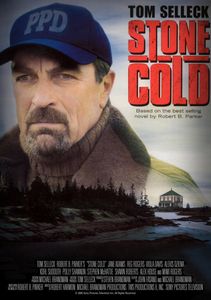
    (In French, On TV, June 2020) As a fan of Robert B. Parker’s crime thriller novels, it was inevitable that I’d eventually make my way to the movie adaptations of his work sooner or later, and Stone Cold has the distinction of featuring a protagonist other than Parker’s Spenser. (Technically, this is the first of nine films in the series but it’s adapted from the fourth novel—don’t worry too much about it.) Paced more slowly than many other police thrillers, it’s focused on Jesse Stone, a grizzled police chief in a small Massachusetts town where nothing usually happens, and who suddenly had to contend with serial killing and the rape of a teenager. For a made-for-TV movie, this one has a rather good pedigree, what with Tom Selleck credibly playing Stone, supported by such well-cast notables as a pre-stardom Viola Davis (as a police officer), Jane Adams (not much of a stretch playing a psycho killer) and Mimi Rogers (with a handful of great scenes as a lawyer who goes after what she wants). Stone Cold is not much of a crime mystery—we already know early on who did it, so it’s best approached as a character study in following a disillusioned, possibly depressive man at the end of his rope. The atmosphere of a small seaside town is amiably portrayed, and the film becomes a somewhat comfortable experience, more remarkable for the ride than the destination.

  • 3 Men and a Little Lady (1990)

    3 Men and a Little Lady (1990)

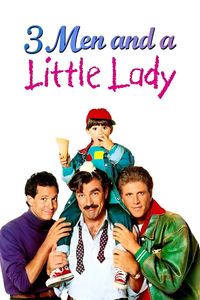
    (In French, On Cable TV, April 2020) If you’ve seen 3 Men and a Baby, get ready for the contrived sequel 3 Men and a Little Lady—a big gloppy 1990s-vintage comedy that barely cares about how ludicrous it is. Despite a capable cast, the film suffers from a bad case of sequelitis in which everything is bigger, crazier and yet less interesting than this original. In this case, our three titular men are shocked out of their poly-conjugal arrangement when the mother of the little lady abruptly announces that she’s getting married and moving to England. (Don’t ask why. A sequel is why.) Contrivances piled upon contrivances are this script’s idea of plotting, and there’s no other choice than to ride along until the predictable ending. Nothing in this film feels real, from the absurdly manipulated situations all the way to a marriage that piles clichés on top of another. This is not necessarily a bad thing as long as we know what we’re in for: A script that milks all potential jokes out of a situation before moving on to the next one. While 3 Men and a Little Lady hasn’t necessarily appreciated much in the past thirty years, it does feature some performances from actors whose star power has considerably dimmed since then. Tom Selleck does get a good role, Ted Danson hams it up in a variety of costumes and roles, while Steve Guttenberg doesn’t get much to do… and circa-1990 Fiona Shaw gets insistently coded as unattractive, which is very much up for debate for anyone away from Hollywood. Still, the film is generally watchable, even if it loses a bit of its way in the England-set second half and its madcap wedding comedy antics. But then again—afflicted with such a severe outbreak of sequeltis, where else could it go?

  • Killers (2010)

    Killers (2010)

    (In theatres, June 2010) Likable actors, a promising high concept, action-packed plotting and the ever-enjoyable absurdity of an assassin trying to settle down in bland suburbia.  What can go wrong?  Well, start by explaining why this so-called comedy struggles so much to earn even indulgent chuckles.  Killers starts slow with an overlong prologue that tells too much and wounds the picture before it even gets going, only to restart again three years later.  Overstaying its welcome before it even starts, this film simply never clicks. It doesn’t help that boy-hero Ashton Kutcher is never believable as a potentially murderous psychopath: even in action sequences, he seems to be preening in front of the camera, too self-absorbed to make us believe in his character.  If you ever want to know what went wrong with Killers, start with the lead casting.  On the other hand, there are a few good actors elsewhere in the movie trying their best to deal with what they’re given: Tom Selleck is great as a moustachioed dad, Catherine O’Hara does what she can as a boozy mom (how droll…) while Katherine Heigl –in-between high-pitched squeals—gives viewers a splendid excuse to look at her in low-cut outfits and gratuitous lingerie.  None of them can save the film, but they rescue it from a complete lack of interest.  The script is about one rewrite away from passable, placing far too much trust in actors who don’t have good comic timing.  With so many problems, it hardly seems fair to nit-pick the plausibility of the plot, the horrible moral evasiveness of the conclusion of the preposterousness of the setup.  The direction isn’t any better, wasting two otherwise promising suburban car chase through lawns and backyard fences.  Killers is so good-natured that it does escape variations on “I hate this movie”, but it’s so bland, unfocused and a waste of its own potential that it can’t even reach the level of a marginal recommendation.