Topper series

  • Topper Takes a Trip (1938)

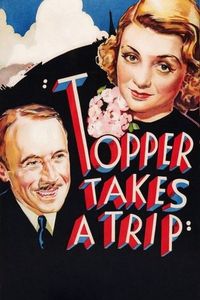
    Topper Takes a Trip (1938)

    (On TV, October 2021) Picking up right after the first Topper (but negating its reconciliation conclusion), Topper Takes a Trip foregoes Cary Grant but keeps the rest of the cast, as banker Cosmo Topper and his wife are once again at odds and she decides to leave for France during a temporary separation. This won’t do, decides the flirtatious friendly ghost of the first film (Constance Bennett, given that Grant has presumably ascended to heaven) as she sets out to reunite the bickering couple. As with the first film, the emphasis remains on silly, often improperly justified comedy, as ghosts materialize or appear without much consistency in their powers. The important part is taking in the gags and having the Toppers reunite at the end. Roland Young and Billie Burke are not bad as the Toppers, but they clearly play second fiddle to Bennett. Topper Takes a Trip is a fairly weak brew as far as comedies go, but it’s unquestionably a follow-up that steps into the shoes of its predecessor. I liked it without loving it—it’s reasonably fun, but not that good nor that funny.

  • Topper (1937)

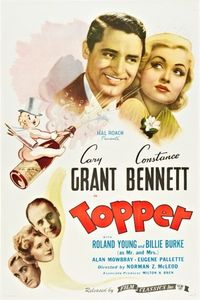
    Topper (1937)

    (On Cable TV, October 2021) The 1930s were surprisingly heavy in movies about spiritism, mediums, clairvoyants and such. Supernatural comedy Topper is squarely in that tradition, as it features a henpecked husband affranchising himself with some help from a couple of deceased free spirits. It was a box-office smash, got good reviews and launched a series that ended up with three films, but this first instalment is, to contemporary viewers, slightly maddening. For one thing, it keeps a young Cary Grant in a very supporting role as a bon vivant husband suddenly dead. Don’t cry for him—his character is just as lively in the afterlife, and Grant himself would use Topper as a springboard to an astonishing steak of terrific performances in better-remembered screwball comedies. Close behind him in likability is Constance Bennett, playing a carefree ghost only too happy to be as flirtatious as she wants. Finally, there’s Roland Young, playing the actual protagonist of the film: Cosmo Topper, a banker of high status but terrible home life, with a wife only too happy to tell him what to do in minute detail. (If you’re not happy with this review’s late introduction of the protagonist, just keep telling yourself that I’m merely aping the film, which spends a good ten full fun minutes with Grant and Bennett before sighing and going through the motions of introducing its real and less-fun protagonist.)  While amusing, Topper pales in comparison of other comedies of the same period: it’s amiable and cute, but it doesn’t quite reach for the full possibilities of having two ghosts running around making life crazier or better for a live protagonist. It does not help that Topper is lazy in setting up the rules of its ghosts, who can appear or not, but always manipulate physical objects. It all leads to an acceptable ending, with a (hidden, for this was the Hays Code era) glimpse at fancy lingerie as proof that our protagonist and his wife were back on the mend and mutually satisfying physical intimacy. As for our ghosts, well, they apparently disappear having completed their good action, which does seem awfully indulgent. As I said: Topper works, but just barely. I find it significant that the second sequel would let go of its original premise to take a far more overtly comedic turn in the midst of a murder investigation, becoming far closer to the occult detective narrative. Then, as now, when a formula is broken, filmmakers will change it to follow what everyone else is doing!

  • Topper Returns (1941)

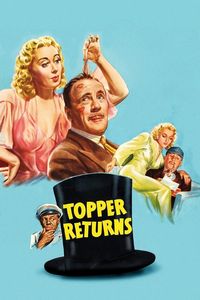
    Topper Returns (1941)

    (On Cable TV, September 2020) As much as I’ve grown allergic to overly laborious origin stories in other circumstances (for instance, in movies about already widely-known characters), there is a definite strangeness in stepping into a series through the third instalments, with many series characteristics already established and in play without much justification. Topper Returns is the third instalment in a series featuring a mild-mannered banker with the power of seeing ghosts, and the complications that ensue when his wife doesn’t understand what’s going on. Clearly playing into its established mythology, it does move at a fairly fast clip—our heroine gets killed (taking it rather well), then finds Topper and recruits him to both solve her own murder and prevent her friend from being murdered as well. The tone of the film is semi-comic—despite the violence inherent in the premise, the characters are upbeat, and the film can’t help but feature a befuddled wife and a bewildered black servant. (I’d like for the servant character to be less stereotyped, but it’s a 1941 film, and the character goes gets a decent amount of screentime.) There’s a pleasant, well-oiled quality to the way the film runs through its paces, exploiting its spooky house setting (always a favourite of mine) and actually going through a surprising amount of plot in less than 90 minutes. The optical special effects are quite good in their own way. Topper Returns is arguably more popular today than its predecessors thanks to accidentally ending up in the public domain, but it’s a reasonably good movie in its own right.

    (Second Viewing, On Cable TV, October 2021) The third instalment of the supernatural comedy Topper series, Topper Returns, abruptly takes a different tack than the previous two. After a pair of romantic comedies fuelled by ghostly intervention, this instalment takes on a murder mystery as a deceased woman (the beautiful Joan Blondell) collaborates with series protagonist Cosmo Topper to find out who killed her. But that’s an overly simplistic description of what goes on in this film, as it blends elements of haunted mansions (with numerous twisty back-passages), crime comedy (with an exasperated police inspector), traditional romance, bickering couples, and even a small star vehicle for noted black comedian Eddie “Rochester” Anderson. Far denser than the previous two films, Topper Returns is also significantly more fun. As someone who loves mysterious old mansions with back passages, the setting has a clear appeal. I still don’t like the series’ inconsistent approach to its ghosts able to appear or materialize at will, but at this point it’s funnier to focus on the vivacious Blondell, helping resolve her own murder with a very striking lack of angst. There’s so much going on that the same plot could have been, with minor revisions, be used to focus on three or four different protagonists—Topper not being the most interesting of them. Still, there’s quite a bit of fun here—Anderson’s portrayal of a black chauffeur will strike some as insufferably racist, but by 1941 standards it’s not that bad, and by having incredulous reactions to the ghostly weirdness around him, he becomes the character through which the audience channels their own reactions. Some special effects still impress. The plotting gets slack toward the end, but the integration of murder mysteries (which were a big B-movie genre at the time) with the series’ ghostly elements works better than expect. Topper Returns is an unexpectedly entertaining film, worth viewing even if you haven’t seen the first two in the series.