Toronto

  • Short Circuit 2 (1988)

    Short Circuit 2 (1988)

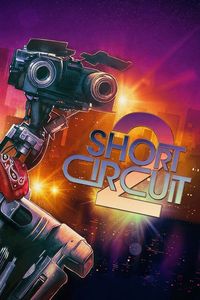
    (Second Viewing, In French, June 2021) I remember seeing Short Circuit 2 as a teenager and not liking it very much, strongly objecting to the French dub voice of one character, but being somewhat amazed that I recognized quite a bit of Toronto in the result. Decades later, second impressions can be amazingly consistent: It’s still not a particularly good movie, the French dub voice is still irritating and Toronto is almost as big a character as any of the human or robotic ones. If you’ve seen the first Short Circuit, you already know what to expect: Here’s book-smart and street-dumb Johnny Five, a robot designed for war whose sentience was an unexpected feature. In this sequel, Fisher Stevens is the only actor returning on-screen, as he (a Caucasian actor) plays the genial engineer (of Indian ethnicity) of Johnny Five. In this instalment, his attempts to sell robotic toys require some assembly-line assistance from Johnny Five, but bringing an information-hungry robot in the big city is a recipe for trouble, especially as subplots regarding romance (cribbing from Cyrano de Bergerac) and diamond heists are brought into the mix. Clearly designed for kids, Short Circuit 2 only marginally exceeds mediocrity: The 1980s puppeteering work required to transform a robot into a likable character is still impressive and finds its apex late in the film, as we’re outraged that Johnny Five gets severely damaged by the antagonists. In French, though, the chosen voice of Johnny Five almost completely destroys whatever sympathy we may have: high-pitched, ingratiating, with distinctive exasperating intonations that I could remember decades later. I suspect it’s not quite as annoying in English. On the other hand, I can’t help but love the obvious use of Toronto as a filming location for an American metropolis. Short Circuit 2 makes no attempt whatsoever at hiding where it is, with numerous local landmarks, businesses, transit vehicles and even a boat clearly marked as being from Toronto. It often gets weird, but never as weird as recognizing the seat of Ontario’s legislature, Queen’s Park, being used as a backdrop to an American citizenship ceremony. Wow. Still, the film amply justifies its existence simply for the extended sequence set in front and inside the much-lamented landmark Word’s Biggest Bookstore, of which I have some extensive and fond memories. In other words, very little of what I do like about Short Circuit 2 can be found in the screenplay — it’s all about watching the background shots and being amazed at how late-1980s Toronto was captured so brazenly on celluloid. And that, now more than when I first saw the film, is what’s worth remembering about it.

  • Enemy (2013)

    Enemy (2013)

    (On Cable TV, December 2014) In some ways, it’s fitting that Enemy should be the last film I’ve seen in 2014, given how my reaction to it is in many ways a reflection of where I am in my cinephile’s journey.  Because Enemy is one of those movies where an enigmatic plot ends up being a metaphor for a deeper meaning that may not be fully apparent from a superficial viewing.  Here, a mild-mannered college professor discovers that he has a doppelganger, an extrovert actor.  When the two men meet, issues of fatherhood, relationships and intimacy all come up, in an enigmatic mixture of mystery, fantasy and allegory.  Anyone watching the film for plot will be frustrated, especially if they expect stated answers by the end of the film.  There is a lot to decode in the film, starting with the issue of whether there is a doppelganger and whose doppelganger it is.  Now, as it happens, I’m at that stage in my movie-watching life when I can recognize the deeper levels of interpretation –but can’t be bothered to care.  Purposefully-enigmatic films that revel in ambiguity (all the way to the director remaining coy about what it all meant in press interviews) are more annoying than anything else, and my ultimate reaction is to opt out: I refuse to put the puzzle together.  So what’s left in Enemy for us refusniks?  Fortunately, a well-crafted film.  French-Canadian director Denis Villeneuve does really well in this second (chronologically first) collaboration with Jake Gyllenhall, leading a carefully designed film bathed in the kind of gold light that makes Toronto looks either cool or creepy.  Gyllenhall himself gets a plum pair of roles as a split personality playing off himself.  The film may be quiet, but the second-to-last shot is a pure shocker, fit to send even forewarned viewers climbing the drapes while shouting HOLYCATS, WHATWASTHAT?!?!!  Too bad that the film wants to be so maddeningly mysterious.  It asks a lot of its audience, so it shouldn’t be surprised if many won’t play along.

  • Videodrome (1983)

    Videodrome (1983)

    (On cable TV, March 2012) The media landscape has changed so much in thirty years that there was a real risk that Videodrome, in tackling the TV anxieties of the early eighties, would feel fatally outdated three decades later. In some ways, that’s true: at a time where gory execution video-clips are never farther than a Google search away, the premise of satellite channel piracy uncovering a snuff TV show doesn’t quite have the same power to make audiences shiver. The average moviegoer now has effortless access to a vastly more complicated media diet in which can be blended the worst perversions: Videodrome really scratches the surface of the horrors out there as we realize that we now all have access to the same. But there’s a lot more to Videodrome than a treatise on the dangers of satellite TV and a charming throwback to early-eighties techno-jargon: As the body horror of the film’s second half kicks in, director David Cronenberg (who, a long time ago, still made horror movies) truly uncaps the techno-surrealism that still makes the film worth a look. Videodrome still deserves its cult status as an unnerving piece of bizarre horror, perhaps even more so now that cathode-ray tubes are receding in the past. The visuals, as imperfect as they were in a pre-CGI age, still have a sting and the shattering of the protagonist’s reality is good for a few kernels of terror. What really doesn’t work all that well is the last act of the film, which disarms the film’s increasing sense of paranoia and ends up burying itself in pointlessness. Videodrome, even today, is more interesting for its potential rather than its execution. Oh well; at least James Woods is captivating as the protagonist, and Toronto gets a pretty good turn in the background. A stronger third act would have been a good way to wrap up the film, but as a cult classic, it probably doesn’t need any improvement.

  • Scott Pilgrim, Bryan Lee O’Malley

    Scott Pilgrim, Bryan Lee O’Malley

    Six-book series made of…

    • Scott Pilgrim’s Precious Little Life, 2004, Oni Press, ISBN 978-1-932664-08-9
    • Scott Pilgrim vs the World, 2005, Oni Press, ISBN 978-1-932664-12-6
    • Scott Pilgrim & the Infinite Sadness, 2006, Oni Press, ISBN 978-1-932664-22-5
    • Scott Pilgrim Gets it Together, 2007, Oni Press, ISBN 978-1-932664-49-2
    • Scott Pilgrim vs the Universe, 2009, Oni Press, ISBN 978-1-934964-10-1
    • Scott Pilgrim’s Finest Hour, 2010, Oni Press, ISBN 978-1-934964-38-5

    Publishing success doesn’t often correlate with anything resembling quality, so it’s satisfying to see that one of the biggest comic series of the past few years has been Bryan Lee O’Malley’s idiosyncratic Scott Pilgrim.  Now ending its run with a sixth volume and the near-simultaneous arrival of its movie adaptation, O’Malley’s unlikely success blends a look at post-teenage male romance, videogame-inspired personal mythmaking, a deeply Torontonian setting, sharp writing, great characters and hilarious moments.  I first climbed on board the series when the fifth volume was released, but the movie adaptation gave me a great excuse to re-read the entire story in a single gulp, and revisit what makes it click.

    I am, I’ll admit, too old and too square to truly empathize with much of the series: I’m now a good decade older than the series’ cast of characters, and my own path through life has been the university-to-cubicle professional fast-track rather than the kind of erratic McJobs-and-clubs slacker universe in which Pilgrim and friends live.  But Scott Pilgrim nails that post-teenage lifestyle in stunning detail: that slice of time not quite shackled by the demands and disillusions of full adulthood, in which people come to define themselves now that they don’t have to attend classes.  Pilgrim and friends are free to exist away from their parents, live in tiny apartments, hang out at hip venues, play in garage bands, work occasionally, and get mixed-up in complex romantic entanglements.  Their universe is one of pop-culture references inspired (unlike previous generations) by videogames, their personal mythologies defined by gaming heroism as much as anything else.

    So it is that the series begins with “Scott Pilgrim is dating a high-schooler!” and ends with “So… we try again.”  In-between, it’s pure Canadian magical realism as Pilgrim falls for a mysterious girl named Ramona and must fight her seven evil exes in order to earn her affections.  That’s the plan, at least: the actual path to romantic bliss isn’t quite as clear-cut, especially when Pilgrim realises how much of “a crummy boyfriend” he’s been.  The last volume of the series is particularly unkind to its hero –and surprising to readers not expecting Scott to grow up in a hurry.

    But as with many other graphic novels, Scott Pilgrim is more memorable for its page-per-page execution than its narrative satisfaction.  O’Malley peppers his series with a near-constant stream of small delights, whether it’s a number of Torontonian references, self-aware patter, absurdly fantastical plot devices and musical moments.  The series breaks the fourth wall frequently, but doesn’t cheapen its characters’ problems.  It’s such a compelling reading experience that every time I reached in my stack of volumes to check details, I ended up re-reading dozens of pages.

    As a hip must-read reference for the younger set, it’s something that even the older ones among us are nearly certain to enjoy.  The cutting-edge references exist alongside gaming metaphors that will be familiar to anyone who has stepped in an arcade back in the eighties, and they all serve to pump up a universally appealing male romance to sustained reading enjoyment.  Don’t miss it (especially if you live in or near Toronto) and let it comfort you that, sometimes, sale numbers do point at something worthwhile.

  • Scott Pilgrim vs. The World (2010)

    Scott Pilgrim vs. The World (2010)

    (In theaters, August 2010) For a movie that only highlighted how truly old I am getting, I enjoyed Scott Pilgrim vs the World from beginning to end.  Transforming a fairly ordinary post-teenage romantic comedy into an mythological epic through fantastical devices such as videogame combats given life, Scott Pilgrim becomes a relentless, sometimes exhausting blend of action, romance and comedy gold.  Given that director Edgar Wright is best known for manic comedies Hot Fuzz and Shaun of the Dead, the whip-fast editing, witty dialogue and reality-defying direction should come as no surprise.  What is a bit more unusual, however, is the way Wright plays along with the grammar of cinematic storytelling, telescoping scenes together, taking fantastical flights of fancy in the middle of grainy indie dramatic scenes, or varying his approach just to keep things fresh.  This third successful film only highlights how Wright is pushing the envelope of comedy directing, daring older audiences (cough-cough) to keep up.  As a fan of the Bryan Lee O’Malley’s graphic novel series, I had a clue about what was in store.  But I couldn’t predict how cleverly the script would condense, simplify and amplify the storyline of the comic book into something that feels even more grandiose.  Streamlined to make the hero’s final success feel even more rewarding, Scott Pilgrim vs the World should please most fans of the original, while allowing newcomers to grab the graphic novels and find further delights in them: the way material from the book is rearranged in a new plot will keep fans of both versions entertained.  The resemblance of some actors to their graphic equivalent is astonishing, and their delivery of the dialogue, in a mixture of arch line readings and mumbled deadpan quips that I find irresistible, is often far funnier than the material would suggest.  I’m still only half-sold on Michael Cera as Pilgrim, but the supporting cast is strong and notable performances include Kieran Culkin as the cool roommate and Ellen Wong as a hot-tempered high-schooler.  But even better yet is the way Toronto plays itself as a big city capable of hosting cool stories: The script’s Canadian references are not only hilarious, but on-target as well.  Still, it’s not all fun and games as Scott Pilgrim has a few things to say about urban romance during post-teenage years (there are practically no older adults in this film, nor any need for them), or the way modern personal mythmaking comes from genre-dominated gaming rather than older sources of inspiration.  It all amounts to a hilarious, heartfelt, dynamic film that appealed to me in ways that felt very personal.  I’m not sure it could have been any better.

  • Repo Men (2010)

    Repo Men (2010)

    (In theatres, March 2010) In a generous mood, I would probably praise Repo Men for its satiric vision of a future where synthetic organ transplants are common and expensive enough to warrant repo men going around repossessing deadbeats, leaving them, well, dead on the floor.  I would congratulate Jude Law, Liev Schreiber and Forrest Whittaker for thankless roles playing unsympathetic characters and Alice Braga for something like a breakthrough role.  I would say something clever about the film’s forthright carnographic nature.  I may even have something affable to say about Eric Garcia, who sort-of-adapted his own novel for the screen (the story, as described in the book’s afterword, is far more complicated) and wrote one of the most bitterly depressing movie ending in recent memory.  Heck, I would point out the numerous undisguised references to Toronto (where the movie was shot): the inverted TTC sign, the Eaton center complete with Indigo bookstore, the streetcars, even the traffic lights and suburban streets.  But I am not in a generous mood, because Repo Men is an unpleasant and defective attempt at a satirical action SF film that fails at most of what it attempts.  The characters are unlikable, their actions are despicable, the chuckles are faint and the Saw-inspired gory violence isn’t warranted by anything looking like thematic depth.  It is a literally viscerally repulsive film, and even trying to play along the grim sardonic humour gets increasingly difficult to swallow during self-congratulatory action sequences.  Once the film’s none-too-serious credentials are established, it’s hard to care –and that includes a wannabe-romantic sequence in which internal organs are exposed and fondled.  The ending wants to be witty, but it just feels absurd before it is revealed to be cheaply cynical.  The Science Fictional elements don’t even fit together and the result is a big bloody bore.  Instead, just give me another shot of Repo: The Genetic Opera!: at least that film knew how to balance arch seriousness with a sense of camp.  The irony is that Garcia’s novel is actually quite a bit better than the film –don’t let the adaptation scare you from a novel that does what the film wanted to do in a far more palatable fashion.

  • Blood & Donuts (1995)

    Blood & Donuts (1995)

    (On DVD, June 2009): The most frustrating thing about this low-budget Canadian horror film shot and set in Toronto is how uneven it is: Too often settling for a muddy drama somehow featuring a vampire protagonist, it occasionally flickers brightly with a moment of interest, only to fade again. It’s self-consciously ridiculous (David Cronenberg plays a local mob boss with boot-scratching gusto), and yet it also tries to have it both ways as a character study, especially near the unsatisfying ending. (Here’s a hint: Don’t try make us go “Oooh nooo he’s dead” over the film’s most annoying character.) But what do I know? The film was nominated for a bunch of Genies, including for the Best Screenplay award. It’s a bit of a shame to see that lead Helene Clarkson’s IMDB filmography tapered off shortly after this film, because her charm is one of the things holding the rest of the film together. Otherwise, well, fans of Canadian horror will fill a big hole in their cinematography by watching this, and fans of unusual vampire films may as well give it a look.

  • The Silent Partner (1978)

    The Silent Partner (1978)

    (In theaters, June 2008) Both good enough to be entertaining and bad enough to be amusing, this drama benefits from a good script by Curtis Hanson (who would later achieve notoriety with L.A. Confidential), capable actors, and a very Torontonian setting to overcome thirty years of bad editing, ridiculous replies and stiff direction. This low-budget film has definitely aged, but more in individual moments rather than overall story: The plot (about a bank clerk who matches wits with a robber) still works wonderfully well today, as the protagonist (Elliott Gould) proves both resourceful and sympathetic in a cornered-sad-dog fashion. A slick-faced scenery-chewing Christopher Plummer plays the devilishly evil antagonist, while John Candy makes an appearance as another bank employee. People familiar with Toronto will get plenty of small thrills as the film is largely set in the Eaton center, features shots of City Hall and the CN Tower, and even has its characters talking while driving a convertible down the Gardiner Expressway. The film isn’t so successful in its shot construction, reflecting the stiff pre-digital low-budget conventions. But once that’s past (and once given the indulgence to laugh over some unexpectedly terrible moments), The Silent Partner remains an effective little crime drama, with unexpected twists, a better-than-average duel between protagonist and antagonist, and a uniquely Canadian flavor.