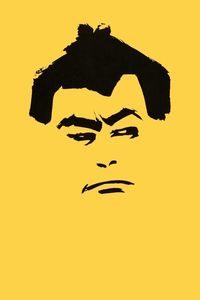
Toshiro Mifune

  • Yoidore tenshi [Drunken Angel] (1948)

    Yoidore tenshi [Drunken Angel] (1948)

    (On Cable TV, November 2020) As heretical as it may sound, I usually like Akira Kurosawa’s films better when they are set in contemporary times. As much as everyone likes Seven Samurais, Rashomon and Yojimbo, I feel closer to Ikiru and High and Low. Drunken Angel, however, is a bit of a mixed bag. Often hailed as one of the first Yakuza movies, it presents a downtrodden, alcoholic doctor working near an urban swamp who eventually gets involved with a figure in the local organized crime scene. It is the first film to pair up Kurosawa with frequent collaborator Toshiro Mifune, as the later plays the small-time hoodlum who seeks treatment from a doctor who won’t ask too many questions. There’s some ambiguity as to who is the protagonist of the story: While much of the film is told from the doctor’s point of view, the hoodlum arguably has the clearest dramatic journey. Filmed in black-and-white in downtrodden areas, Drunken Angel offers a portrait of postwar Japan (somewhat sanitized by the occupying American authorities) dominated by a stagnant body of water, alcohol, crime and tuberculosis. It’s watchable, although clearly a lesser (or rather: earlier) Kurosawa work. Mifune is already up to his usual standards, but Takashi Shimura is more impressive as a doctor who knows that he’s taken a wrong turn somewhere, and hopes to atone by saving one person at a time. The result is far from the pyrotechnics or emotional impact of Kurosawa’s best, but it does make for watchable enough viewing if you’re in the mood for a quieter experience.

  • Tengoku to jigoku [High and Low] (1963)

    Tengoku to jigoku [High and Low] (1963)

    (On Cable TV, April 2020) While I keep notes on the movies I see, I don’t always finish or edit these capsule reviews until a few months later. That’s how I can tell you with some confidence that High and Low is in the running for my favourite Akira Kurosawa movie. Set in then-contemporary 1960s Japan, which has now acquired some historical patina, it’s a kidnapping thriller with plenty of procedural details, plot twists and turns, and a small but significant part for Toshiro Mifune. The child kidnapping plot is gripping enough, but where the film gets even more interesting is that paying the ransom will ruin the life of the man putting up the money, reinforcing the titular theme of class divide motivating the crime. It’s a compelling watch from beginning to end, even though the running time of 143 minutes seems too long, especially in the third act where things should be happening more quickly. There’s a sagacious use of an instrumental of the Elvis song “It’s now or never” as the soundtrack to the climax. Part of why the film is so interesting is its blend of very accessible thriller mechanics (adapted from the American Ed MacBain novel King’s Ransom) with the social environment of 1960s Japan—not a blend of high and low as much as the familiar and the unusual. High and Low is compelling to watch, and has enough substance to set it apart from mere genre exercises.

  • Akahige [Red Beard] (1965)

    Akahige [Red Beard] (1965)

    (On Cable TV, April 2020) I find writer-director Akira Kurosawa’s Red Beard interesting because it blends a streak of concerns and themes found in other films and other styles. It is a period drama but it is not centred on samurais. It is about public service, but not quite as bluntly as Ikiru. It’s almost refreshing in the way it goes for an epic recreation of a historical period… only to keep its gaze firmly focused on the quotidian struggles of semi-ordinary people. It is, on the other hand, very, very long—taking two years to shoot, requiring almost an entire town to be built, spanning a multiplicity of overlapping subplots, mini-movies, double flashbacks and plot turns. Toshirō Mifune is magnificent, possibly regal in the title role—a grizzled veteran doctor explaining how the world works (and more importantly how it should work) to a younger protégé. Red Beard did test my patience after a while, even though I do like a lot of its humanistic approach: in its current state in-between a movie and a TV show, I probably would have liked it better had it been shorter.

  • Tsubaki Sanjûrô [Sanjuro] (1962)

    Tsubaki Sanjûrô [Sanjuro] (1962)

    (Criterion Streaming, December 2019) While writer-director Akira Kurosawa’s Sanjuro is recognizably the sequel to his earlier Yojimbo, they don’t really feel like the same movie. While Yojimbo was a very long action epic starring Toshiro Mifune as a Ronin-with-no-name manipulating two criminal factions to their destruction in order to save a village, Sanjuro feels more like a lighthearted episode in which the same ronin-without-a-name cleans up a village from corruption using a crew of ten amusingly younger acolytes. Aside from an atonal ending, the tone is lighter, funnier, and more disposable. It’s also significantly shorter, which helps a bit. From the get-go, the protagonist is portrayed as a genius-level quasi-superhero, able to outthink and outmanoeuvre friends and foes alike. This does lend to Sanjuro an accessible atmosphere as a bit of a fantasy, while reinforcing the protagonist as the centrepiece of the film. Various episodes show how corruption is identified and removed, all leading to an ending where the protagonist goes back on the road, having completed his mission. That’s when Sanjuro takes a bit of a weird turn, ending on a final fight that is not only far more dramatic and suspenseful, but surprisingly bloody as well. (As the story goes, the blood-gushing machine malfunctioned and a torrent of fake blood splattered out—they kept it in the movie even despite how it didn’t fit with the rest of it.)  Still, the movie works just fine as “one more hit” for Yojimbo’s protagonist—and at barely more than an hour and a half, Sanjuro is admirably concise.

  • Kumonosu-jô [Throne of Blood] (1957)

    Kumonosu-jô [Throne of Blood] (1957)

    (On Cable TV, December 2019) Legendary writer-director Akira Kurosawa had a passion for Japanese history and so several of his films (and nearly all his best-known ones) take place deep in historical eras, allowing us to revisit a time and place not often seen outside Japanese cinema. Throne of Blood is very much in this tradition, although it’s more fantasy-focused than many of his other films. A localized adaptation of Shakespeare’s Macbeth, it transposes the story to feudal-era Japan, streamlines the action and spends a lot of time creating a foreboding atmosphere. The result is … impressive. From the first few moments, as two soldiers lost in the foggy woods encounter a witch capable of unsettling prophecies, it’s clear that this is not a straight historical re-enactment, and that the film will be as much a fable than a drama. Kurosawa stalwart (and screen legend) Toshiro Mifune once more gets the full spotlight in the lead warrior role, although Isuzu Yamada gives him some strong competition playing the equivalent of Lady Macbeth in unsettling makeup and steely resolve. The Shakespeare references and genre elements (choruses, prophecy, and a great final battle sequence) do much to keep the story accessible and interesting throughout—more so than many of Kurosawa’s other films. Frankly, it does still resonate as one of the best Macbeth adaptions I’ve seen to date, although that should be taken with a grain of salt given that straight Shakespeare adaptations usually bore me. Despite a few lengths, Throne of Blood has aged admirably well because it stands out of time: out of the 1950s for sure, but also out of its own chosen historical period by use of genre elements. It reaches for universality and largely attains it.

  • Shichinin no samurai [Seven Samurai] (1954)

    Shichinin no samurai [Seven Samurai] (1954)

    (Kanopy Streaming, October 2018) A band of men get together to protect a village from bandits: If Seven Samurai feels familiar, it’s because it’s been very, very influential since its release. You can trace successors both direct (The Magnificent Seven, original and remake versions) and indirect (the entire ensemble-cast of heroes action movie genre) to what it solidified. Akira Kurosawa left behind two templates (in between this and Yojinbo) for the action movie and other filmmakers haven’t been shy in reusing it. The draw here is as much the story as the performances of the actors, especially Toshiro Mifune as the wild card of the group, skilled but not sane. Seven Samurai is long, but there are a lot of rewards along the way, and a very immersive sense of being in a feudal-Japan-era village as the action unfolds. This may be an older black-and-white film, but it’s certainly not boring.

  • Yôjinbô (1961)

    Yôjinbô (1961)

    (Kanopy streaming, October 2018) If you really want to know where Clint Eastwood’s screen persona comes from, then have a look at Akira Kurosawa’s Yôjinbô, the classic “man comes to town” western story … except for being set in medieval Japan. And being adapted from a hard-boiled Raymond Chandler novel. As the film begins, a Ronin played by none other than Toshiro Mifune strolls into town, asking for nothing more than a place to stay for the night. But the small town he just walked into is divided between two warring gangs. Many would like to see the gangs gone except … who will take them on? If that feels like an overly familiar premise, keep in mind that it was done here first, with many of the traditional action movie tropes (such as the introduction of the protagonist through some unrelated heroic business) being codified here for the first time. The link between Yôjinbô and Sergio Leone’s films is well documented, but it’s also blindingly obvious from even a casual watch, as you nearly don’t even need the subtitles to tell where we are in a familiar story. Mifune is nothing short of amazing here, a force of nature transcending cultural and temporal borders. While the film definitely feels too long, it also definitely feels like a western despite not being at all in the same time or place. Action movie fans should enjoy a look at this, the progenitor of an entire subgenre.