Tyrone Power

  • Blood and Sand (1941)

    (On Cable TV, September 2021) There is a melodramatic intensity to Blood and Sand that makes it as ridiculous as it’s hard to resist. It’s a drama that boldly heads to Spain to tell us about the dramatic life of a matador as he outdoes his dead father’s accomplishments, encounters initial success, and is then seduced and destroyed by the trappings of fame and power. There isn’t much in terms of ethnically authentic casting, but Tyrone Power does well in the lead role, with female co-leads going to the wholesome wife played by Linda Darnell and the seductive vamp given life by Rita Hayworth. It’s all very colourful in that early-Technicolor garishness, archly presented in a way that leaves no room for subtlety. There’s bullfighting, singing, dancing and high tragedy in the Greek sense of the term, with the hero defeated by his success. If Blood and Sand is often too unsubtle to be taken all that seriously, there’s some narrative rhythm to the story that backs up its vivid presentation, and the result is not quite as dull as you’d expect.
  • Nightmare Alley (1947)

    Nightmare Alley (1947)

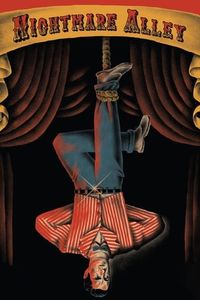
    (On Cable TV, September 2021) Among film noir fans, Nightmare Alley is perhaps best known for being a rare A-list production with first-rate stars and a decent budget — most crime thrillers we now associate with the noir tradition were B-grade productions, not meant for prestige nor posterity. But this film had one of the most famous actors of the time, Tyrone Power, and the production crew required to do justice to its ambitious setting, from the underworld of carnival shows to Chicago high society… and back. If the essence of noir was poking at traditional American values and pressuring its characters until they did unspeakable things, then Nightmare Alley couldn’t be more representative — our hero chooses to be a conman and associate with others who share his lack of morals. This all backfires a few times, and the film clearly patterns itself along the lines of a classical rags-to-riches-to-rags tragedy, the hero doomed by his own personal failings. Power is better than average here, with such notables as Joan Blondell, Coleen Gray and Helen Walker providing good supporting performances. It’s not pleasant stuff (although the ending isn’t quite as dark as it could have been) but the heightened nature of the carnival environment does lend a welcome off-kilter quality to the result. The other role of the carnival is to create parallels between it and larger social issues — viewers will easily make the parallels between the carnival’s naked artifice and how it’s more honest than Chicago high society about its deceptions. It’s not surprising to learn that the film was not a hit upon release, but that its critical reputation has considerably improved since then. It remains somewhat harsh and merciless, which is a flavour of cinema that’s better digested today — not to mention that only confirmed classic Hollywood fans know much about Power these days. In any case, the film remains worthy of a look, and is set in the coming months to get a big-budget remake as an enduring homage.

  • A Yank in the R.A.F. (1941)

    A Yank in the R.A.F. (1941)

    (On TV, September 2020) A very nice surprise opens A Yank in the R.A.F.: A recreation of a famous bit of US/Canadian history in which American-built planes were flown, driven and then pushed to the Canadian Border, at which point the Canadians pulled the planes onto British Allied territory and were able to legally fly the planes to the UK while breaking no neutrality law. Alas, the rest of the film is far less interesting: Featuring Tyrone Power as a far-too-cocky American pilot, the film takes us through the first two years of WW2 with Power’s character fighting the war as a sideshow to his insistent pursuit of another American working in London (played his frequent screen partner Betty Grable).  A Yank in the R.A.F. tries to do too many things at once while not quite changing gears fast enough to suit the project. Produced at breakneck speed as the Americans were still contemplating whether to get involved in the war, the project tried to take the Power/Grable dynamic and force it into a war movie, ending up making compromises on both sides. Grable’s character is also far too much of a cad to be likable—and the film’s insistence on his rule-breaking heroism rings false from the get-go, as he casually flies from the Manitoba/North Dakota border to Trenton, Ontario—a two-thousand-kilometre trip! Granted, this is probably the only film in history where confusing Trenton, ON with Trenton, PA becomes a minor plot point, but still—it sets the stage for even dumber stuff later on, perhaps reflecting the lack of polish of a production so closely following the events of the war. If nothing else, this pre-propaganda film was clearly meant to prepare the audience for the United States intervening in the war, and by proxy gets us thinking about the now-unbelievable and often-elided isolationist attitude of the United States during early WW2. Unfortunately, A Yank in the R.A.F. is not quite the vehicle fit to fully do justice to the topic—Much of what it does well has been done better in other movies.

  • The Razor’s Edge (1946)

    The Razor’s Edge (1946)

    (On Cable TV, September 2020) Despite its sharp title, The Razor’s Edge is not a thriller, not a film noir, not a crime movie—it’s a soul-searching literary drama adapted from Somerset Maugham’s novel and whose contemporary impact may not be immediately understandable by twenty-first century audiences. What a bit of historical investigation reminds us is that the story was written during WW2 and, upon release in 1944, gradually found a public receptive to its themes of aimlessness after a great trauma, then-unusual transcendental themes and resistance to the increasing materiality of American culture. Even elements such as casting Tyrone Power (then more akin to a matinee idol) were playing into that zeitgeist. (Gene Tierney looks nice, though.) Those may not be readily apparent many decades later, but they certainly feed the film’s thematic concerns. Whether the result is successful is up for debate—one of the dangers in adapting a novel heavy in unconventional themes is the double-flattening effects of material being handled by people who didn’t come up with it, and tailored to an audience even further removed from what the original work was trying to say. Then there’s the real danger of ending up with a dull clunker incapable of properly conveying the point—and at 145 minutes, The Razor’s Edge is clearly vulnerable to that statement. All of this to say—sit down and prepare yourself for a long sit because this isn’t some genre piece with regular action beats to keep you awake.

  • The Mark of Zorro (1940)

    The Mark of Zorro (1940)

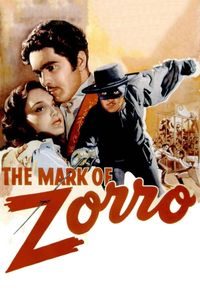
    (On Cable TV, May 2018) In some ways, there really isn’t anything new in The Mark of Zorro if you’d seen, say, the 1998 remake of it or have been immersed in pop culture for the past few decades: It’s a bog-standard story in which virtue triumph over perfidy after a fair amount of sword fighting. On the other hand, there is something to be said about execution, and that’s why there’s no tiring of The Mark of Zorro even if you’ve seen the 1920 version, the 1998 version, the 1980s parody, the Batman origin stories or any of the unacknowledged inheritors of the swashbuckling tradition. Tyrone Power makes for a fantastic hero, Linda Darnell has the whole damsel-in-distress thing locked down, and Basil Rathbone is simply awe-inspiring as a henchman more interesting than the main villain. The closing Power/Rathbone confrontation is a physical tour-de-force that hits all of the classic tropes of swordfights (cut candles, climbing on furniture, witty repartee) in a way that will leave no one unsatisfied. Seriously, if you watch nothing else, then fast-forward to the final sword fight—it will make you watch the entire film. Old and yet still bold, The Mark of Zorro amply justifies its lasting reputation as one of the finest swashbuckling epics of all time.