Udo Kier

  • La terza madre [Mother of Tears] (2007)

    La terza madre [Mother of Tears] (2007)

    (In French, On Cable TV, June 2021) It’s hardly controversial to state that not all of Dario Argento’s films are created equal, and that his early films are better-crafted than the ones made after (roughly) 1990. It does Mother of Tears no favours whatsoever that it sets itself up as the concluding instalment of a series launched by nothing less than Suspiria (a giallo that even a slasher-hater like myself can like) and Inferno — no film could possibly aspire to follow up those two opening films and get good reviews. Indeed, other than a few rare moments and an ambitious apocalyptic plot, there isn’t much in Mother of Tears to impress. The plotting is crazy, but the execution feels far less audacious. Even with Asia Argento in the lead role and Udo Kier hovering menacingly in a supporting role, the film struggles to capitalize on its own potential. It avoids failure with a few flourishes, but again the comparisons to earlier Argento are almost unbearable — what would the younger Argento have been able to do with the budget and digital effects required to do justice to this kind of wide-scale vision of horror? Tough to say, but we’re on somewhat firmer ground in calling Mother of Tears a disappointment made even worse by the unrealistic comparisons that it courts.
  • American Exit (2019)

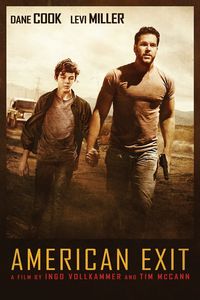
    American Exit (2019)

    (On Cable TV, June 2021) While it does have its interesting moments, American Exit can’t quite manage an entire engaging film with what it’s got, and even a surprising lead acting performance isn’t enough to keep our interest throughout. The setup, once it’s clarified, holds some promise as a dying man breaks a few rules in order to have one last road trip with his son, a journey during which he also hopes to complete one last illicit deal in order to secure his son’s future. Dane Cook, who got some well-deserved criticisms in earlier movies, successfully goes for drama here as the dying father. Udo Kier plays a heavy, while Levi Miller does well as the son. Alas, once past the setup, there isn’t much more left until the somewhat predictable and downbeat conclusion. Shot with an ugly yellow filter (to best represent Mexico, as the cliché goes), American Exit quickly becomes irritating to watch, with the constant colour palette making the experience even more repetitive than it should. Stuck between delivering a genre action film and a heartfelt character drama, writers/directors Tim McCann and Ingo Vollkammer can’t quite package everything into something that fulfills its potential. The pacing is off and there’s not much sense that American Exit builds toward something. Not a terrible thing, but you may not remember it the following week.

  • The Theatre Bizarre (2011)

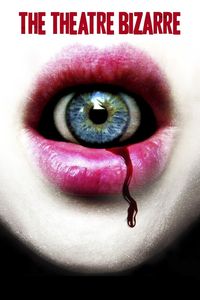
    The Theatre Bizarre (2011)

    (In French, On Cable TV, April 2021) As far as horror anthologies go, The Theater Bizarre is a bit more striking than most. For one thing, it doesn’t hold back on the gore, sex and disturbing material; for another, it’s also curiously versatile in the ways it approaches horror. There’s a framing device (starring Udo Kier) having to do with a woman discovering the titular bizarre theatre and being told macabre tales until terrible things happen to her. The first story, “The Mother of Toads,” is probably the blandest of the bunch, what with an entirely predictable bit of Lovecraftian folk horror. Things don’t necessarily get better with “I Love You,” a tragic anti-romance with another completely predictable ending — although the segment does get blackly hilarious as a standard I’m-leaving-you speech gets progressively crueller, to the point where it leaves no awfulness unturned in its quest for the ultimate put-down. “Wet Dreams” abruptly cranks the gore and the body horror within another tale of adultery — and a supporting role from horror legend Tom Savini, who also directs the segment. “The Accident” is the oddest and best segment of the bunch, largely gore-free but haunting in illustrating a conversation about death between a mother and her young daughter. “Vision Stain,” from well-known Canadian cinematographer Karim Hussain (you can spot downtown Montréal streets in the exterior shots), looks great but more immediately renews with the horror by way of needles in eyeballs to make up for a nonsensical story. Finally, “Sweets” does end in predictable gore, but takes an interesting path to get there, going for food-based grossness for once — it’s remarkably disturbing. Clearly meant for fans of all-out horror leaving nothing to the imagination, The Theatre Bizarre remains a better-than-average horror anthology, especially considering the ways some of the segments take a slightly askew approach to the genre.