Universal Monsters series

  • Frankenstein meets the Wolf Man (1943)

    (On Blu-Ray, November 2021) By the mid-1940s, the eldest members of the Universal Monsters series were clearly running out of steam — the monsters having been introduced in the early 1930s, the series was past the origin stories and their first few sequels, leading to the idea of combining two monsters in the same film. (The Abbott and Costello parodies were only five years away.)  Frankenstein meets the Wolf Man dares to combine Lou Chaney Jr.’s then-new Wolfman (introduced in 1941) with the almost-teenaged Frankenstein’s monster (introduced in 1931). It takes a while to get there — much of the first hour is spent getting the Wolf Man back up to speed (considering that he died in the previous film) and then send him on a quest to find the monster for reasons. It takes until the last five minutes of the film for them to fight, and even then, you’ll be wondering such questions as “who builds a dam above a castle, really?”  Still, the point of Frankenstein meets the Wolf Man, perhaps clumsily made, is to start playing around with the monsters, wringing out a bit of fun and profit from established franchises — a reminder that commercial exploitation has always been part of Hollywood’s DNA. Frankenstein meets the Wolf Man is not that good, but it does have some of the same fun as other films in the cycle, and does get the titular monsters interacting. Good enough!

  • Bud Abbott and Lou Costello Meet Frankenstein (1948)

    Bud Abbott and Lou Costello Meet Frankenstein (1948)

    (On TV, February 2020) Whenever anyone complains about Hollywood taking on the silliest premises in the name of profit, remind them that dubious high-concepts have been in the film industry’s DNA for a very, very long time. Bud Abbott and Lou Costello Meet Frankenstein is not the first nor the worst example, but it’s wild enough to be remembered. By 1946, Universal had been in the Monster Movie business for a decade and a half—long enough to look for ways to spice it up, and the one they picked was melding it with their Abbott and Costello comedy franchise. Crossovers: They’re not new! Despite the title, it’s a comic companion to the big three of the Universal Monster roster, as Dracula and the Wolf Man join Frankenstein for the fun. And fun it is—hitting several comedy registers (physical, verbal, conceptual), this is a film with something for everyone, and it doesn’t overstay its welcome at 83 minutes. The brain transplant comic premise is funny enough, and Lenore Aubert is very cute in the lead female role. Acting-wise, though, Lon Chaney Jr. looks like a terrific actor next to Abbott and Costello. Universal clearly threw everything they had in store at the time: the live-action also features special effects and animation. Bud Abbott and Lou Costello Meet Frankenstein certainly wasn’t meant as great cinema, but a counterbalance of sorts to the seriousness of the Universal Monster movies… and it still works.

  • Creature from the Black Lagoon (1954)

    Creature from the Black Lagoon (1954)

    (On Cable TV, December 2019) I’m not sure about others, but in my mind Creature from the Black Lagoon’s Gill-man is one of the major Universal monsters. An often forgotten or maligned one, but still part of the line-up. (I suspect that its aquatic nature means that he’s not as reusable as Frankenstein, Wolfman, Dracula, or the Mummy in the popular imagination, but that’s how it goes.)  What’s perhaps more interesting is that his introduction took place twenty-three years after the first Universal Monsters, in a very different environment for horror. The 1950s were nothing like the 1930s—the fantastic was getting more commonplace even outside the core audience for horror, and an entire slew of monster movies emerged during that decade to reflect various Cold War anxieties. As a result, it does feel slightly different—but it’s clearly among the best of those 1950s monster movies, playing off themes of unrequited romance and a somewhat sympathetic monster. There’s a clear line going from Creature from the Black Lagoon to 2017’s Oscar-winning The Shape of Water, perhaps reflecting the nature of empathy throughout decades. The film’s production values are not bad, especially when you get to the underwater sequences that present obvious acting and plot progression challenges when straight-up dialogue isn’t possible. It remains essential viewing for anyone interested in the origins of lasting cultural icons, but it’s also, thankfully, an entertaining film in its own right.

  • The Wolf Man (1941)

    The Wolf Man (1941)

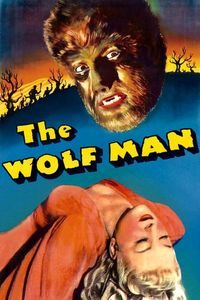
    (On TV, July 2018) The 1941 original version of The Wolf Man is rightly considered one of the big-five Universal Horror monsters (alongside early-thirties Dracula, Frankenstein, The Mummy and The Invisible Man), so it’s a bit of a surprise to find out, throughout the film, how much of it seems to differ from our codified understanding of the werewolf monster. This film (scripted by legendary SF writer Curt Siodmak) does bring together werewolves and silver, but not necessarily shape-shifting under a full moon—which is a later innovation. As with many Universal Monsters foundational texts, there is a substantial romantic component at work here, and a cinematography that bridges between German expressionism and American film noir. Lon Chaney Jr has quite a presence as the titular wolf man, anchoring a potentially silly story into something with romantic gravitas. The film has surprisingly good makeup and special effects, though they come in fairly late in the movie. Despite some mythology weirdness compared with the contemporary version of the werewolf monster, The Wolf Man did create much of the myth and so remains a mandatory viewing for horror fans—fortunately, it happens to be a decent movie still.

  • Dracula (1931)

    Dracula (1931)

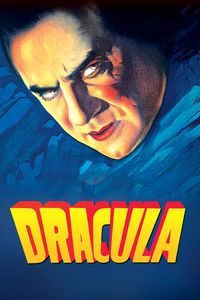
    (On TV, July 2018) It’s amazing to realize how much standard Halloween iconography (“Halloween” being used here as “mainstream watered-down portrayal of horror”) can be traced back to a handful of 1930s Universal movies. In-between The Wolfman, The Mummy, Frankenstein, The Invisible Man and Dracula (released in 1931–1933, except for The Wolfman in 1941), you have the five classic monster archetypes and the associated iconography. A ridiculous amount of what has become associated with vampire movie portrayals is owed directly to Bela Lugosi’s portrayal of Count Dracula, down to the exaggerated vocal performance (equally taking from the theatrical and silent movie acting styles) and quotable material. It means that Dracula is still worth a look today … but those very same qualities also make it an overly familiar borderline-dull experience. Much like Frankenstein, the film moves through an intensely well-worn plot that was made just as well earlier (Nosferatu) and much later (Bram Stoker’s Dracula). That certainly does not make it a bad film (its legacy can still be found everywhere come late October), but it does nibble at some of the basic enjoyment of watching a film to see what’s going to happen: In this case, we know exactly what will happen and that makes it more like a repertory piece—even to first-time watchers! I’m still glad I saw it, but the rough early-1930s production values mean that if I’m going to watch something based on Bram Stoker’s original novel, I’m going to volunteer the rather entertaining Coppola version.

  • The Bride of Frankenstein (1935)

    The Bride of Frankenstein (1935)

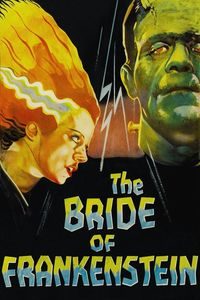
    (On Cable TV, July 2018) When they say that The Bride of Frankenstein is one of the best sequels ever made, they’re not kidding: Even if the original Frankenstein is not a bad movie, it’s so familiar that it can feel underwhelming. While the cultural impact of The Bride of Frankenstein is significant, much of the film feels fresher, more challenging and more imaginative than its predecessor. There are some brilliant special effects here and there, the story is far more morally ambiguous (I mean—the monster is likable, but he actually kills a young girl!) and it doesn’t merely go through the motions of the Shelley story like the first one does. There’s a clear articulation of a mad scientist rivalling Frankenstein, making the stakes ever more complex. This being said, I was surprised to find out that despite the iconic nature of the titular bride, she only shows up for a few moments—and her plot purpose seems to be to reject Frankenstein so that he’s motivated to go kill himself. Hmmm. Nonetheless, I had a much better time watching The Bride of Frankenstein than its predecessor, and its unusual nature is a significant part of it.

  • Frankenstein (1931)

    Frankenstein (1931)

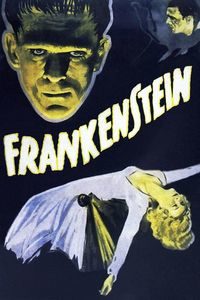
    (On TV, July 2018) The great things about the handful of classic Universal Monster movies is that they’re iconic enough to be worth a watch at any time. The not-so-great thing about them is that they’re so iconic that they’ve been remade, ripped off, sequeled, and nodded at so often that we often know exactly what will happen even if we’ve never seen the movie. So it is that this 1931 version of Frankenstein is pretty much what we’d expect from a Frankenstein film. There’s Bela Lugosi in traditional makeup, there’s the mad scientist, there’s the lightning-powered machinery, there are the villagers … it’s extremely familiar and while it’s good, I don’t think there’s any surprise to it. I still enjoyed watching it, but I’m having trouble actually finding anything worthwhile to say about it.