Uwe Boll

  • Rampage: President Down (2016)

    Rampage: President Down (2016)

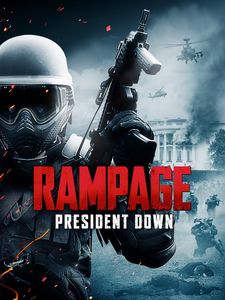
    (On Cable TV, June 2021) Writer/director Uwe Boll made few friends during his (first?) seventeen-year rampage through the North American film industry. Known for his threadbare production values, paper-thin scripts, pugilistic stance toward reviewers and provocative subject matter, Boll eventually left the industry to become a Vancouver-based restaurateur. While rumours strongly suggest that he’s coming back, Rampage: President Down was billed as his retirement film. As such, it’s surprisingly representative of the career that preceded it: it’s deliberately aggressive, cheaply shot, incompetently scripted and yet, somehow, weirdly political in a fashion that is rarely explored elsewhere in filmmaking. While I haven’t (yet?) seen the first two Rampage films, the title is explicit enough—what with a powerfully armed protagonist killing a lot of people as he airs his grievances. Quite a bit of it is linked to a reasonable amount of anger: In the film’s many, many uninterrupted rants, Boll takes aim at an increasingly unequal society, with corrupt politicians, rapacious corporate interests and the marginalization of citizens’ interests. It’s not hard to make the parallel here between the film’s exasperated discourse and the state of American politics, with populist forces leading to excesses of anger with counterproductive results. In that, Rampage: President Down (repetitively?) joins other Boll films, such as Assault on Wall Street in which anger leads to violence. If nothing else, it’s a raw expression of rage that finds few equals in so-called more respectable corners of the film industry. Alas, this doesn’t do much to make anyone feel any better at the nihilistic violence espoused by its anti-hero. If anything else, it probably exposes Boll’s rants as an ill-fitting justification for exploitative shootouts, neither all that clever nor thematically aligned. Of course, it’s easier to feel cynical when the film clearly doesn’t have the budget or the wit to fulfill its ambitions — Much of what’s dramatically interesting about the film happens off-screen, described by news anchors alongside stock footage, or narrated by YouTube-like shots by the film’s anti-hero. Structurally, the film is an amateurish mess with a lousy populist wrap-up that would have been interesting if someone with more cleverness had shaped the material into something more interesting. Rampage: President Down may be more interesting at a glimpse of what the discourse can become when so few other controlling interests are involved — as well as the limitations that a limited budget and a slapdash filmmaker can bring on themselves.
  • House of the Dead (2003)

    House of the Dead (2003)

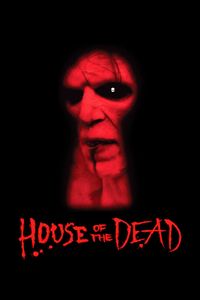
    (In French, On Cable TV, February 2021) Curiously enough, it took me almost eighteen years to watch House of the Dead — it’s certainly not an essential movie, but it felt weird having written so much about writer-director Uwe Boll without mentioning his best-known (and perhaps highest-budgeted) film. House of the Dead in infamous in movie circles as a terrible film, one that showed Boll’s limitations as a director, announced the rest of his career and established his lack of care in delivering a movie. It’s adapted from a videogame, and Boll won’t you let you forget it: the opening credits are set against distortions of footage from the original 1996 game, and scene transitions throughout the film are awkwardly spliced with more game footage — it’s as visually repellent as you can imagine. Not that this is the worst of the film’s problems, given its characters going to a rave held on an ominously-named island and somehow not freaking out when nobody is there upon their arrival. This means zombies, of course, and House of the Dead briefly becomes enjoyable once the protagonists gear up for undead-shooting action: the techno music pumps up along the number of cuts per minute, and the bullet-time camera rig gets a workout as every character gets a spinning hero action shot. (It’s a low-budget bullet-time rig, though: the one pointing up rather than the horizontal-facing one that requires a studio greenscreen and CGI to hide the other cameras.)  As overlong and in-your-face as that sequence is, it’s probably the strongest claim to cinematic style that Boll can make, and it’s ever-so-briefly enjoyable… especially for those with a nostalgic kick for early-2000s techno music. The rest of the film is not good at all: terrible dialogue that makes you doubt the sanity of the screenwriters, awkward staging, nonsensical narrative, exploitative costumes and low-budget production values all make House of the Dead a bad movie. Perhaps not as bad as many would like—there’s a difference between theatrical-bad and streaming-bad, and 2003 critics were grading against the theatrical curve—but still not good. Oh, there are a few fun things — aside from the graveyard war sequence, sharp-eyed viewers who know what to look for will spot Canadian rock singer Bif Naked as the rave DJ. But an absence of excruciating pain is not exactly a strong compliment, and so House of the Dead generally lives up to its reputation as the film that announced that Uwe Boll was up to no good. Of course, the joke would be on reviewers, since Boll then proved that he could do much, much worse than House of the Dead.

  • F- You All: The Uwe Boll Story (2018)

    F- You All: The Uwe Boll Story (2018)

    (On Cable TV, November 2019) It’s still a bit early to definitively state that Uwe Boll will never direct another movie, but even in youthful retirement he leaves behind a distinctive filmography rich in fascinating material. In case you don’t know Boll, let us be clear: His films are terrible, but he was able to make a lot of them (twenty-two of them in ten years) thanks to savvy use of financing opportunities and a casual disregard for quality. For the generation of movie reviewers working between 2004 and 2015, Boll was a punchline until he became the one doing the punching—literally: in 2006, he dared movie reviewers to a boxing match. Some of them, forgetting that Boll had a semi-professional pugilistic background, accepted … and got beaten up. Stories like that are legion about Boll, who easily takes a spot on anyone’s list of pugnacious directors. He exploited tax loopholes; he shot in miserable conditions; he shot first drafts of scripts against the screenwriters’ wishes; he rarely spent more than a few takes before deciding to move on. This documentary’s biggest contribution, besides capturing the insanity of Boll’s career in easily digestible format, is to explain why Boll’s films were so terrible. It’s all about the money, of course. Or, if you want to be more precise, that Boll had a gift for getting money, but as a producer of his own films often sacrificed any artistic ambition in order to further his agenda as a budget-conscious producer. Unusually enough, Boll himself is not always his best advocate in interview segments filmed for this documentary—often, the best insights come from collaborators and friends trying to figure out what they saw or felt on the set. Boll himself is often argumentative, unrepentant, apparently unwilling to provide answers. It makes for good footage, obviously: Boll is a consummate showman in his own way, and he has chosen combativeness as a way of getting attention. Still, anyone looking for definitive answers may have to wait longer: As of the film’s shooting, Boll was still somewhat in the entertainment business, now being a successful Vancouver-area restaurateur. Both the movie and the restaurant world are better for it. Writer-director Sean Patrick Shaul should be proud of having explored the mystique behind the character, even if the answers he gets are tentative at best and not quite supported by the man himself. Anyone who has bemoaned the lack of grander-than-life directors after the passing of Howard Hawks, John Ford, or Joseph Von Sternberg (this being the last time Boll will be compared to those three) should have a look at this documentary—his movies are still not good, but now we have a record of Boll himself.

  • Bailout: The Age of Greed aka Assault on Wall Street (2013)

    Bailout: The Age of Greed aka Assault on Wall Street (2013)

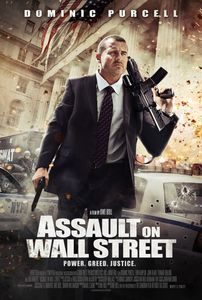
    (On Cable TV, February 2014) Writer/Director Uwe Boll may be one of the most reviled filmmakers around, but wow is his latest Assault on Wall Street a fascinating piece of work. Few movies commit as completely to sheer populist outrage, and in selecting Wall Street as a target for a cheap exploitation film, Boll seems far more adept at reading the cultural zeitgeist than in more Hollywoodized products such as Tower Heist. From the get-go, the plot screws have the ring of the time: A protagonist stuck between crippling medical bills and life savings frittered away by financial shenanigans vows vengeance when he loses everything. The titular assault not only succeeds, but goes unpunished and even celebrated in a bit of epilogue narration. Hollywood is never this transgressive, and that makes Assault on Wall Street worth a look even if the film itself never rises above straight-to-video quality levels. There really isn’t much to say about the acting, directing or cinematography when compared to the sheer chutzpah of the script. Taking a break from more fantastical video-game premises suits Boll well: maybe he should consider that as a future career path. Who knows –he may end up doing something more than half-way respectable one of those days.

  • Bloodrayne: The Third Reich (2011)

    Bloodrayne: The Third Reich (2011)

    (On Cable TV, October 2013) Surprisingly enough, prior to this film I had never seen any film by legendary director Uwe Boll.  I say “legendary” in the most jocular sense, as few other directors have been able to earn the kind of low-budget, bad-reviews, tax-shelter-financed, consensually-punches-critics-in-the-face fame that Boll has acquired over the years.  His films aren’t meant to be art: they’re usually low-budget videogame adaptations aimed at the direct-to-video market and everyone knows it.  Until recently, I had no easy access to that lowest tier of filmmaking, and little interest in venturing there.  Now that I’ve got a cable TV subscription package with a dozen movie channels, though… I figured I could watch Bloodrayne: The Third Reich while putting together a few IKEA bookcases.  As it turns out, this is exactly the right kind of movie to watch while doing something else: it’s hollow, inane and visually unremarkable, but it does have a few moments here and there to make you look up.  I’m not at all familiar with the Bloodrayne video games, but the premise of the film doesn’t require a lot of explanation: Here’s a female human/vampire hybrid battling Nazis and vampires and even nazi vampires.  The skin-tight outfits, swords, mad scientists, machine-gun battles and sex scenes are just more layers on a big cake of exploitation filmmaking.  There’s little subtlety nor substance in a film that barely lasts 79 minutes with lengthy credits: The id of the film is perilously close to the surface, and all that’s left is broad strokes with easy plot elements.  At times, there’s a sliver of interest.  Clint Howard is curiously compelling as a Nazi doctor who wishes to use vampire blood to make Hitler immortal (sadly, this idea goes nowhere, whereas a better film would have run with it) and he has one fun scene with a randy vampire prostitute.  The film occasionally manages to get a chuckle out of sheer desperation, and while the two sex scenes may be wildly gratuitous and intrusive, they do feature a decent amount of nudity –something that’s surprisingly lacking in many contemporary exploitation films.  Still, let’s not get overly excited: BloodRayne: The Third Reich is still terrible, whatever the level of filmmaking you’re looking at.  Conceptually, it’s completely botched and never manages to use its core plot elements as effectively at it could.  The screenwriting is usually fairly bad, immature in the way it overuses swearing, and never duller as when it features the rebel forces that ally themselves with the heroine.  Visually, it’s bland from beginning to end: While this not the worst-looking film I’ve seen (even in the last month), it’s not interesting either and the direction does nothing to elevate the material.  The action scenes feel particularly uninvolving.  I was, maybe curiously enough, expecting considerably worse, and I’m disappointed that this example of Boll’s film isn’t as bad as I had been led to believe.  Maybe it’s one of his better movies.  I’m not sure I want to make sure of that.