Val Kilmer

  • Paydirt (2020)

    Paydirt (2020)

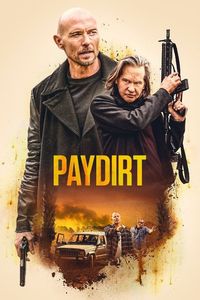
    (On Cable TV, April 2021) The best-case scenario in writing a bad film according to formula is that the formula will carry much of the film on its shoulders, compensating for other flaws by sheer force of familiarity. I don’t have any issue with admitting that I like Paydirt’s formula a lot — the idea of putting together a crew of hoodlums (especially ones known for their nicknames) for one last score, the sunny California setting, the booming use of music during montages, nestled flashbacks, the gorgeous women, the final twists and turns that transform a defeat into a complete victory— this is all good stuff as far as I’m concerned, and Guy Richie alone has probably forgotten some of his own movies following this formula. Paydirt clearly follows it blindly, all the way to the predictable twists at the end. It really does not have the wit or the finesse to make it look natural — everything looks laboured, deliberate and almost exhausting even when it’s mechanically assembling the pieces it needs. Writer-director Christian Sesma dictates it as if he knew what works, but only being half-right about that. Many people attack formula films by saying it’s all gloss, but Paydirt doesn’t even have that: it operates at half-throttle all the time, going through the motions of something compelling without actually being compelling itself. Luke Goss is, in keeping with the rest of the film, fairly bland throughout. Val Kilmer impresses for all the wrong reasons in a supporting role: He looks really old and overweight here, no doubt a result of his recent health problems. But the problems are everywhere in this film, and the worst are in the script. The sloppy plotting can’t be bothered to convincingly nail down the details, and by the time the coda laboriously explains with a self-satisfied wink what we’d guessed anyway due to (again) the formula, it all feels even more contrived than usual. Despite all of these flaws, I still half-enjoyed Paydirt: it should be much, much worse, but thanks to the formula, it manages to paddle hard enough to keep its head above water. That’s not exactly a ringing recommendation, but at least it got halfway there.

  • The Salton Sea (2002)

    The Salton Sea (2002)

    (On Cable TV, February 2021) There’s a neo-noir sensibility to The Salton Sea that is not necessarily apparent from its first few minutes, considering that it begins with a surprisingly funny explanation of where meth comes from and the curious community that forms between junkies in a crack-house. But as the lead character tells the audience, we haven’t heard the entire story and should wait before judging. Things get kicked in second gear soon after, as a visit to a not-so-friendly neighbourhood drug dealer leads to the protagonist calling the police as an informant. There’s clearly another narrative at play, especially when our protagonist starts thinking about his past life as a jazz musician. Plot-heavy but stylishly directed, The Salton Sea proves to be an auspicious feature film debut for director D. J. Caruso, who would go on to direct an uneven but intriguing corpus of thrillers. It stars Val Kilmer in one of his last good leading roles before a lengthy eclipse (though there’s an interesting link to be made here between The Salton Sea and the following year’s Wonderland, both set in the Los Angeles underworld), and features Vincent D’Onofrio in a usually creepy turn. The plot twists and turns and twists some more with a few happenstances thrown in for good measure, but eventually settles for a satisfying conclusion. The Salton Sea probably works better now than it did upon release — its hodgepodge borrowing of other films and showy style have grown a bit less unusual, and the film no longer labours under the shadow of Tarantino. It’s not a bad watch, but it does make one yearn for the late career that Kilmer never had.

  • Wonderland (2003)

    Wonderland (2003)

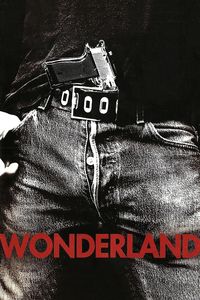
    (On Cable TV, June 2020) The hook in Wonderland’s premise is learning more about pornographic film legend John Holmes—but as it turns out, the film’s narrative takes place after his acting retirement, and becomes a slice of California low-life noir, with plenty of guns, drugs and debauchery. Stylishly presented by writer-director James Cox, it explores the perspectives of several characters as a patchwork of interpretations of the same quadruple murder. Part of the need for this stylishness comes from a lack of certitude regarding the facts of these still-unsolved murders and the drab dirty environment in which this all takes place. The cast is certainly impressive, and even more so considering that everyone is so thoroughly de-glammed by the grimy settings that they may be unrecognizable. Still, we get Val Kilmer in one of his last solid dramatic roles, Eric Borgesian chewing scenery as a mogul, Lisa Kudrow, Janeane Garofalo, Tim Blake Nelson and as proof that the film came out in 2003, Paris Hilton showing up on a yacht for a few seconds. Still, by the end of Wonderland, the entire thing does feel a bit pointless—junkies make poor choices and get killed in the end. One wonders if the story would have ever been told if it wasn’t for Holmes’ presence.

  • Thunderheart (1992)

    Thunderheart (1992)

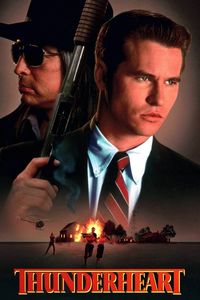
    (In French, On Cable TV, January 2020) On the one hand, there’s something admirable in seeing Thunderheart tackle the deplorable state of native reserves in the United States by setting a murder mystery within its borders. Our way into this setting is done through the dispatch of an FBI agent of mixed ethnicity (Val Kilmer, who is also of mixed ethnicity) but no cultural affiliation to native causes. As he gradually investigates the murder, he also gains an appreciation for his own origins. Standard Hollywood character development, but handled well, especially within the context of an unvarnished depiction of reserve living in the early 1990s—not that things have changed very much since then. Director Michael Apted makes effective use of helicopter-mounted cameras to give a good sense of space, action and the neighbouring landscapes—an essential when setting a film in the Badlands. While Kilmer ably headlines, the highlight here is once again Graham Greene as a local agent. Still, this could have been a better film: Thunderheart remains very much the story of a non-native protagonist exploring “the other,” and not a story told from within the native community. As revelatory as it could be in the early 1990s, it does feel limited today at a time when movies increasingly reflect diverse voices from their own perspectives. I liked it, but I can see how we’ve gone a bit beyond that.

  • Willow (1988)

    Willow (1988)

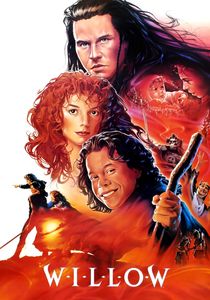
    (On Blu Ray, September 2019) I’m aware that Willow has its fans—if you were a fantasy fan of the right age in 1988, Willow was supposed to be a genre-defining event, a bit of hype that was helped along with having George Lucas as the film’s screenwriter. The intent was to deliver a fantasy equivalent to Star Wars (you can recognize themes running through both), working from an archetypical plot executed through state-of-the-art technology. The result, well, isn’t quite as successful. Drawn-out, dull, repetitive, predictable, it’s somewhat balanced with a great lead performance by Warwick Davis, some oddly likable bits of worldbuilding, Val Kilmer in a breakout role, and some digital special effects that, in retrospect, demonstrate the road to even more sophisticated CGI. Watching the film as a middle-aged man, I can’t quite say that it has aged well—the film’s young target audience is obvious, and part of the point of fantasy stories is the immersion that the sometimes-dicey special effects break. For every good thing that makes us like Willow, there’s at least one other bad thing pulling us farther away. Clearly, I’m far too old to watch it as intended.

  • The Doors (1991)

    The Doors (1991)

    (On TV, March 2019) I am surprisingly underwhelmed by sex-drugs-and-rock-and-roll biopic The Doors, and even more so considering that it’s from Oliver Stone, a filmmaker who has amply demonstrated his ability to deliver vivid and exciting takes on American history. He doesn’t fail here—it’s more that he half-succeeds, focusing on one specific element without quite bringing everything else together. It’s not uninteresting by the time the credits roll, but the film does itself no favours with a first half-hour spent in a series of false starts and delirious haze. Stone keeps things moving and the least we can say is that the film rarely stays sitting still for long … but the flip side of that is The Doors’ hectic quality, moody intercuts and scattered attention span. The focus here, despite the film’s title is clearly on lead singer Jim Morrison—bolstered by an exceptional performance by Val Kilmer, the film embraces a portrait of the singer as a death-seeking drug-fuelled paranoid. It’s a great topic for a flamboyant film, but maybe not so much for historical accuracy. Saying that the result is pretentious isn’t a criticism as much as an acknowledgement that it has captured a significant facet of Morrison’s personality even as it has downplayed others. Even then, the film does sport some interesting performances in its corners—Meg Ryan and Mimi Rogers, among others, still manage to be memorable. Which, in the middle of a film with great music and an exemplary rock-and-roll superstar subject, is no little feat.

  • Doctor Moreau’s Island (1996)

    Doctor Moreau’s Island (1996)

    (In French, On TV, March 2019) The making of Doctor Moreau’s Island is one of the most legendarily troubled production of the past few decades, so it’s fascinating to find that the film itself is spectacularly dull. Quirky, twisted, off-putting at times, maybe, but once you take away the menagerie of human/animal hybrids designed by Stan Winston’s company, not a lot is left to contemplate. Handled by directors Richard Stanley then John Frankenheimer, the story is dull, muddled and uninteresting—even updating the classic story to modern technobabble doesn’t do much to help. Casting-wise, Fairuza Balk always fun to see, while Val Kilmer has a much smaller role than expected and David Thewlis is the film’s true protagonist. Let’s not talk about Marlon Brando, who’s a walking disaster (hey, let’s cast him in a role of a legendary eccentric lost in the jungle—what could possibly go wrong?)  The film’s big budget doesn’t really help things—even the credit sequence is terrible. If you want better entertainment, read about the film’s production rather than just watch the film.

  • The Snowman (2017)

    The Snowman (2017)

    (On Cable TV, August 2018) If, while watching The Snowman, you find that the plot makes no sense, then don’t worry about whether you’re having a stroke—rest easy knowing that according to the film’s director, its troubled production meant that a good chunk of the script was never shot. The film, as released, was cobbled together from incomplete material. How that happens (if that’s what happened) is a fascinating question as of yet unanswered, which is somewhat amazing considering the impressive pedigree of the cast and crew. And yet no one, not director Tomas Alfredson, not Michael Fassbender, not Charlotte Gainsbourg, not J. K. Simmons, not Toby Jones, not pretty Swedish landscapes can actually make the film any good. Not that missing narrative pieces are the film’s sole or biggest problems: Even the best production schedule still would have led to a silly and implausible film in which yet another serial killer gets off on making snowmen after killing his victims. (Actually, as a Canadian with substantial snowman-building experience, I’m somewhat dumbfounded by the whole snowman-after-killing shtick—snowman weather is very specific, and it only happens a few days per year, unpredictably linked to the weather. Any budding serial psycho building his killing schedule around near-zero-degree snowstorms would face near-impossible logistical challenges.) The Snowman gets worse the deeper you go in its details and subplots, as many of them don’t get any kind of resolution … and at some point you have to confront Val Kilmer’s terrible, overdubbed performance. Interestingly enough, the film’s botched handling of now familiar but still overdone thriller elements lay bare the ludicrousness of modern written thrillers, as they endlessly remix the whole troubled-detective, crazy-killer, sordid-society elements. It takes a ham-fisted interpretation of the formula to make us realize how stupid the whole thing has become. On the upside, The Snowman was such a derided failure (both commercial and critical) that we will be spared any further entries in the series.

  • Tombstone (1993)

    Tombstone (1993)

    (On TV, May 2017) In an ideal world, I would be writing my impressions about Tombstone in a perfect vacuum, untainted by any later film or experience. In this world, however, I waited two weeks before jotting down this capsule review … after seeing the similar Wyatt Earp. I’m unlikely to be the only one to draw comparisons between the two, as both movies came out in 1993–1994 and have been linked ever since. While Wyatt Earp tries to give a whole-life portrait of Earp, Tombstone focuses on the events immediately preceding and following the shootout at O.K. Corral. But more crucially, Wyatt Earp is dour and interminable, whereas Tombstone does have Kurt Russell with a glorious moustache shouting “You tell ’em I’m coming … and hell’s coming with me, you hear? Hell’s coming with me!” That’s everything you need to know about both movies. Game over. Go home, Kevin Costner, you’re playing a drunk. More seriously, though: While Tombstone is the better of both Earp movies, it’s hardly a perfect film. While Russell, Val Kilmer (as Doc Holliday) and Sam Elliott (among many others) make a good impression, the film does take a while to find its footing: it’s only after some tedious throat-clearing and mismatched scenes that Tombstone realizes that it can have fun with its story and truly gets going. At times, it seems as if the film (wrongly) assumes that its viewers are familiar with the O.K. Corral shootout: there seems to be some connecting narrative tissue missing, some subplots disappear into nothingness and there’s an argument to be made that the shootout is the climax—anything that follows becomes less and less interesting and isn’t shot with the same amount of intensity. Looking at the comparison between Tombstone and Wyatt Earp once more highlights that Tombstone is better because it’s more fun—so maybe had it been even more fun it would have been even better? A shorter, even more focused, even less historically accurate version may have been a stronger movie. I suspect that had Tombstone been made a few years after Wyatt Earp, it would have been quite different.

  • Top Gun (1986)

    Top Gun (1986)

    (Second viewing, On TV, December 2016) I’ve been re-watching a fair amount of eighties movies lately, and I’m struck by what ages well and what doesn’t. Re-watching Top Gun, I’m most struck by its absence of subtlety. The macho ego is in naked display here, whether it’s flying planes or wooing women, the characters do it without the semblance of sophistication. The entire movie is like this: straight to the point, unimpeded by complexity. The producers (celebrated duo Jerry Bruckheimer & Don Simpson) clearly aimed for that result. The typically American glorification of the military is never far below the surface, and the anti-foreign jingoism isn’t either. Watching Top Gun, it seems almost absurd that it would have worked as well as it did … but it did, and continues to do so today. To be fair, Tom Cruise is a lot of fun in full alpha male mode, and while his banter with Val Kilmer may be on-the-nose, it does feel of a kind with the rest of the film. Kelly McGillis isn’t bad either, and while her character is a prize, she’s somewhat more complex than she could have been. The scene starring the airplanes are nice (although hampered by the production constraints of the time—a Top Gun shot today would feature far more CGI, even if used invisibly) and there are some intriguing real-world details in the depiction of flight officer school. I wouldn’t go as far as saying that I enjoyed Top Gun: Its bluntness hasn’t aged well, and seems to belong to an entirely different culture. But it’s certainly a striking film even today, and it has the advantages of its weaknesses. I, on the other hand, will watch Hot Shots! as an antidote.

  • Real Genius (1985)

    Real Genius (1985)

    (Second Viewing, on DVD, June 2011) The danger is revisiting an old favourite whose memories have faded is discovering the dull bits in-between the remembered highlights.  While Real Genius is still an amusing-enough film with a strong whiff of mid-eighties Cold War atmosphere that now adds to the comedy, it’s far more leisurely paced than I remembered, and the standout lines (“A girl’s got to have standards.”) feel more like abnormalities in the middle of a far less funny film.  The surprisingly heavy military satire takes a lot more time than I remembered, and the script doesn’t have the zing than its more inspired moments lead to remember.  Still, judged by the standards of films now twenty-five years in the past, Real Genius has survived pretty well: Its portrait of gifted students is sympathetic, and never more so when the brash and self-confident character played by Val Kilmer (looking impossibly young) reveals that he’s behaving this way to avoid burnout.  Compared to Kilmer, film anchor Gabriel Jarret is practically a non-entity –overshadowed by a flashier supporting character, and not given anything interesting to do by the script.  The ending at least has the decency to wrap everything on a high notes, with the memorable popcorn explosion and an oh-so-typically-eighties musical moment with Tears for Fear’s “Everybody wants to Rule the World”.  In-between the comic set-pieces, Kilmer snark and odd moments of antiestablishment politics, Real Genius is just fine –not a classic, clearly, but a fond memory.  The DVD, unfortunately, has no extra features.