Val Lewton

  • The Seventh Victim (1943)

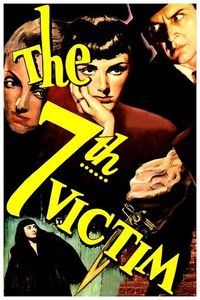
    The Seventh Victim (1943)

    (On Cable TV, September 2021) It’s interesting to go back in time and see some of the earliest examples of clichés. Sure, Satanist cultists are a dime a dozen in today’s horror films, but you can go back to 1943’s The Seventh Victim to see an early version of the trope, as a young woman goes hunting for her missing sister in New York City (that den of perversion!) and finds her indoctrinated in a cult. I have to admit that I had a very, very hard time getting into The Seventh Victim, my attention constantly wandering away from it — I had to restart it three times before it stuck, and even powering through the movie netted not much more than an abrupt, unsatisfying ending. But I was surprised to find out, doing background research for this review, that the film has a rather enviable contemporary reputation — it’s not just a precursor to Satanist cult horror, but its shower scene is thought to prefigure the one in Psycho, and its homosexual undertones (which I barely noticed) now bring the film under the queer cinema umbrella. I strongly suspect that The Seventh Victim, often mentioned as one of legendary horror producer Val Lewton’s most intriguing features, is heavily dependent on mood — if you’re up for subtle gothic horror, unconventional dread and some missing narrative pieces, then you will probably have a better time with it than I did.
  • The Body Snatcher (1945)

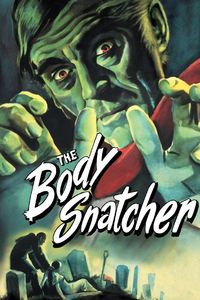
    The Body Snatcher (1945)

    (On Cable TV, May 2021) For classic horror fans, The Body Snatcher features a mixture of familiar names— infamous murderers/graverobbers Burke and Hare, for one (their infamy extending well into twenty-first-century takes), producer Val Lewton for another, and also chameleonic director Robert Wise in one of his earliest directing credits (and perhaps his first true end-to-end project). But what will get most people’s attention is Boris Karloff and Bela Lugosi in the same film, neither of them playing the monster archetypes they’re best known for. This certainly isn’t their only collaboration, and Lugosi’s role is minor at best — but Karloff is quite good, and more importantly he’s good in a somewhat respectable context: The Body Snatcher is heavy on atmosphere and historical references, helmed by a director who clearly wanted to impress. Even the premise, having to do with murderous graverobbers, is far from lurid monster features. The result is very decent no matter the age of the film: it’s a signpost in the filmography of many familiar names, but it’s also a film that holds up decently as long as you don’t walk in expecting cheap thrills or camp monsters.

  • The Curse of the Cat People (1944)

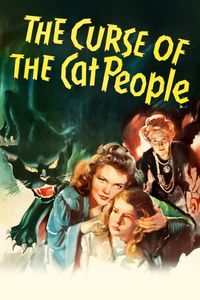
    The Curse of the Cat People (1944)

    (On Cable TV, April 2020) You’re more than free to hail Val Lewton for his work on the still-superb Cat People, but there’s a very good argument to be made that The Curse of the Cat People is equally interesting as a showcase of his unusually sophisticated sensibilities. Billed and marketed as a follow-up to the first film, this film doesn’t settle for mere sequel rehash—it becomes an unusually heartfelt mediation on a young girl’s loneliness, executed as an ethereal ghost story. While the end result isn’t perfect (much of it due to studio meddling, this not being what they expected), it’s considerably more impressive than most of the run-of-the-mill horror movies of that time. Horror as seen from the perspective of a child is a special mixture—and one carried even today by filmmakers such as Guillermo de Toro. The Curse of the Cat People is an early example of what is possible with the horror genre as soon as you don’t focus on the scares at the expense of having something to say. Surprisingly sophisticated… unless you’re a Lewton fan, in which case it’s exactly as expected.

  • Cat People (1942)

    Cat People (1942)

    (On Cable TV, March 2019) One of the particularities of investigating horror films of classic Hollywood is appreciating how some of them could do much with very little—using atmosphere, cinematography, and subtlety to achieve interest without buckets of blood and gore. The Hays Code prohibited such overt material, and some producers found ways around the restrictions. Writer-producer Val Lewton was one of the best at it, and he found in director Jacques Tourneur a kindred spirit. Cat People was their first collaboration, and it shows an interesting intent to play on a semi-psychological register, with a woman (Simone Simon, convincingly feline) convinced that she turns into a panther when aroused. The romance that follows with a man skeptical of the claim is punctuated by strange events and (predictably) doesn’t end well. I won’t try to exaggerate the subtlety of the film—not when some of the dialogue is on-the-nose to the point of obviousness. Some of the material is simply weird (who stuffs a cat in a box?), but the black-and-white cinematography is quite nice and the plotting is devoid of nonsense enough to fit in 73 minutes. There are layers to it all, though—a take on female sexuality that was good enough to be remade more permissive decades later, some oneiric symbolism and direction that’s not entirely figurative. I quite liked Cat People, but keep in mind that I watched it with a cat on my lap.

  • I Walked With a Zombie (1943)

    I Walked With a Zombie (1943)

    (On Cable TV, July 2018) Our post-Romero definition of a zombie is significantly different from the classical old-voodoo-school zombie, so don’t be misled by I Walked With a Zombie’s title: This is about Caribbean drugs-and-maybe-magic zombies rather than the living dead. But it goes a little bit farther than that—sometimes described as “West Indian Jane Eyre”, the film turns out to be far more interested in family conflict than jump scares, with a nicely textured result that’s equally psychological horror and foreign xenophobia. The atmosphere of the film remains quite unusual, and it does have a notable dramatic engine underlying the horror component. There are also a few cute surprises in the opening segment: A script by noted SF&F writer Curt Siodmak; a disclaimer about persons “living, dead or possessed”; and an opening scene “set” in my native Ottawa, with snow falling outside the window to set the plot in motion as a Canadian nurse (Frances Dee, looking good) is sent to the Caribbean to take care of an invalid patient. The film has aged well except when it hasn’t—as you can suspect from the production year of the film and the Caribbean/voodoo premise, there’s quite a bit of racism in the way the black characters (some of them eating what looks suspiciously like fried chicken) are portrayed—although, by the same token, they are shown as having some agency and power, even if it’s scary-to-white-people power. Overall, though, even those issues make I Walked With a Zombie interesting in its own right. Director Jacques Tourneur keeps things moving and imbues the production with a quality that was not a given under producer Val Lewton’s supervision. It could have been much, much worse, as a look at most contemporary horror films would show.