Vincent Price

  • His Kind of Woman (1951)

    His Kind of Woman (1951)

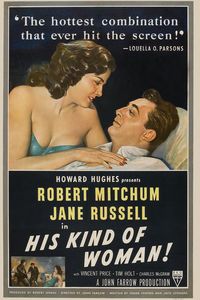
    (On Cable TV, June 2021) I’m not going to say that His Kind of Woman is a good or great movie, but I will say that if you’re looking for something halfway between romantic drama and film noir, this is a very representative example of form as of the early 1950s — and that does double if you start looking at the film’s typical production problems. The story itself sees a tough guy (Robert Mitchum) travelling to a Mexican resort, where he encounters a beautiful singer (Jane Russell) and a movie actor (Vincent Price) with marital problems. After various shenanigans, the film eventually realizes it has to go with dead bodies, gunfights and something more suspenseful. The escalates to a tidy action-driven conclusion with a heavy helping of dumb comedy and that’s that. Even if you don’t know about His Kind of Woman’s rocky production history, you can certainly see the evidence of an abrupt change of direction. In front of the camera, you have a few icons of the time being used as per their specifications. Mitchum is reliably enjoyable, Russell is the bombshell and Price plays to type as an actor prone to hamming it — he was never subtle, but maybe this is the film that validated his approach. The film’s genre-hopping is almost like getting an anthology of many of the era’s most distinctive genres. The last half feels like a desperate afterthought of action and comedy, but the film is strong whenever you have Mitchum and Russell going through their romantic material, or contemplating Hollywood’s backstage through one actor’s behind-the-scenes insecurities. His Kind of Woman’s representativeness grows even stronger one you read about the film’s production and find out that this was another one of RKO’s films that eccentric billionaire-producer Howard Hugues endlessly tinkered with during his tenure as the studio’s owner, much to the detriment and belated release of the film. The result speaks for itself as a bit of a mess, but a very pleasantly circa-1950 kind of mess.
  • Theater of Blood (1973)

    Theater of Blood (1973)

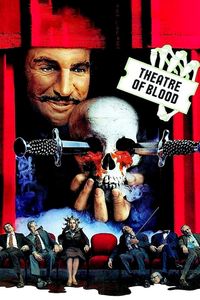
    (On TV, May 2021) On paper, Theater of Blood sounds much better than it feels on a moment-by-moment basis. Featuring none other than Vincent Price as a serious Shakespearian actor taking murderous revenge over his reviewers, it sounds like a great excuse as a fun romp: You get Price doing Shakespeare (even in small segments) and a fantasy sequence showing what filmmakers would really like to do to those pesky critics. In execution, though, Theater of Blood proves to be more laborious and less interesting than expected. As usual whenever filmmakers have to talk about reviewers, they’re portrayed as caricatural antagonists with no depth other than opposing our viewpoint character. Much of the narrative structure anticipates the slasher craze of later years, as director Douglas Hickox goes from one murderous set-piece to another, each critic getting a gory death along the way. There are a few welcome complications along the way, but much of it feels muted, far from achieving its own potential. Price is delightful as ever, but Theater of Blood itself feels like a missed opportunity… and I’m not just saying that because I’m a reviewer.

  • The Raven (1963)

    The Raven (1963)

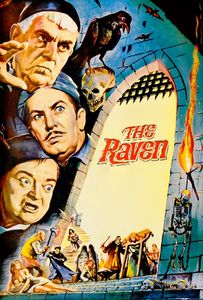
    (On Cable TV, March 2021) Some movies should come with warnings along the line of “don’t watch this before you watch those other movies.”  If that was applied to The Raven, the prerequisite would probably include movies featuring Vincent Price, Boris Karloff and Peter Lorre just so you’d come into it expecting their screen persona. You would probably also want to include at least one of producer/director Roger Corman’s horror films of the period just to give an idea of what audiences were expecting. Finally, it wouldn’t be a bad idea to throw in a later film from Jack Nicholson to show how far he’d go from this film to superstardom, and probably a modern fantasy film just to highlight what happens when a genre becomes fully defined. But let me explain — Roger Corman, at the time, was adapting classical works of horror literature (many of them from Edgar Allan Poe) as pretexts for horror films. Price and Karloff were already horror movie icons, whereas Lorre was a fixture as “creepy guy” in a variety of films. Jack Nicholson was barely beginning his long career, and fantasy as a genre (not just as movie genre) was at least a decade from being codified. But The Raven tried something weirdly different, delivering a fantasy comedy based on Poe’s “The Raven” that allowed Price and Karloff to portray rival sorcerers trying to one-up each other. The poem’s “Lenore” is a traitorous harridan, while Lorre portrays The Raven, occasionally spitting feathers. It’s definitely a comedy, although modern viewers may want to temper their expectations regarding the density and impact of the jokes. Sometimes, The Raven seems to bask simply in how weird it is, without going the extra mile of making itself funny — but then again, I suspect that Corman’s idea of what’s funny wasn’t that of a conventional comedian. From modern lenses, the weirdness of the film also comes from working with unbuilt tropes — picture “wizard” in your head, and you won’t match the film’s vision of “wizard” because it came in ten years before the printed version of The Lord of the Rings and, in turn, the way wizards have been portrayed in fantasy literature since then. Any circa-2021 attempt to retell the same story would be far more overly funny, but would also deal in visual archetypes familiar to audiences from decades of fantasy films all going for the same iconography. Where that leaves The Raven for modern audiences is more akin to interesting experiment… as long as you’re familiar with the prerequisites of the film. Seeing Karloff and Price in a lighter register than usual is fun, but the film stops well short of hilarious. If you’ve seen the prerequisites, though, go ahead and have fun — The Raven is meant to be playful all the way to its closing lines: Nevermore!

  • Beach Party (1963)

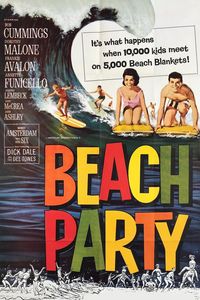
    Beach Party (1963)

    (On Cable TV, January 2021) While Gidget may have sparked interest, it’s Beach Party that formally launched the “Beach Party” movie subgenre of the 1960s, featuring Frankie Avalon and Annette Funicello in a series of seven films that spawned about twice as many imitators. This first instalment, as usual, doesn’t quite have the formula nailed down: While most of the recurring players are there, while the tone is very similar, there’s some narrative weirdness in spending so much time on an academic character (played by Bob Cummings) studying teenage mating habits—with a beard so thick and out-of-place that it’s fated to come off at some point. It’s a character that exemplifies how dumb movies portray smart people, but the caricature is very much in line with the absurdist comedy style of the film, with some fourth-wall breaks along the way. It’s all in good fun—even Vincent Price joins in with a special cameo that heralds more to come in the series—although the musical numbers are a bit weaker than in the follow-ups. The key to the series is probably found in the unobjectionable material featured here—some flesh but no nudity, some inept bikers but no real threat, some tension but no breakups. Plus, an academic who learns better from the teenagers.

  • While the City Sleeps (1956)

    While the City Sleeps (1956)

    (On Cable TV, December 2020) The more I discover lesser-known movies from the 1950s, the more I realize that, despite the conformist fairytale that many would like to make you believe about the decade, it was filled with social criticism, technological doubts and satires about the post-WW2 order. While the City Sleeps benefits from the outsider’s gaze of director Fritz Lang: it is at its core a crime drama that becomes an excuse to examine the growing power of media in American society. When a media magnate dies as a serial killer terrifies the city, the directors of the three divisions of his empire (newswire, newspaper and television) are encouraged to find the killer first in order to secure a prestigious new job. As an excuse to study the tensions between personal gain and news ethics, While the City Sleeps exploits its plotting for all it’s worth: the directors scheme and draw audacious plans that directly put others in danger in an attempt to seize the headlines (and accessorily catch the killer). A great cast complements the story – Dana Andrews at the protagonist, a suitably slimy Vincent Price as an underestimated heir, George Sanders as one of the competing directors and a great-looking Ida Lupino as a clever writer. It all amounts to an absorbing film, clearly going beyond film-noir clichés to attempt an ambitious study of how personal greed can corrupt institutions meant to be trusted by the public. It’s suitably cynical at a high level, but can rely on a likable protagonist to anchor the film. Lang’s Hollywood career was not perfect, but I don’t recall truly disliking any of his films during that period. While the City Sleeps is no exception.

  • The Tingler (1959)

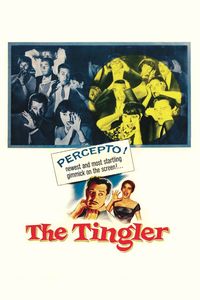
    The Tingler (1959)

    (On Cable TV, October 2020) With producer-director William Castle, the gimmick was the thing, and what’s most remembered from The Tingler isn’t as much the silly story as the tales of theatre seats rigged with small devices that would vibrate at carefully selected moments in the film, echoing the on-screen theme of sensing fear and screaming to drive the monster away. The gimmick is carefully set up in the film’s first two minutes, as Castle introduces himself on-screen and delivers a portentous monologue that sets the tone and the topic of the film. After that, it’s up to Vincent Price to take up the slack with his soothing voice, playing a mad scientist who identifies a parasite living near human spinal cords that kills from fear… unless the victims can scream themselves hoarse. The plotting is ludicrous (and that’s without even mentioning the then-legal use of LSD by Price’s character as an experiment to scare himself silly), but there is an undeniable body horror moment at the idea of having a fear-fuelled parasite inside our bodies, and by the time the film makes its way to an actual movie theatre, the fun of Castle’s gimmick is back in full force. There are a few jolts along the way too: Other than the disgust of seeing a rather good parasite puppet move around the set, there’s also a scene with bright red blood flowing in the middle of a black-and-white film. Price is terrific as usual, and the added social satire of having married couples plotting to kill each other adds a bit of thematic content to the blunt high-concept. The result may not be sophisticated, but if you’re already attuned to Castle’s brand of gimmicky horror (start with House on Haunted Hill and 13 Ghosts), The Tingler is good fun with a bit of an added kick to it.

  • House of Wax (1953)

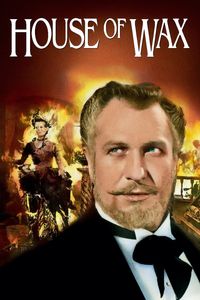
    House of Wax (1953)

    (On Cable TV, October 2020) Despite having seen enough movies to know better, I thought that having seen the 2005 remake of House of Wax meant that the original wouldn’t have many surprises in store. I was happily mistaken—it doesn’t take a lot of time to realize that the “remake” is as far apart in plot from the original as “movies about a wax museum created by a psychopath using live persons” could be. This version stars none other than the unique Vincent Price as a genius-level wax sculptor who, in the opening moments, sees his labour of love being burnt down. When he reappears, he’s got a few people working for him with designs far darker than before, and it’s up to the investigators to piece together the rebirth of his museum, the mysterious disappearances around the city and the reports of a horribly disfigured figure prowling around. House of Wax does feel a bit more daring than usual for a 1950s horror film—the prestige colour cinematography does help a bit, and Price does help make any material compelling. It’s a decent film in its own right, and much more interesting for those who have seen the remake.

  • Leave Her to Heaven (1945)

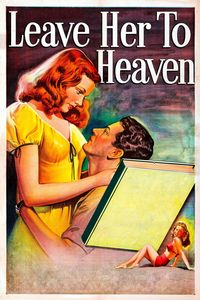
    Leave Her to Heaven (1945)

    (On TV, September 2020) The first half-hour of Leave Her to Heaven had me very, very confused—it’s a film noir, and yet I was served a Technicolor romantic drama about a man and his possessive new wife. While the images were spectacular (That lodge! Wow, that lodge!) and a foreboding prologue promised much, we were so deep in melodramatic territory that I found my attention slipping—Sure, Gene Tierney is always worth a look (although Jeanne Crain has her beat here), but would the film eventually get any better? And then it does, spectacularly. After a few arguments realistic enough to be uncomfortable, the film cranks it up midway through as a shocking death puts the female lead’s psychological cruelty to the forefront, and then it’s off to races as things get more and more convoluted for our likable protagonist. There are femmes fatales in film noir, and then there’s Gene Tierney’s character here, willing to plot revenge from beyond the grave in an effort to ensure that her husband will remain hers no matter what. By the end of Leave Her to Heaven, the film’s moniker as “the first Technicolor film noir” made complete sense—although I note with some amusement that it does provide a somewhat uplifting ending after so much misery. The blend of genres may be off-putting on a first viewing, but it does make the film stand out, even today, as something refreshingly different. Cornel Wilde is fine in the male lead role and Vincent Price does make a mark in a relatively short turn as a jilted then prosecuting attorney. But the film belongs to Gene Tierney, who was nominated for an Oscar for her performance. I’ll note that the film fits rather well in the “domestic thriller” subgenre of the era, albeit gender-flipped so that it’s the woman who is the threat rather than the husband. From an inauspicious beginning, Leave Her to Heaven does pack quite a punch in its later half. If you’re bored still after the first few minutes, keep watching—it gets much better.

  • The Story of Mankind (1957)

    The Story of Mankind (1957)

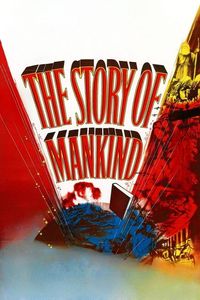
    (On Cable TV, August 2020) Oh, what a mess. Any movie that punches so hard through my suspension of disbelief that I start asking why it exists has already lost. In the case of The Story of Mankind, here we have a science-fictional “alien judgment” framing device looking at the history of humanity as an excuse to have small historical sketches conveniently casting as many known actors as possible. It’s hard to resist a film that had Hedy Lamarr, three of the Marx brothers, Vincent Price, Peter Lorre, Dennis Hopper (!) and Cesar Romero, but just wait until it begins and you’re served sketches that are neither funny nor profound, skipping ahead history to serve the usual bromides, with stunt casting that doesn’t really use the actors to their fullest extent – even the Marx Brothers appear in different scenes, and don’t play to their strengths. (I was waiting for the Groucho scene… I should have skipped it.) The film being directed by Irwin Allen, I half-suspect that the idea was for a grandiose statement with state-of-the-art special effects. Instead, we get sketches comparable to a high-school production, and a constant back-and-forth between trying to make a statement and trying to make jokes. The Story of Mankind is almost fascinating in its hideousness, but I really can’t recommend it as anything but a curio.

  • The Private Lives of Elizabeth & Essex (1939)

    The Private Lives of Elizabeth & Essex (1939)

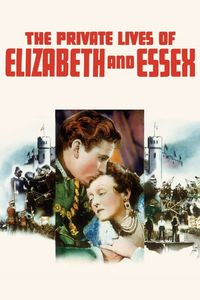
    (On Cable TV, February 2020) Historical costume dramas aren’t to everyone’s taste, but there’s something to be said in the case of The Private Lives of Elizabeth & Essex for an engaging cast. Bette Davis as Elizabeth I? Solid. Having her surrounded by Errol Flynn, Olivia de Havilland, and Vincent Price? Now that’s interesting. Directed by Michael Curtiz, the film becomes more compelling than most equivalents in large part due to Davis’s steely performance and some deliberate choices to make the story more dramatic and accessible. Technical credentials are quite good, considering that this was a Technicolor production and Warner Brothers was willing to go all-out on the spectacle. It’s not so much about Elizabethan England than about 1930s Hollywood studio conventions, and that’s perhaps for the best. The Private Lives of Elizabeth & Essex remains a costume drama, but a click one, and more interesting than most.

  • The Three Musketeers (1948)

    The Three Musketeers (1948)

    (On Cable TV, November 2019) There have been a lot of adaptations of Alexandre Dumas’ The Three Musketeers over the years, so the only way to talk about them is to highlight how they differ from one another. In the case of 1948’s version, the answer is simpler than we think: Gene Kelly. That’s it: Gene Kelly as d’Artagnan, meeting the three musketeers and fighting valiantly against Milady, Countess de Winter (Lana Turner!) for the honour of France. The casting highlights doesn’t stop there, what with Vincent Price as Richelieu and Angela Lansbury as Queen Anne. The swashbuckling is strong in this late-1940s MGM spectacle, and while director George Sidney said he drew inspiration from westerns in staging the sword-fighting cinematography, the presence of Kelly suggests that there’s quite a bit of dancing inspiration in there as well—and Kelly’s skills were uniquely well suited for a non-singing sword-fighting hero. The colour cinematography still pops out today, and the rest of the adventure is handled competently, although perhaps too sedately when not busy with action scenes. Remove the cast and the sword-fighting and the film becomes far more ordinary, but that’s the nature of all versions of The Three Musketeers: we’re there for the swords, the rest is just fancy wrapping. If you want the story, read the book.

  • The Fly (1958)

    The Fly (1958)

    (On Cable TV, March 2019) I suspect that most people who approach the original 1958 version of The Fly will do so with a good working knowledge of the 1986 Cronenberg remake, which will probably set a very different set of expectations. Clearly, the 1950s film won’t be as gut-churningly gory as the 1980s one, but it does have its own sense of eeriness and dark comedy. All of this is helped along with Vincent Price in colour, sweet-talking his way through a mad-scientist role. The experience is so different that it certainly has its attraction. Even from the start (which features a mild-mannered murder mystery as we try to figure out why a wife says she has killed her husband with a hydraulic press, despite a complete absence of evidence to the matter), it takes us somewhere different. (As a bonus, this version is “set” in Montréal.)  While The Fly can be silly at times (I’m thinking of the much-criticized audio comedy of the final spiderweb, for instance), it’s still a horror film, and it still carries a punch such as the revelation of the fly head (despite the unconvincing makeup). It even gets tense and disturbing at times. That’s pretty much the best-case scenario for looking at a film with a famous remake: Perhaps not quite as striking, but distinctive and effective in its own way.

  • The Last Man on Earth (1964)

    The Last Man on Earth (1964)

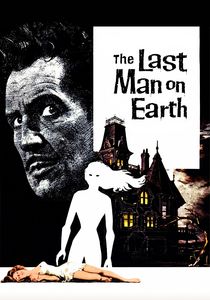
    (On Cable TV, March 2019) Considering that no less than three well-remembered films (1964’s The Last Man on Earth, 1971’s The Omega Man and 2007’s I am Legend) all came from the same 1954 Richard Matheson novel I am Legend, it’s tempting to keep comparing all three adaptations to each other. While my favourite is probably The Omega Man, it’s not by a wide margin and you can certainly argue that The Last Man on Earth is fast acquiring a patina of almost quaint charm, so artificial does it now feel compared to modern standards or later adaptations. This is clearly Vincent Price’s movie, so central is he to the action and how thoroughly comfortable he seems to be in the role. It’s a bit cheap and shot in Italy to save further costs, but the ideas are there and developed relatively well—despite the familiarity with the story, I still found the finale a bit surprising. Of course, much of The Last Man on Earth will feel humdrum to modern viewers considering that its premise has been mined and remade left and right. Still, it’s not a bad beginning for the novel’s string of adaptations, and it’s definitely worth more than a historical look.

  • House on Haunted Hill (1959)

    House on Haunted Hill (1959)

    (On Cable TV, February 2019) By design, I programmed myself a haunted house double bill going immediately from the very respectable The Haunting to the rather far less serious House on Haunted Hill. The contrast was refreshing, and probably worked to both films’ advantage. From the very first moments, we’re clearly not meant to take this William Castle production very seriously: the opening sets the tone of an over-the-top horror film with ponderous narration and overdone characters. There is, for modern viewers, a deliciously comfortable feeling in watching this granddaddy of all “spend a night in a haunted house IF YOU DARE” plots: we think we know where it’s going, and the well-worn mechanics of that kind of story are great good fun. (The real fun of the movie begins when you realize that the stated plot of the film really isn’t its real plot—the other one is hidden and only revealed late after both collide.) Vincent Price has seldom been so deliciously overacting as he is here, and that only adds to the fun of it. The infamous skeleton sequence late in the film doesn’t make a whole lot of sense when everything is revealed and laid bare … but who cares? Some horror films have earned a legacy because they were utterly serious about what they’re doing (The Haunting being one of them) but House on Haunted Hill chose to go another way and improbably ended up being something of a classic in another vein. I know there’s been a remake already, but how about another good remake one of these days? On second thought, never mind: This film is good enough as it is, and no one will ever recapture its delicate campiness.

  • Pit and the Pendulum (1961)

    Pit and the Pendulum (1961)

    (On Cable TV, November 2018) I wasn’t expecting much from Pit and the Pendulum: horror movies of the early 1960s can be undistinguishable from one another, especially given how many of them were made with small budgets and indifferent actors. But from the first few minutes, there’s something remarkable about the film’s use of colour (in an early-sixties horror film!), its confidence in using a flashback structure and, of course, in Vincent Price’s performance. Director/Producer Roger Corman became a legend for a reason, and Pit and the Pendulum remains surprisingly effective. Great sets help, as does the unusually stylish flashback cinematography. The titular pendulum and pit set is also quite good. This being said, my favourite moment in the film is the stinger at the very end, which takes barely a second to remind us that something horrible is still happening to one of the antagonists—and will keep happening for a while. It’s an amazingly good jump-conclusion to a decent horror film.