Vincente Minelli

  • Designing Woman (1957)

    (On Cable TV, September 2021) At this point of my cinephile journey, I’ve seen the landmark movies, the classics, and the box-office sensations. All that’s left is a deeper and more scattered journey through the rest. That’s not necessarily a bad thing: “the rest” includes a number of solid commercial and critical successes that many people have enjoyed, even if they haven’t necessarily remained references throughout the decades. From time to time, you even get something that’s a lot of fun. Such is the case with Designing Woman, a cleverly subversive romantic comedy that pokes at 1950s clichés and offers enjoyable second-tier performances by a well-known cast. In this case, we have Gregory Peck and Ingrid Bergman (stepping in for, we’re told, Cary Grant and Grace Kelly — a downgrade for Grant-to-Peck, but an improvement for Kelly-to-Bergman) as a sports writer who meets an alluring woman while covering a golf tournament in California. They get married within a week (as often happens in classic Hollywood) only to then discover upon returning to New York City who they are. Or, crucially, that she’s a fashion designer with more money, class, clout and well-connected friends than he does. The resulting loss of panache from the male protagonist is very amusing, and the rift only gets bigger once they start entertaining their respective circles of friends (his: working-class schlubs; hers; insanely well-connected artists) in her (now their) apartment. That’s more than enough to fuel the first half of the film—the rest is taken up with old flames and threats from mobsters that have him lie and flee to protect her, and her suspecting the worst from his lies and his disappearance. Director Vincente Minelli can’t quite manage to make the second half as convincing and amusing as the first (especially with an ending that’s too abrupt to be satisfactory), but the entire film does work quite well. Peck sells the undermining of masculinity in hilarious fashion, while Bergman is an icon of elegance throughout. The framing device of “talking” to the characters after the fact does add a bit more comedy and suspense to the story, further showing that this was a film with clear and bold intentions. In other words, Designing Women is worth recommending — it’s another proof that the 1950s were far more self-critical than we think, and a great example of a Technicolor romantic comedy with more bite than expected.
  • Some Came Running (1958)

    Some Came Running (1958)

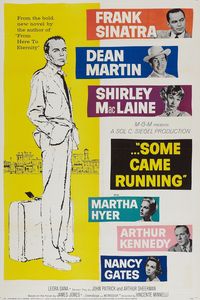
    (On Cable TV, May 2021) For a rather low-key drama, it’s interesting to see how often Some Came Running comes up in classic film discussions. The facts are that this is a film directed by Vincente Minelli and adapted from a doorstop best-selling novel, that it starred Frank Sinatra, Dean Martin and Shirley MacLaine, that good chunks of it were shot on location in a small middle-America town and that it was an example of widescreen colour cinematography at a time when Hollywood dramas usually went for black-and-white Academy ratio. That last factor does help explain the film’s longevity, as it remains more accessible on modern widescreen colour displays than many of its contemporaries. The story is small-potato stuff, as a writer-turned-veteran (Sinatra) returns to his hometown after a long absence, with a loose woman (MacLaine) in tow, and reunites with his brother (Arthur Kennedy), later befriending a likable gambler (Martin). While the original novel is reportedly 1,200 pages long, this stripped-down adaptation fits everything in slightly more than two hours and seems almost lackadaisical in its drive to the ending. But a host of reasons explain why the film stuck in the popular imagination. For one thing, it got five Academy Award nominations (including MacLaine’s first). It was the first screen pairing of Sinatra and Martin, prefiguring the Brat Pack series of movies they’d do together. Its location shooting comes complete with wild tales of fans mobbing Sinatra, wild nights of partying with Martin, and made such an impression that you can still tour Madison, Indiana to see the shooting locations. Minelli’s widescreen colour direction was much admired among fellow directors. None of this really improves the middle-of-the-road impression left by Some Came Running, but sometimes it’s instructive to realize why a film endures… especially if it doesn’t have to do with its quality.

    (Second viewing, On Cable TV, August 2021) It’s almost a subgenre of American cinema: the small-town drama –usually adapted from a novel– in which a prodigal son returns after some time spent away, usually in the military or in a big city that has changed him forever, and how he realizes he can’t come back home. (On the flip side, you have the Hallmark romantic Christmas comedy in which the prodigal daughter returns home, rekindles a past romance with a local hunk, and realizes she can stay home forever.)  Some Came Running is both exemplary and distinctive in how it clearly plays with the building blocks of the genre, but brings a few unusual things along – such as having Shirley MacLaine as a floozy accompanying the protagonist, or how the protagonist rolls up the military aspect, the writerly aspect and the spent-time-in-a-big-city aspect into one character. Frank Sinatra is quite good in the lead role, with a smaller-than-expected part for fellow rat-packer Tony Martin. The small-town aspect is convincingly portrayed (TCM has a lovely companion piece detailing the mayhem caused when Sinatra and Martin stopped into Madison, Indiana for a few weeks of shooting), but the film itself often feels like a collage of elements not necessarily fitting together: by the time even local gangsters get involved, it’s as if the narrative has grown bored with the whole “can’t come home again” theme and reached for more exciting genre elements as trick shots. Some Came Running is watchable without being particularly memorable, but then again, it’s in good company in its subgenre.

  • Yolanda and the Thief (1945)

    Yolanda and the Thief (1945)

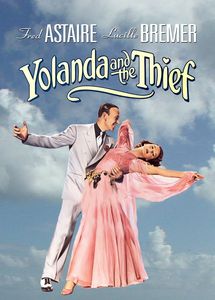
    (On Cable TV, February 2021) The farther down I get in Fred Astaire’s filmography, the more I understand why they’re not his more popular films. On paper, there should be plenty to like about Yolanda and the Thief:  It’s a 1940s colour musical featuring Astaire as a con artist making his way to a fictional Latin American country and hatching a scheme to seduce an heiress. Alas, the limits of the film become more apparent once you realize that he intends to do so by posing as her guardian angel. Such shaky narrative hooks may have worked with a more interesting execution, but they just compound the problem that Yolanda and the Thief is one of the least interesting Astaire films I’ve seen so far. Despite the gorgeous (and self-conscious) colour cinematography and expansive direction from Vincente Minelli, the film itself doesn’t seem to have the light touch and humour of other Astaire films — it’s weighed down by its own ambitious dance numbers, ironically leaving less for Astaire himself to do. Considering that Astaire is his single best asset, it almost leaves him stranded in the middle of his own film. He’s usually not bad playing a cad, but an outright thief preying upon the devout may be a step too far. It doesn’t help that Lucille Bremer is bland in the lead role—I usually like redheads a lot, but she doesn’t do much here as she should—perhaps illustrating the lack of that elusive “star quality” we all talk about. (Bremer retired from Hollywood shortly thereafter.)  Yolanda and the Thief is at its most remarkable when it delves into surreal fantasy sequences, most notably a long ballet sequence that anticipates similar film-stopping flights of fancy as The Red Shoes or An American in Paris a few years later. It’s something to see all right, but is it an Astaire kind of film? The substantially lower number of dance sequences doesn’t help, nor does the substantially less humorous narrative. But, well, it’s still another Astaire film — and one of the weirdest on record. It’s worth seeing, but don’t be in a hurry.

  • The Clock (1945)

    The Clock (1945)

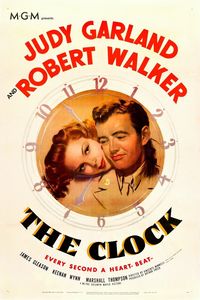
    (On Cable TV, January 2021) Having a sailor on leave meet and woo a young woman was a surprisingly familiar premise of 1940s movie musicals, and one of The Clock’s most surprising characteristics is seeing this common trope being used as a basis for a romantic drama rather than sing-and-dance. The surprise gets bigger considering Arthur Freed as producer, Vincente Minelli at the helm and Judy Garland as the female lead—this was Garland’s first serious role as a young woman rather than a girl, and she doesn’t sing once. The film is decidedly low-key, with the stakes being almost entirely focused on the boy-meets-girl plot. Mid-1940s New York is convincingly portrayed, especially given that the entire film was shot in Los Angeles. Clearly meant to be less spectacular and more romantic than the previous Freed/Minnelli/Garland production Meet me in St. Louis, The Clock will strike some as a well-executed intimate drama and others as a bit of a disappointment compared to its most immediate contemporaries. But Garland is quite good here—attractive and playing in a dramatic register that is arguably more interesting than the roles for which she was pigeonholed through her career. The Clock is also notable for at least glancing at the issues raised by a whirlwind romance—it states that our couple of lovebirds will be fine once he comes back from the war, but at least it entertains the notion that this may be rough sailing for a while. While it doesn’t have the re-watchability of its closest equivalents, The Clock is perhaps best seen as a change of pace for everyone involved in it.

  • Bells are Ringing (1960)

    Bells are Ringing (1960)

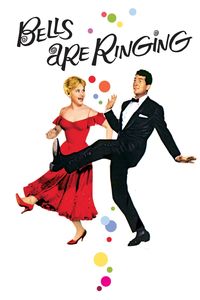
    (On Cable TV, January 2021) In cinema history, Bells are Ringing is noteworthy for being the final film of two well-known names. It was actress Judy Holliday’s final film before her death a few years later. Perhaps more significantly, it was Arthur Freed’s last musical film as the head of the famous MGM Freed Unit, which was responsible for putting together a twenty-year run of many of the most celebrated movie musicals of Hollywood’s Golden Age. This aura of finality seems appropriate, considering the tired nature of the results on-screen. Adapted from a Broadway play with the usual problems of stage adaptations relative to original musicals, Bells Are Ringing is far more laborious to watch than you’d expect. Despite a mildly amusing premise about a Manhattan answering service operator getting drawn into the lives of her clients, it’s a surprisingly mild and unremarkable musical. While Holliday is not bad and Dean Martin adds much to the film as its male lead, the comedy is perfunctory, the songs are not memorable and the entire thing leaves without having left much of a trace. Of course, musicals were fast declining by 1960 and films like Bells are Ringing certainly contributed to this decline—there’s little here to reflect the heights of the form in the previous decade: little wit, little invention, little cinematic quality—and this from otherwise dependable director Vincente Minelli. I’m certainly not saying that Bells are Ringing is a bad film—but it’s average in wholly forgettable ways, which represents an underwhelming end of the line for the producer responsible for such all-time classics as Easter Parade, Singin’ in the Rain and The Band Wagon.

  • Cabin in the Sky (1943)

    Cabin in the Sky (1943)

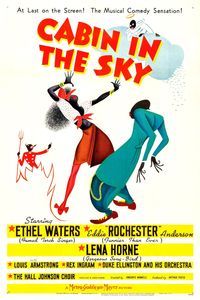
    (On Cable TV, July 2020) What’s historically important about Cabin in the Sky is that it was one of the very few black-dominated musicals at a time when major film studios were reluctant to even put black performers on-screen at all. The story is a religious-themed (but funny) parable about God and the devil battling it out over a man’s soul, but the film exists for the decent musical numbers, showing a very different rhythm than other musical comedies of the time. Clearly, the reason to see the film is for Lena Horne as a sexy seductress… whew! This being said, she’s not the star here: Ethel Waters has more to do (musical wise) and deserves the spotlight. Elsewhere in the cast, Louis Armstrong shows up playing the trumpet. Cabin in the Sky is billed as Vincente Minelli’s first solo directorial effort even if some of the musical numbers are directed by Busby Berkeley. The worth of the performances that the film captures easily outweighs the sometimes-racist plot elements (and the other assorted stereotypes, such as facing off the mammy against the town harlot). It’s easy to make comparisons between this and Stormy Weather, as both were rare examples of black-cast MGM musicals in successive years—Cabin in the Sky is stronger on plot, but weaker in just about everything else, most crucially dancing and music. Still, both make a compelling case for a parallel universe in which black cinema from studios would be kick-started decades before the blaxploitation era—and it’s hard not to notice how these musicals play on an entirely different and more uplifting register.

  • I Dood It (1943)

    I Dood It (1943)

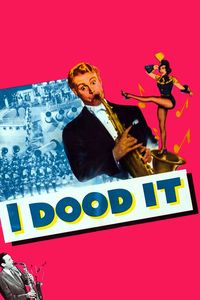
    (On Cable TV, July 2020) One box-office formula is as old as time: funny man plus attractive woman. In I Dood It, it’s then-popular comedian Red Skelton playing a humble pants presser, paired with the supremely gifted Eleanor Powell as a Broadway star. Through various shenanigans and misunderstandings, the two end up married, leading to further confusion and set-pieces. An entertaining blend of comedy, dancing and singing, I Dood It is not exactly a film with a strong plot: What is in place is just enough to get us from one sequence to another, and while the dancing and singing are fine, the comedy bits tend to be stretched just a bit too long—if you’re dubious about Skelton’s brand of comedy, some passages based on his verbal humour are borderline unbearable. Meanwhile, the physical comedy bits (including a sequence featuring a passed-out Powell manhandled by Skelton) are a bit better—Skelton had some help from gagman Buster Keaton in conceiving the physical comedy, as the film is a partial remake of Spite Marriage. Powell does quite well in her role, with two impressive original dance numbers (a Western-themed one at the beginning of the film, then a Polynesian one near the two-third mark) with a final reprise from Born to Dance that’s telegraphed by having the protagonist describe his ideal dance sequence in suspiciously familiar terms for Powell fans. While some moments drag on too long, I can’t fault I Dood It for those—one of the highlights of the film has the story stop cold in order to have the great Hazel Scott deliver a dazzling piano number, immediately followed by Lena Horne headlining a rather amusing “Fall of Jericho” number. Who can complain about that? Wartime topical content includes a saboteur subplot that provides just enough drama to prop up the last act, and a rather amusing precision that a French poodle is a “Free French Poodle” (as opposed to a “Vichy French Poodle.”) It’s not particularly well directed by Vincente Minelli (although there is a flourish during the piano and dance sequence), who would go on to better things. While I Dood It starts slowly and doesn’t amount to much more than a collection of scenes, it’s worth it for the Powell, Scott and Horne trio.

  • Undercurrent (1946)

    Undercurrent (1946)

    (On Cable TV, June 2020) Wait, wait! There’s a film in which Vincente Minelli directs both Katharine Hepburn and Robert Mitchum? Why did no one tell me? Well, it’s probably because they’ve seen it, considering how all three are playing outside their wheelhouse in Undercurrent. A domestic thriller the likes of which were popular at the end of WW2, it features a demure spinster who marries a mysterious rich man but ends up having a closer affinity with his brother. There’s a bit of gothic romance to the story as hints of mental instability creep in and the action moves to murder: it doesn’t escalate to noir, but there’s still a creepy drama underscoring the entire film. The threat may come from inside the house, but Undercurrent’s biggest twist is that Hepburn plays a meek character, Mitchum plays a sensitive guy (for barely three scenes), Robert Taylor plays the creepy villain, and Minnelli tries his hand at suspense, all of which is completely at odds with their strengths. One of Hepburn’s last role as a debutante (she was 39!), the film isn’t particularly good nor terrible: it’s interesting for the eyebrow-raising use of familiar names in unfamiliar roles, but if you’re looking for a good domestic thriller of the era, you might as well have another look at Gaslight.

    (Second Viewing, On Cable TV, July 2021) The only thing better than a film that brings familiar names together is a film that uses those familiar names against type. Of course, saying that about Undercurrent is misleading, as it takes place early in the career of two of its three marquee names. So here we have MGM musical director Vince Minelli going for a quasi-gothic thriller, steely Katharine Hepburn settling for a soft and weak character, and noir icon Robert Mitchum playing a refined and good-hearted character. (Plus, leading man Robert Taylor going for moustache-twirling psychopathy.)  It’s quite a ride if you’re coming to it with different expectations, and it’s probably that which distinguishes my second better-informed viewing for the first – in between the two, I developed my own appreciation for those three names, and Undercurrent clearly plays against them. Otherwise, well, there’s not much more to say: from a detached narrative perspective, the film does go hard for gothic mysteries, as the new wife of a mysterious man gets to gradually unveil the secrets surrounding his brother. The film is designed to be overly melodramatic, and feels long at something like 115 minutes. It’s not a bad watch but not a particularly fine example of a form perfected by Rebecca or Gaslight – but it’s worth a look if you’re too comfortable in what to expect from any of the marquee names.

  • Lust for Life (1956)

    Lust for Life (1956)

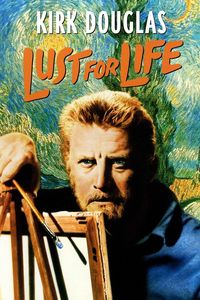
    (On Cable TV, March 2020) Kirk Douglas is quite a revelation in Lust for Life, surprisingly good at playing Vincent van Vogh as a tortured-artist archetype. (And if that’s not enough, you also have Anthony Quinn playing Paul Gaugin, because why not?) His red hair and beard are as striking in Technicolor as the artist’s vivid paintings, even if Douglas’ energetic performance is apparently not quite the right fit for the reserved painter. But let’s be clear—this is a Classic Hollywood biopic movie made in the 1950s by Vincente Minelli—there’s no way it would be melancholic, realistic or even accurate. This is l’artiste as presented to the moviegoing masses as a big weirdo, and it’s enjoyable even if we suspect that’s it’s complete bunk. Production values are high, the acting duet between Douglas and Quinn is quite good, and the paintings are given centre stage, so that’s that. If you’re particularly concerned about authenticity, there are many other Van Gogh movies out there—this one is best taken as an opinionated take on familiar material, with the gloss of a mid-1950s studio production.

  • Father’s Little Dividend (1951)

    Father’s Little Dividend (1951)

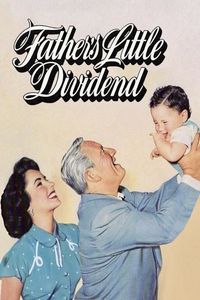
    (On TV, January 2020) If you’re still annoyed at how Steve Martin (or rather Nancy Meyers) screwed up 1995’s Father of the Bride Part II, I’ve got mixed news for you. For one thing, Martin and Meyer weren’t completely making it up by themselves—the sequel was also a remake of 1951’s Father’s Little Divided, with the main plot (the father of the bride becomes a grandfather; angst ensues) inevitably making up the main arc of the follow-up. The good news is that the 1951 film wisely stopped there—there wasn’t a ludicrous subplot about the wife of the father of the bride becoming pregnant at 49, and that’s for the better. Focusing on the original does highlight how much the remake mishandled fundamental elements. Here, the essence of the film remains a universal experience—how do men go through the perception shift of thinking of themselves as grandfathers? Once again, Spencer Tracy makes for the perfect everyman going through a universally relatable scenario. Meanwhile, Elizabeth Taylor is cute but slightly wasted in the role of a young expectant mother—the focus, unfortunately, is squarely on her father without much interest in what she’s going through. While generally likable and still resonant, the film doesn’t equal its predecessor and highlights how values have shifted in the decades since then—the last set-piece of the film before its happy ending (grandpa losing a baby due to inattentiveness) is now nothing short of hair-raising, and that may stop some viewers from embracing the result entirely. (Still, that scene is notable for one interesting constant—Grandpa doesn’t become grandpa at his grandson’s birth, but later on once his self-image catches up to the events.) Still, the film survives this plotting bump thanks to Tracy’s always-sympathetic performance and some warm direction from Vincente Minelli. It may not be enough to smooth over the 1950s attitudes so prevalent here—there’s a lot of “well, accounting for the times…” required to get to the universality of the film. Still, my bold theory is that the 1951 film is still more relatable than the frantic 1995 remake that didn’t trust itself to tell a simple story without making it a frantic two-ring circus. If you’re going to make a film about a rite of passage for older men, why not focus on that? One final piece of trivia that may escape modern viewers: Father’s Little Dividend was released less than a year after Father of the Bride: a breakneck production pace that may explain why this sequel doesn’t quite rise to the level of the first film despite a good attempt.