Virginia Madsen

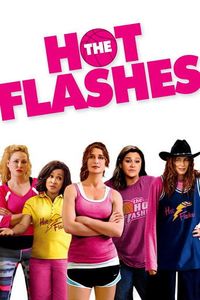
  • The Hot Flashes (2013)

    The Hot Flashes (2013)

    (On TV, November 2021) Older stars don’t quietly fade away in supporting grandmother roles any more: In the best cases, they get vehicles that openly acknowledge their age and take advantage of it. So it is that The Hot Flashes reunites a number of middle-aged actresses and get them to play their age as an impromptu basketball team competing against high-schoolers to raise money for a breast cancer detection truck. (Yes, it sounds far-fetched, but those are the stakes that this small-town comedy goes for.)  Brooke Shields stars as the hobby-seeking housewife who tries to correct a lapse in judgment by leading the fundraising effort, but she regularly gets outclassed by the supporting cast:  Wanda Sykes remains a reliable scene-stealer as a woman wondering what basketball will do for her mayoral campaign, while Camryn Manheim incarnates a cannabis enthusiast and Virginia Madsen plays the town trollop (or so others say) with a considerable amount of charm. This being a film focused on women, it’s not surprising if nearly everyone gets a self-empowerment dramatic arc, from the lead character confronting her no-good philandering husband (an inglorious turn from Eric Roberts) to the lesbian character coming out, to characters regaining their confidence and beating down the arrogant teenagers. It’s not meant to be a very deep film — the clichés fly fast even when they’re being subverted (the small town is called “Burning Bush,” for goodness’ sake) and director Susan Seidelman is more interested in an accessible middle-of-the-road comedy than anything else. The Hot Flashes feels very familiar, even in its occasional hints of so-called subversion: the idea of older people embracing young people’s things has been frequently exploited over the past few years, and the feminist message of the film is not particularly progressive nor well-executed. But there’s something to be said for older actresses finding good solid age-appropriate roles even as Hollywood tries to discard them as past decades’ flavours — those films may be familiar, but they can be worth a look.
  • The Magic of Belle Isle (2012)

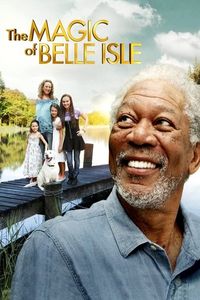
    The Magic of Belle Isle (2012)

    (In French, On TV, October 2021) It’s not always a bad thing when professionals go slumming: In most cases, you end up with something competently done, watchable even if not particularly interesting. The starting point of The Magic of Belle Isle will feel very familiar, as an alcoholic writer moves into a summer residence and gradually gets acquainted with the next-door divorcee and her kids. Will they be able to bring him back from the abyss of self-loathing? Asking the question is answering it—especially considering the long list of movies in which nothing is more important than saving an alcoholic writer from himself. Oh, there are a few differences, of course: Morgan Freeman plays the writer, and the age difference between him and Virginia Madsen (as the divorcee) means that the romance is thankfully implied more than shown, and much of the film’s relationship-building goes between the protagonist and a girl with interest in writing her own stories. The Magic of Belle Isle is not a bad movie, but it’s an overly trite one: Writer-director Rob Reiner is not pushing himself here, and the actors are working within well-trodden material. At least it’s meant to be uplifting without being too dramatic about it, meaning that even the emotional manipulation is tolerable. As usual, Madsen does look terrific, and the cinematography reinforces the comforting impression of a summer spent in a quaint destination village. It ends exactly how you think it will end, and that’s it. The Magic of Belle Isle is a sub-par effort from Freeman, Madsen and Reiner, but it hits its modest marks well enough.

  • Highlander II: The Quickening (1991)

    (Second Viewing, Amazon Streaming, August 2021) I remember watching a version of Highlander II in the early-to-mid-1990s and not liking it at all — as a nerdy late-teenager, I was incensed that a sequel to Highlander would so thoroughly corrupt everything that was interesting about the first film. Aliens stranded on Earth rather than mythical immortals in a grand tournament? Blech. Considering that the timeline of my first viewing precedes the release of the reworked “Renegade Version” that recuts material in a (slightly) more coherent way to get rid of the alien factor, I must have watched the original theatrical version. Good news (?): that version isn’t available any more unless you scour old VHS tapes — all releases since 1995 have been of the Renegade Version, and since 2004 of an even-more-fixed Special Edition with a spackling of additional CGI. My second viewing is of the Amazon Prime Special Edition, so it’s probably not an accident if I found the film bad-but-not-that-bad. (Seeing it after a spate of very bad movies further recalibrated matters.)  The aliens may be gone from this cut, but what replaces them is still nigh incomprehensible, with warriors beyond time fighting under a shield protecting the Earth from Ozone depletion. (Obviously, the shield is now useless — Highlander II comes complete with a fight-dictatorship subplot and bright shining skies at the end.)  Christopher Lambert does his best in the lead role, with Sean Connery lending some of his charm to a largely useless character brought back in an even more arbitrary fashion. One thing I had unfortunately forgotten is that Virginia Madsen and her glorious mane of blonde hair also star in the film, adding further interest. The film, even in a special edition, is still a bunch of nonsense that molests a wonderful first film —which is really weird considering that they share the same director Russell Mulcahy, and it does have a few sequences that succeed at getting an appreciative nod. For instance, the scene in which Lambert fights off another immortal and regains his youthful powers is meant to impress and it does, even including a darkly funny “kiss” from an oil tanker. Connery gets to have some fun in a suit shop, and Madsen gets to look good in an otherwise underwritten character. Special Edition or not, Highlander II is more watchable than what I remembered, even at its worst — or it may be that I’m just getting more generous in my advancing age.

  • The Astronaut Farmer (2006)

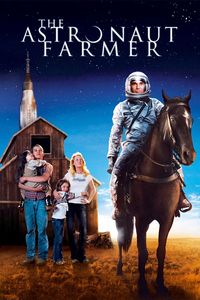
    The Astronaut Farmer (2006)

    (In French, On Cable TV, June 2021) Despite decades of ardent movie-watching, I still find films that I regret missing upon release, and The Astronaut Farmer is merely the latest in a long list. I’m not sure why I haven’t seen this film in theatres upon release — I’ve always been interested in space stories, and this film, about a man putting together a rocket in his barn with the intent of launching it for an orbit or two, is clearly along the lines of favourites, such as The Right Stuff and October Sky. No matter — even if it’s fifteen years later, there I am admiring the result. Billy Bob Thornton anchors the film as the cantankerous farmer (formerly pilot and astronaut-in-training) defying advice and good sense in putting together a rocket. The Astronaut Farmer handwaves a major objection by telling us he’s buying parts from rocket manufacturers — the major sticking point is obtaining the fuel, which brings him to the attention of the federal government, national security agents and an unsympathetically portrayed FAA. Much of the film plays like a modern fantasy, with a rugged individualist going through incredible trials to thumb his nose at his doubters. On paper, it sounds iffy, but it plays much better on-screen thanks to well-grounded handling by writer-director Michael Polish and good performances from Thornton and Virginia Madsen. It’s still not completely convincing (my own sticking point is how the rocket launches without setting fire to the hay-filled barn and much of the surrounding farm), but it’s curiously effective as a tale of wonder and ambition. Much of the media circus that comes to dominate the film’s middle third also feels reasonably accurate. The Astronaut Farmer is not a great film, but it’s a good one, and I regret missing it on the big screen.

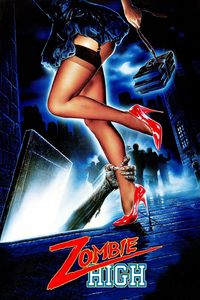
  • Zombie High (1987)

    Zombie High (1987)

    (In French, On Cable TV, June 2021) When you think about it, the best mind-bender when programming a weekend-long zombie movie marathon is to throw in a zombie film that isn’t. So it is that when the local horror channel delivered a slew of zombie movies over three days, Zombie High found itself on the schedule… despite not having much to do with zombies. The effect is frankly refreshing. Taken by itself, however, it’s not that much of a movie. Featuring a boarding school student (played by the very cute but clearly twentysomething Virginia Madsen) who discovers that the faculty of her new school is extracting the vital essence of her fellow students in order to remain forever young, it’s a film that’s not quite horrific and yet not really comic. If I correctly understand Zombie High’s production history, this is essentially an overblown film school student project that somehow snagged Madsen and a few other actors to produce something that was commercially viable in the 1980s video market. As a result, don’t necessarily expect something finely controlled — the script is maybe halfway to satisfaction, the technical credentials are rough even for the 1980s B-movie market and there are so many missed opportunities along the way that the thing becomes more frustrating than entertaining. There are a few surprises—including, why not, a car chase—but when everything is mixed together, it often feels like two or three movies thrown together. But at least Zombie High wasn’t about zombies… so that made it a bit of a surprise. Your context may feel different.

  • The Prophecy (1995)

    The Prophecy (1995)

    (On TV, October 2020) There are a lot of things about The Prophecy that are undercooked, bland, or otherwise disappointing… but it also has Christopher Walken as fallen angel Gabriel, and Viggo Mortensen as Lucifer licking Walken’s face, and a great-looking Virginia Madsen. How can I be mad at all of that? Writer director Gregory Widen handles his angelic civil war narrative in uneven but often high-key fashion, sometimes going for expressive visuals and special effects. It works often enough to raise viewers’ expectation that this is all going to be much better than it is. Instead, the film frequently loses itself in dull material, narrative lulls, not having anyone equal to Walken in an opposing role, and being inconsistent in how it seriously takes the material. (To be clear: this film is fun when it doesn’t take itself seriously, and considerably less fun when it does.) There’s a much better version of The Prophecy locked inside this film, but it was never allowed to get out.

  • Dune (1984)

    Dune (1984)

    (Second or Third Viewing, On Blu Ray, September 2019) At least two generations of Science Fiction fans have now commented at length on David Lynch’s Dune, and it’s easy to take cheap shots at the result. As an adaptation to one of the most widely read, widely known best-selling SF novels of all time, this is a film that sets itself up for failure: There’s no way a mere two-hours-and-seventeen-minute film could do justice to a densely packed 500-page novel that launched a mythology that barely fits on a single shelf. That holds even true considering how inwardly focused the novel can be, with complex conspiracies, duelling factions, sweeping galactic events and subtleties on top of subtleties. In fact, considering the nature of the source material, I’d say that Lynch’s version does quite well with what it brings to the screen. The special effects are not particularly good by today’s standards (and there are a lot of them), but the set design and costumes remain effective, and the sheer ambition of the film does create some amount of sympathy. Of course, I’m not exactly looking at Dune without a healthy dose of nostalgic wonder—I watched the film once or twice as a teenager and I credit it with what was necessary to read the novel. (It’s a great novel, one of my favourites, but it’s not a bad idea to have pictures in your mind to understand who’s who and what’s what.)  If the film seems a bit crazy and over-the-top as a middle-aged adult, it’s a good kind of crazy and over-the-top. Even when it doesn’t quite succeed, when it looks silly, when it clearly bites off more than it can chew, it’s still wonderfully ambitious. The cast is an amazing mixture of generations of actors (I mean: super-young Virginia Madsen alongside super-old José Ferrer, with various pop-culture icons such as Sting, Patrick Stewart, Sean Young, Kyle MacLachlan and Linda Hunt? That’s wild.) That remains interesting even when the film gets caught up in the mechanics of the plot and gadgets it shows on-screen. Dune escapes the question of whether it’s good or bad—it’s a good thing that it exists, flaws and all.

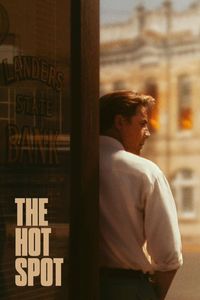
  • The Hot Spot (1990)

    The Hot Spot (1990)

    (In French, On TV, June 2019) I don’t think that The Hot Spot is all that good a movie, but if you’re the kind of viewer who craves a bit of steamy neo-noir, then it will satisfyingly scratch that particular itch. The film, adapted by none other than Dennis Hopper from a 1950s novel, starts from the familiar premise of a stranger coming into a small Texas town and deciding to stay for a while. This being a neo-noir from the 1980s rather than the 1940s, there’s a lot more explicit sex and violence than its black-and-white predecessors, as our hero frequents a strip bar, befriends women played by Jennifer Connelly and Virginia Madsen, and gradually puts his plan in motion. True to noir, even a canny man of mystery is no match for the machinations of women with their own designs. The visual atmosphere of the movie does reflect the kind of torrid Texan heat best suited for the film’s subject matter. Don Johnson plays the protagonist with a certain stoicism not dissimilar from Kevin Costner, which does suit the film. Meanwhile, I may have been vocal before about how twenty-first century Madsen is more attractive than her younger self, but she looks really nice here (it’s the curly hair and the stockings more than the brief nudity). Meanwhile, Connelly is presented as innocence personified—misleading, but convincing. The pacing of The Hot Spot is a bit too slack for it to rank as a truly good 1980s neo-noir, but if you’re indulgent on that aspect then the film does deliver what it intended, and fans of the genre will find it very much to their liking.

  • Candyman (1992)

    Candyman (1992)

    (In French, On Cable TV, February 2019) I remember some of the marketing for Candyman back in 1992, but for some reason had almost forgotten about the film until now. I’m almost glad I did, because it allowed me to discover something that, under the garbs of a horror movie, is quite a bit more than a standard supernatural slasher. In addition to a villain that almost qualifies as original, Candyman does delve quite a bit into themes of urban decay, social injustice and black mythology as presented through urban legends. From a gripping opening, the film develops a specific visual style made of overhead shots of Chicago slums, bee imagery and askew camera angles. When combined with the fantastic screen presence of Tony Todd as the titular boogeyman and a rather good turn by a young Virginia Madsen (plus Kasi Lemmons in a supporting role), Candyman is significantly more interesting than most horror films of the early 1990s. Unusual plot developments keep our attention, and the well-executed sense of alienation of a white woman plunged into urban black myth leads to an effective descent into hell. Writer/director Bernard Rose cleverly adapts a Clive Barker story to an American setting, throws narrative curveballs and manages an effective atmosphere of dread making judicious use of its slum setting. It’s a much better film than you’d expect from its era. My biggest (minor) qualms are not the film’s fault—I happen to think that 1990s Virginia Madsen doesn’t look as good as 2010s Madsen, and catching the film in French deprived me of Todd’s distinctive voice. All the better reasons to rewatch the film again at some point. Considering the renewed interest in black-themed horror with social relevance, Candyman seems almost perfectly placed for a remake and whaddaya know—one is being planned right now.

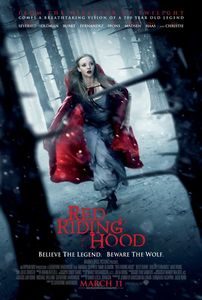
  • Red Riding Hood (2011)

    Red Riding Hood (2011)

    (On DVD, January 2017) I don’t think anyone was actively asking for a feature film reimagining of the Red Riding Hood fairy tale, but Hollywood has seemingly taken aim at every other fairy tale out there, usually producing results far worse than Red Riding Hood. Helmed by Catherine Hardwicke (who also helmed Twilight—this will be relevant in a moment), this take on the classic fairy tale soon runs into a supernatural serial killer mystery set in a small village, with religious paranoia and shapeshifting lust as important plot drivers. There are a few good moments as the village is in near-panic mode. Elfin blonde Amanda Seyfried holds the lead and manages to acquit herself decently even when the material around her threatens self-parody. Gary Oldman shows up as a decent human antagonist, while Virginia Madsen has a too-small role as an imperfect mother. Visually, the film does have a few striking moments—showing the life of a small medieval village not as a drab misery, but a picturesque showcase. Red Riding Hood is borderline ridiculous at times (especially given the Twilight echoes as the werewolf romance becomes stronger—this is a pure Team Jacob film response) but it still manages to hold our attention. Having never been a teenage girl, I’m far from being the target audience for this film—so I’m inclined to be lenient toward Red Riding Hood and simply acknowledge that it achieves what it sets out to do.

  • The Number 23 (2007)

    The Number 23 (2007)

    (On Cable TV, May 2012) Despite ample evidence to the contrary, Jim Carrey is still primarily perceived as a comedian, and part of the appeal of psychological thriller The Number 23 is seeing him headline a fairly grim tale of obsession and death.  As an ordinary guy suddenly fascinated by a book explaining the numerological intricacies of the number 23, Carrey does well –especially when the film take a meta-fictional bent and start presenting both the character’s reality and the heightened fiction that he reads.  The Number 23 is never more enjoyable than when it’s weird without explanations, going from reality to fiction to increasing paranoia.  When comes the moment for the movie to lay down its cards and tie everything together, you can hear the creaks of the tortured storytelling (in which characters do bizarre things for no better reason than to look suspicious later on), the disappointment of threads being tied up and the lousiest plot cheats come up again.  Still, the film feels underrated: Ably directed by Joel Schumacher, it has a potent visual kick, a strong directing style and some stylish cinematography.  Carrey is believable in the lead role (though not distinctive enough to be worth the rumored 23 million dollars he was paid for it), while Virginia Madsen and Danny Huston provide able supporting work.  The plotting certainly isn’t airtight (the boy’s age doesn’t match the chronology), but the film makes a compelling case for itself as a visual piece of work.  Schumacher may have burned out spectacularly after Batman & Robin, but he has since been turning in some interesting niche movies, from Tigerland to Trespass and now The Number 23.