W. S. Van Dyke

  • Guilty Hands (1931)

    (On Cable TV, October 2022) High melodrama and overacting make Guilty Hands an evergreen not-that-guilty pleasure. Lionel Barrymore stars as a lawyer who uses his knowledge of crime to build the perfect murder against a womanizing friend who plans on marrying his daughter. If that feels a bit over-the-top, you haven’t seen the film’s conclusion yet. But I have already said too much. Still, this film moves quickly at less than 70 minutes, features the wonderful Kay Francis, and gets some fun out of classic mystery movie clichés. There is plenty of irony in having a trusted lawyer investigate a murder he himself committed, and Barrymore runs with that idea. The Pre-Code nature of the film means that it’s a bit wild in the corners of the dialogue, and it’s willing to entertain at least some moral ambiguity for its characters. It’s not particularly stylish (although director W. S. Van Dyke moves his camera more often than you’d think for an early-1930s film), but that’s not a problem considering the emphasis on plot and characters. Movie mysteries had a great decade in the 1930s, not so much for the best films of the subgenre, but because there were a lot of them, and many now-obscure films of the era such as Guilty Hands played the game very well.
  • The Prizefighter and the Lady (1933)

    (On Cable TV, September 2022) Classic Hollywood movies are exceptionally good at two things that are well illustrated in The Prizefighter and the Lady. For one thing, older movies can be instructive in illustrating the passing of fame: You can be famous enough one year that they make a movie about you, and then completely forgotten decades later (except by Hollywood nerds). And yet Hollywood will also teach you that there is nothing new under the sun—that the formulas that work now have been in use for generations. So it is that The Prizefighter and the Lady is a boxing film that happens to start a true-life boxing champion (Max Baer, much better as an actor than you’d expect, fighting other champion Primo Carnera in a climactic bout that prefigures their real-life fight the following year) and it goes for boxing movie clichés with the same gusto as Rocky would decades later. It’s quite standard, although the film does benefit from the great Myrna Loy as the titular lady, a gangster’s moll who makes things even more interesting. Some of the boxing sequences, under the successive tutelage of directors Howard Hawks (who left the production early on) and W. S. Van Dyke, still have some punch to them. It’s not much of a movie, but it still works and that, when you get down to it, is what still counts about Classic Hollywood.

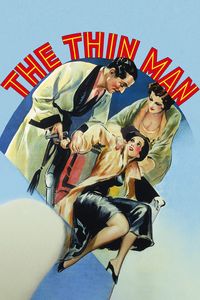
  • The Thin Man (1934)

    The Thin Man (1934)

    (On DVD, September 2019) I’d heard very nice things about The Thin Man, but it took a long while before I was able to see it. For reasons I still haven’t figured out, it looks as if the Canadian distribution rights of the film are snarled in something—whenever it’s scheduled to play on Turner Classic Movies, the Canadian simulcast substitutes something else; the latest DVD is unavailable through official Canadian channels; and it never plays anywhere else on TV (trust me, I’ve been checking for the past three years). Ultimately, I gifted myself with a pricey gray-market import from amazon.com, and it was worth it: The Thin Man is indeed a charming mixture of complex whodunit, strong characters, married-couple romance and 1930s period feel. It features Nick and Norah Charles, a witty leisure-class married couple with a strong interest in alcohol, parties and recreational murder investigations. The plot is complex enough to be interesting, but the heart of the film is in the repartee between the leads, the unflappable Charles, the unusually strong Norah and the sophisticated comedy that comes from seeing such characters conduct their own investigations. It all naturally culminates around a dinner table when villains are unmasked and police rushes in to arrest the killer. Despite pushing eighty-five-years old, The Thin Man doesn’t feel old: While the script has its structural issues (serving far too long an introduction, only fully exploiting its own possibilities in its later half), much of the (barely) pre-code script adapted from a Dashiell Hammett novel contains great snippets of dialogue, delivered with debonair aplomb by William Powell and Myra Loy, with some assistance from Skippy the dog. Director W. S. Van Dyke takes a while to get things moving, but once he does it’s all straightforward to the end. The Thin Man may take a bit of work to see up here in the North, but it’s worth the trouble.