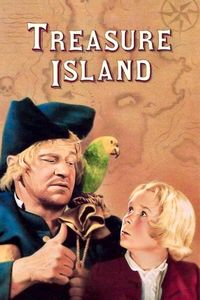
Wallace Beery

  • Treasure Island (1934)

    Treasure Island (1934)

    (On Cable TV, February 2021) The original Robert Louis Stevenson novel is one of those classic tales of adventure that feels timeless, and such is the case with 1934’s version of Treasure Island, which manages to overcome the technical limitations of mid-1930s filmmaking to deliver a still-admirable period take on the piece. The story is familiar to the point of being irrelevant compared to the execution: here’s our orphan hero, here’s Long John Silver, here’s the nautical trip, here’s the island, here’s the treasure. It’s in execution that the film distinguishes itself and stays distinctive. Having Wallace Beery and Jackie Cooper in the two lead roles is historically significant considering the popularity of the pair at the time. While there have been more imaginative or more technically polished takes on the story, this 1934 Treasure Island shows you what big-budget studio filmmaking could do with that premise at the time, and that’s interesting enough.

  • Viva Villa! (1934)

    Viva Villa! (1934)

    (On Cable TV, October 2019) Hollywood has always had a soft spot for grander-than-life outlaws, mostly because it could make portray them as protagonists even bigger than life and (in the name of entertainment) revel in whatever cool crimes they committed. 1930s Hollywood was just as susceptible, as shown by a number of outlaw movies of which Viva Villa! Is only one example. Here we have Hollywood avowedly magnifying the legend of the famous Mexican revolutionary Pancho Villa: a woman in every village, an army of thousands, and an American journalist creating his legend. It’s not exactly subtle, and the film’s treatment of the character is not without a dose of racism: clearly, this is an American perspective on a Mexican story (literally—what would Villa be without the American journalist documenting his actions?) rather than an attempt to show the story from his own perspective. Executed with significant production means, the film features hundreds of extras, a lot of location shooting and grandiose battle sequences, which (combined with the attempt to show a charming rogue, helped along by an exuberant performance by Wallace Beery) help keep the film interesting today … even though it would be completely unacceptable as a new movie today. You can see why Viva Villa! was nominated for a Best Picture Academy Award. Fans of Howard Hawks will appreciate knowing his uncredited contribution to the film, even though director Jack Conway completed the film.

  • The Big House (1930)

    The Big House (1930)

    (On Cable TV, May 2019) There’s something almost comforting in reaching ninety years in the past and finding a film not so different from what we’d see on-screen right now. So it is that The Big House is a quasi-prototypical prison movie, already dealing in well-worn tropes barely two years after the introduction of sound in cinema. The technical credentials are occasionally crude, but there’s no denying a certain cinematic ambition in the use of miniatures, camera movements and overall direction—the prison cafeteria scenes may or may not have influenced White Heat, but they’re handled with a grace that goes beyond flat static shots and into something definitely more daring. No wonder that this manly muscular action drama was nominated for an early Best Picture Academy Award. Story-wise, there isn’t much here, what with its “innocent” hero (who still killed someone while driving drunk—something almost unforgivable today) being a victim of hardened criminals and tough prison warden. The ending prison riot sequence is definitely ambitious, though, what with army tanks getting involved in putting it down. The acting is strictly early-thirties stuff (with Chester Morris and Wallace Beery doing what they knew best), still a bit influenced by the silent-movie methods. Still, for all of its familiar bluntness, there’s a certain charm to The Big House, and definitely a viewing pleasure. Further proof that well-executed tales can be timeless, even when they’re extremely familiar.