Walter Brennan

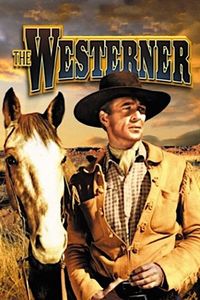
  • The Westerner (1940)

    The Westerner (1940)

    (On Cable TV, July 2021) The Western film corpus is large and not always distinguished — it’s filled with humdrum horse operas merely parroting the mythology of the wild west, cheaply conceived and indifferently executed. The Westerner, however, manages to clear the bar thanks to some skepticism and above-average acting. The story of a drifter who ends up in a long-term adversarial friendship with notorious historical figure “Judge” Roy Bean, the film is slightly ahead of the curve for the genre in poking at the heroic narrative of the west. As early as 1940, it fictionalizes Bean in a somewhat unflattering light, taking for granted that he was abusing his authority for personal gain rather than civilizing the west through frontier justice. This take on a sometimes-beloved figure is already interesting, but then there’s the great interplay between Gary Cooper (stoic but bland as usual as the drifter) and Walter Brennan (in fine form as Bean) — they elevate the material, and make it do it justice to a years-long battle of wills. One shouldn’t read too much into the historical figure of Bean as portrayed in the film: numerous liberties were taken with the facts, and the film is more comfortable poking at the idea of a hanging judge than the reality of it. Still, The Westerner is directed with some narrative energy by William Wyler, and the blend of straightforward western themes with more unusual elements, such as an English actress becoming the obsession of the film’s villain, adds a bit more flavour to the mix. I have muted reactions to westerns and The Westerner doesn’t quite do enough to get me to be enthusiastic about it, but it is a better-than-average western and should appeal more specifically to fans of the genre.

  • The Pride of the Yankees (1942)

    The Pride of the Yankees (1942)

    (On TV, November 2019) The problem with The Pride of the Yankees isn’t that it’s a bad film, because it is not. The problem is that it is primarily a film with very specific melodramatic elements crossed with a baseball legend, somewhat limiting its appeal to anyone who’s not already a fan. It’s easy to see why the topic matter of Lou Gehrig’s life would appeal to Hollywood—a good baseball player, a likable romance and then a fatal medical condition and a heart-stirring speech at the end. Familiar, melodramatic and certainly a bit overdone by today’s standard—but do remember that by the time the film opened in 1942, Gehrig’s final speech and 1938 death were still fresh in people’s mind. Everyone wanted a eulogy rather than a realistic film, and that’s what they got. Bland everyman Gary Cooper is exactly what was needed for the role, with some support from Teresa Wright, Walter Brennan and none other than Babe Ruth playing himself. The Pride of the Yankees will either feel like a stirring paean to a baseball legend, or a somewhat conventional Hollywood melodrama. Movies are often as much about their audiences than their own subject matter.

  • Come and Get It (1936)

    Come and Get It (1936)

    (On Cable TV, August 2019) I’m on a mission to watch the entire Howard Hawks filmography, and at this point in the process, having covered most of his classics, I’m starting to get to his lesser-known films. Come and Get It is one of those, and a bit of an oddball title as he was reportedly fired about two thirds of the way through. Adapted from a novel, it’s a complex and occasionally off-putting story of multi-generational infatuation, as a married lumber baron falls for the daughter of the woman he left behind decades previously. There are multiple complications, to the point of resulting in a messy plot that leaves few people happy when it reaches its ending, spurned would-be adulterous protagonist and all. (Note to modern viewers: The Hays Code was slightly more permissive when filmmakers worked from existing novels, but not that much—which helps explain the film’s jerky and unconvincing morals.)  Considering that Hawks didn’t direct all of Come and Get It, it’s hard to pinpoint his exact contribution, but the spectacular footage of old-school logging operations early in the film was enough to warm my French-Canadian heart and certainly resonates with other Hawks movies. Much of the film’s best moments come early on, what with barroom brawling and sharp scenes to establish the characters. It’s afterwards that Come and Get It seems to lose its way, never quite sure whether to commit to tragedy or romance. (Or to say something about environmental matters, which had been one of Hawks’ initial concerns.)  Three good actors manage to make the film better than its confused screenplay: Edward Arnold as the morally ambiguous protagonist, Joel McCrea as the romantic lead, but especially Frances Farmer in a well-controlled dual role. Walter Brennan is a bit annoying, but that’s his character more than the actor. Despite a fair start, Come and Get It ultimately feels aimless and maybe even a bit cut short—it doesn’t completely capitalize on its strengths, and knowing about its troubled production explains some of the issues.