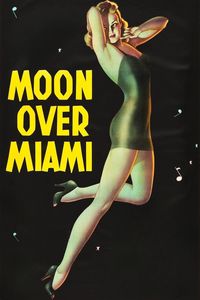
Moon Over Miami (1941)
(On Cable TV, June 2021) While Moon over Miami doesn’t do many things wrong (although I could do without its “Solitary Seminole” number) — and, in fact, does most things right, I’m not convinced it goes much beyond that to achieve its fullest potential. The building blocks of the narrative are solid enough, with two sisters blowing through their meager inheritance with a last-chance trip to Miami in order to seduce and marry millionaires. (Not much of a twenty-first century model… or is it?) The film’s single biggest asset becomes its setting, taking a look at a very different Miami but also letting its distinctive atmosphere influence both the looks of the film (which was partially shot on location) and the nature of some of the musical numbers to incorporate some Latin material. Don Ameche and Betty Grable make for good romantic leads, and the film gets a boost from being shot in colour when there’s so much material here that would have been duller in then-standard black-and-white. Another unexpected bonus: Seeing noted choreographer Hermes Pan on-screen as a dance partner. Director Walter Lang keeps the pieces moving pleasantly enough, although his track record on other musicals reflects a heavy-handed approach that doesn’t go for comic material. And that’s perhaps where Moon Over Miami meets its limits: despite some good and promising material, it doesn’t deliver on its fullest potential. It’s amusing but not comic, its musical numbers are lively but not memorable and the result should be more interesting but merely settles for a pleasant time. I strongly suspect that a similar film made ten years later, as musicals were perfecting their approach, would have been far more striking.