Warren Beatty

  • Love Affair (1994)

    (On TV, July 2021) On paper, the idea of remaking 1939’s Love Affair (itself remade in 1957 as the better-remembered Cary Grant vehicle An Affair to Remember) with Warren Beatty and then-new wife Annette Benning isn’t all that awful as Hollywood ideas go. Sure, it’s recycling, but it’s recycling from earlier decades, which almost makes it affectionately reverent of Hollywood history. Further burnishing this connection to classic film history is Katharine Hepburn, here playing a canny older woman in her final film role. If you look down the cast list, you’ll find names such as Kate Capshaw, Pierce Brosnan (bearded), Garry Shandling, Harold Ramis and Rosalind Chao in a blink-and-you’ll-miss-it role. Still, even a good cast can’t quite save a clunky script that doesn’t update the most vexing elements of the original films, makes new mistakes of its own and can’t create dialogue equal to the original. Beatty and Benning appear self-satisfied with themselves here, but even their star coupling can’t quite translate to screen heat. A series of unlikely events is contrived to make the film happen like it does (including the engineering the entrance of Hepburn’s character) but perhaps the worst is the heavy-handed ableism that powers much of the last act of the film — something that should have been left in the past, even if it had meant not making this film at all. Not all remakes are good ideas, and this may help to explain why this Love Affair has now sunk so thoroughly in obscurity as anything but Hepburn’s final film.
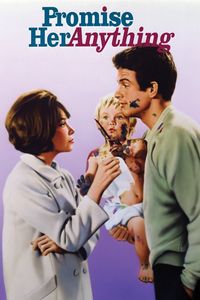
  • Promise Her Anything (1966)

    Promise Her Anything (1966)

    (On Cable TV, March 2021) I suppose that “a romantic comedy written by the author of The Exorcist” is not the best way to sell Promise Her Anything, so try something like “Warren Beatty plays a Greenwich Village nudie film director who is stuck babysitting the toddler son of a love interest played by Leslie Caron.”  There! Much better—although not that appealing. Infused with the very particular atmosphere of a 1960s sex comedy but saddled with some messy romantic comedy complications, this is a film that doesn’t quite know where it’s going, and certainly can’t hit a mark that it doesn’t know exists. If you’re in the business of selling romantic fantasy, you’re also responsible for selling a simplification of life. Once we’re deep in the female lead picking husbands, one of her picks being a kid-hating paediatrician and the other making adult movies while the kid is watching… well, that’s not exactly reassuring at all. (Even the “adult film” portion is toned down, as per 1960s comedies, to nothing worse than swimwear.) Beatty is stuck in a light comedy not suitable for his talents, and the same can also be said for Caron, although she does get to wear an amazing body-hugging white lace two-piece outfit that’s easily more alluring than the half-naked girls showing up in the naughty films. It’s all acceptable if you’re in a forgiving mood, but it’s not in any way exceptional even when you compare it to other 1960s sex comedies. It either doesn’t try or try too hard, and as a result it settles for nothing much. Promise Her Anything is slightly interesting if you’re looking to catalogue the evolution of film comedy in the 1960s, but by the point it becomes relevant, you’ve already seen all the better ones.

  • All Fall Down (1962)

    All Fall Down (1962)

    (On Cable TV, August 2020) While director John Frankenheimer is best known for his action movies, he does have an almost-parallel filmography of character-driven drama films. Take, for instance, All Fall Down, released the same year as the far better known The Manchurian Candidate – it’s a relatively low-stake family drama, featuring a charismatic but self-destructive young man who drags down his family into misery. Unusually enough –and you can credit the literary origins of the film –, All Fall Down rarely revolves around that young man, inelegantly named Berry-Berry (the repetitiousness of it becoming an unintentional gag at some point in the film) and played by a very young and charming Warren Beatty. Much of the film is clearly from the point of view of his younger brother, undertaking a journey to the realization that his older brother is to be pitied rather than idolized or harmed. We also have their parents, divided over their older son’s behaviour, and an older woman who becomes the crux of the brothers’ irreversible rift. There is some intense melodrama to the twists and turns of All Fall Down that hasn’t aged particularly well, and having a handsome but dangerous central character is always a cause for mixed impressions. There are some good performances here – aside from Beatty, there’s Angela Lansbury as a misguided mother, Eva Marie Saint as the girl that divides the brothers, and Karl Malden as a father drinking himself to death. For all of Frankenheimer’s skills in directing, he couldn’t quite manage to improve on the screenplay’s least believable elements enough to improve the credibility of the film – it all seemed like an elaborate plotting exercise, moving pieces around without quite thinking about whether it made sense. I eventually tired of Berry-Berry, and wanted him unable to hurt any more people ever again, no matter how we got there. All Fall Down does hold more interest than expected as drama, but it does feel a bit hollow when all is said and done.

  • $ aka Dollars (1971)

    $ aka Dollars (1971)

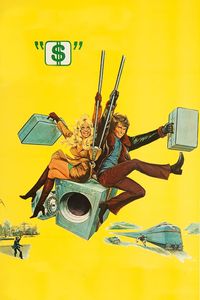
    (On Cable TV, August 2020) More promising than successful, Dollars is certainly watchable, but there’s a sense that a few tweaks would have helped it tremendously. It does have the tremendous advantage of starring a young Warren Beatty (charming) and Goldie Hawn (also charming), so there’s clearly a high floor to how bad this can be. Plus, it features a complex heist narrative where an intricate crime leads to a just-as-intricate game of crosses and double-crosses, as the previous owners of the money they’ve stolen chase them to get it back. It all takes place in rarely-seen picturesque Hamburg, further adding to the unusual appeal of the film. With all of those ingredients, it’s hard to imagine where Dollars goes wrong, but it does. For a lighthearted caper comedy, it clearly overdoes the very, very, very long chase sequence that forms most of the film’s second half—taking out half of it would have improved the rest, already overlong at 120 minutes. It’s also, less clearly identifiably, a film that doesn’t have the added spark that such films require: it’s not light on its feet, it’s not particularly romantic, it’s not sustainably clever (even if the heist itself is ingenious). You can argue that its story choices (notably in a second half that separates the protagonist and turns into repetitive wintertime chases) are not conducive to the kind of expected patter and romantic tension and that’s fair—but Dollars is still the kind of thing you watch and wonder why it’s not better given all of the elements at its disposal.

  • McCabe & Mrs. Miller (1971)

    McCabe & Mrs. Miller (1971)

    (On Cable TV, February 2020) In retrospect, it makes sense that the western genre—for years the stereotypical Hollywood exemplar, would have been one of the most deconstructed genres by the 1970s. New Hollywood was eager to show how different it was from the old one, and in that context it’s not surprising to see Robert Altman squarely taking on the genre in McCabe & Mrs. Miller. Though technically a western, it’s almost at the opposite end of the usual Western iconography. It’s set deep in a forest in snowy cold northwestern American, with flawed characters unable to resist the corrupt business interests against them. Visually, nearly every optical trick in the cinematographic art is used to give a distressed look to the film: Washed-out colour, rainbow highlights, hazy soft focus and so on. It’s all gritty and dirty and colour-muted like many 1970s films, which viewers are liable to love or hate. To be fair, the period recreation is a lavish representation of a western work camp—it’s just the way it’s captured that’s liable to make some viewers crazy. Warren Beatty is quite good as McCabe (it’s a kind of role he’d often play in his career, all the way to the tragic conclusion), while Julie Christie is also remarkable as the other half of the lead sort-of-couple. Even with nearly fifty years of subsequent Western deconstruction, there is still something in McCabe & Mrs. Miller that feels unique—perhaps because no one else since has dared to be so resolutely indifferent to audience expectations. The early 1970s were another time entirely in Hollywood history, for better or for worse.

  • Splendor in the Grass (1961)

    Splendor in the Grass (1961)

    (On Cable TV, August 2019) I’m not a big fan of small-town dramas, but there are two or three things that make Splendor in the Grass worth a look. The first is the most obvious: the casting. With Natalie Wood and Warren Beatty in the lead, there’s additional interest that other movies with lesser-known actors may not have. The other is more subtle, but with its premise turning around the dilemmas experienced by two circa-1928 teenagers dealing with romance, sex, and future prospects, you can feel the film trying to say something about the changing perception of teenagers as of 1961. Splendor in the Grass, directly written for the big screen, is nonetheless messy in ways that originally scripted movies usually aren’t: At times, with its time skips and changes of situation, it feels like an adaptation of a novel being overly slavish to the source material. There are a few melodramatic junctions that stretch the bounds of a believable drama, but so it goes. Director Eliza Kazan was trying for something more than comforting formula here, and the result manages to transcend specific time or place. But even if you’re not having any fun seeing the story go where it goes, at least there’s Wood and Beatty delivering early great performances.

  • Bugsy (1991)

    Bugsy (1991)

    (On Cable TV, March 2019) There is such a heady brew of elements in Bugsy that I wonder why I’m not so happy with the result. It is, after all, a mixture of crime, Hollywood, gambling and empire building, as a mob enforcer goes to Los Angeles in 1940, discovers the allure of Classic Hollywood, and starts dreaming about building a big gambling town in the Nevada desert. It’s easy why the role of “Bugsy” Siegel would have some attraction for Warren Beatty: a mixture of a powerful criminal, decisive lover, futurist dreamer and Golden-Age Hollywood glamour—a fast-talking con man with the ruthlessness to back it up. Plus, the lead female role belonged to Annette Bening, whom he met during shooting and eventually married. Technically, the film is solid: great production values, veteran director Barry Levinson at the helm, and good actors in the main roles. But Bugsy isn’t quite as slick as its components would suggest. The script shows some contempt for its character by titling itself after a nickname he hated. The pacing is unhurried, quite unlike the character it portrays. The ending is as obvious as it’s drawn out. And so the film’s highlights (such as a visit to a movie set) are drowned in so much minutiae that the entire thing feels lifeless in comparison to its subject. Maybe I’ll revisit Bugsy someday and see if I was just in a bad mood, or if the film does not align with its own centre.

  • Ishtar (1987)

    Ishtar (1987)

    (In French, On Cable TV, March 2019) For at least a decade, Ishtar was a punchline among movie fans for anything having to do with a high-budget bomb. Even despite featuring no less than Warren Beatty and Dustin Hoffman, and a shoot in a far-flung exotic location, Ishtar got swept in a storm of production problems involving a perfectionist first-time director, two stars with massive egos, a vicious studio reorganization, and incredible budgetary overruns. (Seriously; a summary of Ishtar’s production history reads like a train wreck in motion.) By the time the much-delayed and infamously troubled Ishtar made it to the public, critics were positively salivating for blood in taking down the film. Thirty years later, well, Ishtar’s not entirely bad. Nominally, it’s still about two mediocre songwriters getting swept in revolutionary intrigue in a Saharan country. Perhaps the worst thing we can say about it is that it’s underwhelming. It’s occasionally funny by force of dialogue or absurdity, but writer-director Elaine May’s direction is often badly handled and much of the film’s self-satisfied tone is clearly irritating. It gets off the wrong foot with annoying characters and then never recovers from it: While the idea of having Dustin Hoffman being the suave one and Warren Beatty the socially inept one is a funny bit of counter-typecasting, the novelty of it quickly wears off. What’s left is decidedly less interesting than what the critical savaging at the time suggested—especially if you’re expecting a terrible movie: the reality is far more middle-of-the-road. Ishtar remains just your average malfunctioning comedy, albeit one with a much bigger budget and star power than you’d expect.

  • Dick Tracy (1990)

    Dick Tracy (1990)

    (Second Viewing, In French, On Cable TV, January 2019) Back in 1990, Hollywood really wanted audiences to go see Warren Beatty’s Dick Tracy. After the success of Batman in 1989, it had been designated as the most likely contender for the Summer Box-Office crown. I remember the overwhelming marketing push. It didn’t quite work out that way: While Dick Tracy did decent business, movies such as Ghost and Die Hard 2 did much better. Still, the film had its qualities (it did get nominated for seven Academy Awards) and even today it does remain a bit of a curio. Much of its interest comes from a conscious intention to replicate the primary colours of the film’s 1930s comic-book pulp origins: the atmosphere of the film is gorgeous and equally steeped in Depression-era gangster movies and comic-book excess. A tremendous amount of often-grotesque prosthetics were used to transform a surprising ensemble cast of known names (Al Pacino, Dustin Hoffman, James Caan … geez) into the caricatures of Tracy’s world. Beatty himself shows up as Tracy, square-jawed and willing to give his best to a film he also directed and produced. Madonna also shows up, but she ends up being more adequate than anything else. Dick Tracy’s big twist is very easy to guess, but this isn’t a film that you watch for the overarching plot: it’s far more interesting when it lingers in the nooks and corner of its heightened vision of 1930s cops-vs-gangsters cartoons. Visually, the film holds its own by virtue of being one of the last big-budget productions without CGI: the matte paintings are spectacular, and you can feel the effort that went into physically creating the film’s off-kilter reality. The question here remains whether the film would have been better had it focused either on a more realistic gangster film, or an even more cartoonish film. Considering the original inspiration, there was probably no other option than an uncomfortable middle ground. In some ways, I’m more impressed by Dick Tracy now than I was when I saw it in 1990 (at the drive-in!)—I wasn’t expecting as much, and I’m now more thankful than ever that it lives on as how big budget 1990 Hollywood rendered the gangster 1930s.

  • Reds (1981)

    Reds (1981)

    (In French, On TV, December 2018) I’m starting to be old enough to realize how complex history can be, and how many little-known side stories, tangents and footnotes it contains. Now, thanks to Warren Beatty’s Reds, I know a little bit more about the American involvement in the Bolchevik Revolution of November 1917 and its aftermath. Beatty here produces, writes, directs and plays in a movie about American journalist John Reed, who witnessed those events first-hand, sent news reports and ended up writing a book about it. In addition to Reed’s reporting, the film does spend quite a bit of time chronicling his complex relationship with socialite Louise Bryant (played by Diane Keaton). If it feels like a history lesson, then this is an impression that the film actively courts—by including documentary footage of “witnesses” talking about Reed, Reds blurs the lines between fact and fiction, and further bolsters the epic scale of the result. The other thing that hits hard is the film’s mind-numbing 194 minutes, far too long even for the kind of massive world-changing epic that Reds has in mind. Still, if you can schedule your life around the movie, it’s quite an interesting history lesson that it has in mind—a corner of American history during which the country may have been tempted to back off from savage capitalism, and a milestone of Russian history seldom depicted sympathetically in American movies. It’s easy to imagine parallel realities emerging from America embracing at least some degree of socialism, as this film dramatizes the elements in play in the late 1910s. Now that Beatty has essentially retired (or at least retreated back in a safe corner), it’s easier to evaluate how daring much of his pre-1990s filmography could be, and with Reds he controlled the project from beginning to end. The result is a fiercely intelligent, provocative, unusual piece of work that may overstay its welcome, but nonetheless illuminates a pocket of history that deserves to be told.

  • Shampoo (1975)

    Shampoo (1975)

    (On Cable TV, November 2018) Despite suspecting better, I half-expected to like Shampoo. I’m usually receptive to critiques of the 1960s or Warren Beatty’s projects, and I like the concept of examining an era’s social more through the lenses of a specific day (here the election of Richard Nixon in November 1968). Shampoo, alas, proved to be a far more sombre experience than I expected. Beatty deservedly stars as an in-demand hairdresser able to use his job to meet women and maintain simultaneous affairs at once. Of course, such a character must not be allowed to profit, and much of the film details the ways in which his life implodes over the course of slightly more than a day. The playboy lifestyle is not played for laughs or wish-fulfillment, with the so-called comedy of the film being tinged with a substantial amount of humiliation, self-recrimination and missed opportunities. It’s not a whole lot of fun and if I had paid more attention to director Hal Ashby’s name or the 1975 year of release of the film I could have predicted that for myself. (For various reasons, my reactions to Ashby’s movies ranges from tepid liking to outright loathing—but then again that’s my reaction to most of the New Hollywood era in general.) Considering the downer plot and restrained laughs, I best reconciled myself with Shampoo as a period study, taking a look at the excesses of 1968 from the decade-long hangover of the 1970s. It’s not much, but it’s better than nothing.

  • Bonnie and Clyde (1967)

    Bonnie and Clyde (1967)

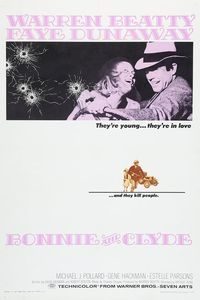
    (On Cable TV, January 2018) There’s no denying that Bonnie and Clyde still carries a strong mystique even today. It’s a reference that pops up every single time there’s a man-and-woman criminal team. It’s also a film that showed very clearly the state of Hollywood by the end of the sixties, sufficiently emboldened by the end of the Hays Code to start showing blood and gore in big-budget entertainment. I can’t quite picture how revolutionary or upsetting the film must have been at the time, with elaborately constructed scene in which people are shot in the head by criminals portrayed as heroes. Such things are, for better or for worse, far more common these days and so Bonnie and Clyde is approached differently today without the element of shock. Personal preferences certainly come into play—I had a surprisingly negative reaction to the film myself: being generally unreceptive to the stereotype of the heroic outlaw, I was unable to empathize much with the murdering anti-heroes. (I’m also Canadian, if that helps: “Peace, order and good government”)  The film does have its qualities—Warren Beatty is at the top of his young roguish persona here, and let’s not forget Faye Dunaway’s presence either. Screen legends such as Gene Hackman and Gene Wilder also pop up in small roles, although modern viewers may be disappointed at their ineffectual characters or small roles. The infamous ending remains upsetting. Bonnie and Clyde, taken on its own fifty years later, is a great deal less special than it must have been. Despite remaining a pivotal film in Hollywood history, I’m not sure that it has aged all that well.

  • Heaven can Wait (1978)

    Heaven can Wait (1978)

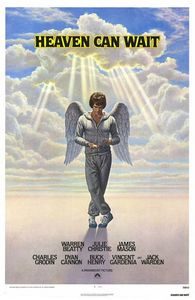
    (On Cable TV, April 2017) Some movies hold up better than ever, but Heaven Can Wait isn’t one of them. The problem isn’t with the period detail, Warren Beatty’s performance or any of the 1978-specific aspects of the film. The problem is the annoying way in which its premise is executed. Beatty plays a lunkheaded football player who dies before his time and is sent back to Earth as a rich man with ongoing problems of his own. But what could have a sprightly fantasy ends up dragged by a script as dumb as its protagonist. Our dimwitted hero has trouble accepting that his football player body is gone, and keeps insisting that he’s going to play the SuperBowl anyway. The movie eventually obliges, in one of the most blatant instance of contrived plotting ever put on film. But the way from Point A to point B is made even worse by the moronic character, adding empty minutes to a film that should move much faster. There is a particularly egregious five-minute scene in which our protagonist laboriously recaps the film for the benefit of a friend, leaving viewers gnashing in exasperation. If the movie was reaching for a grand message on life and its preciousness, it’s more than muddled by the protagonist’s bull-headed insistence on not changing a thing. The body-switching aspect is more painful than amusing (see above about the stupidity of the script) and the laughs are few and far between in what’s supposed to be a comedy. If you haven’t seen it yet, Heaven can Wait can definitely wait.

  • Bulworth (1998)

    Bulworth (1998)

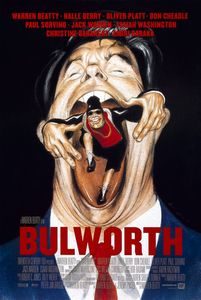
    (On Cable TV, November 2016) I really thought I’d like Bulworth more than I did. As a look in the life of an American politician, it’s not too bad: we get a feel for the trade-offs, the deals, the drudgery of the work. It’s even promising when it becomes obvious that the lead character has decided to give it all up and hires an assassin to take himself out. But then Bulworth decides to become heavily didactic, has its character raps through a few scenes and more or less gives up on any kind of unified tone. It doesn’t work, even despite the good efforts of the performers. Warren Beatty is very good as the titular politician; meanwhile, a young Halle Berry shows up as a young woman that teaches him the errors of his ways. (She gets a very good speech answering “Why do you think there are no more black leaders?”) Bulworth, to its credits, plays with a few daring ideas that remain evergreen (and I write this even despite the crazy electoral circus that was 2016), trying to pass along those ideas within a credible framework. (Witness Oliver Platt, shining as a political operative trying to keep his candidate on track.) But Bulworth ends up shooting itself in the foot a few times, most notably by having Beatty vamp it up by rapping at high-society events, adopting black speech patterns and trying to ingratiate himself in lower society. It’s often more embarrassing than successful, betraying a juvenile intent more than proving its political sophistication. By the end, Bulworth has become a grab bag of intriguing moment and cringe-worthy ones. Beatty the actor does well, but Beatty the director could have used more restraint and another script re-write. But then again, after the results of the 2016 American elections, it may be that our ability to distinguish satire from reality has completely evaporated.